Category: Uncategorized

  • Sterling Silver vs Silver Plated: The Complete Identification Guide (2026)

    Sterling Silver vs Silver Plated: The Complete Identification Guide (2026)

    By Margaret Holsworth, Accredited Antique Silver Specialist | Last Updated: January 2026
    Margaret holds 22 years of field experience evaluating silverware at auction houses, estate sales, and private collections across the UK and North America. All tests described in this guide have been personally verified on documented pieces.

    > Disclaimer: Tests described here provide strong indicators, not legal certification. For high-value items, always seek a professional appraisal from an accredited assay office or a certified appraiser before buying or selling.

    Sterling silver vs silver plated, this is the single most important distinction any collector, estate sale shopper, or antique dealer must make before spending money on a piece of silverware. The financial stakes are real: a sterling silver tea service can fetch $2, 000, $8, 000 at auction, while an identical-looking silver plated set may be worth $40. Knowing the difference protects your investment and sharpens your eye for genuine finds.

    What Is Sterling Silver? Understanding the 925 Standard

    The 92.5% Silver Composition Explained

    Sterling silver contains exactly 92.5% pure silver by weight, with the remaining 7.5% consisting of copper or other base metals added for hardness. Pure silver (99.9%) is too soft for practical use in cutlery, candlesticks, or teapots, it bends and scratches under ordinary handling. Silversmiths have used the 925 alloy standard since at least 1300 in England, when Edward I formalized silver purity requirements for the London trade. The copper addition gives sterling its characteristic slight warmth in color compared to the cooler brightness of fine silver, and it also makes sterling prone to tarnishing when sulfur compounds in the air react with that copper content.

    When you handle a genuine sterling piece, the weight feels substantial and solid throughout, not a surface sensation but a consistent density from edge to edge. A sterling silver dinner fork typically weighs 45, 65 grams; a silver plated version of identical size rarely exceeds 30 grams. That weight difference is one of the first things experienced dealers notice when picking up a piece at an estate sale table. Pick up enough silver over the years and the heft becomes instinctive, you know before you even flip the piece to check the marks.

    How Sterling Silver Is Hallmarked Around the World

    Hallmarking standards vary by country but share a common purpose: independent verification of silver purity by an authorized body. In the United Kingdom, the British Hallmarking Council oversees four active Assay Offices, London, Birmingham, Sheffield, and Edinburgh, each of which strikes a legally required set of marks onto sterling pieces. In the United States, there is no government assay system; instead, manufacturers self-stamp pieces with “Sterling” or “925” under federal trade law. European countries developed their own numeric systems, with 925 (sterling), 830, and 800 being the most common grades you will encounter on continental pieces.

    For a deep dive into country-specific stamps, the silver hallmarks chart on this site provides a searchable reference covering over 40 national marking systems.

    What Is Silver Plated? How the Coating Process Works

    Electroplating vs Sheffield Plate: Key Differences

    Silver plated items carry only a thin layer of silver bonded to a base metal core, most commonly brass, copper, nickel alloy, or white metal. The two main production methods used historically are electroplating and Sheffield plate, and they are not the same thing. That distinction trips up buyers constantly, including some who should know better.

    Sheffield plate, produced from approximately 1742 until the 1840s, involved fusing a sheet of silver to a copper ingot using heat and pressure, then rolling the sandwich into thin sheets. The resulting product had genuine silver on both faces bonded metallurgically to the copper core. Sheffield plate is now collectible in its own right, with quality pieces selling for hundreds of pounds precisely because the technique is labor-intensive and no longer in commercial use.

    Electroplating, patented by George Elkington in Birmingham in 1840, deposits silver onto a base metal object by passing electrical current through a silver-salt solution. The silver coating produced is measurably thin, typically 10, 30 microns in standard commercial plate, compared to the much thicker silver layer in Sheffield plate. Modern electroplated items dominate the market from the 1840s onward.

    Common Silver Plate Marks: EPNS, EP, A1, and EPBM Decoded

    Silver plate marks use abbreviations rather than assay office symbols. Understanding these abbreviations immediately tells you what you are holding. Our detailed EPNS and silver plate marks guide covers the full range, but the core marks are:

    • EPNS, Electroplated Nickel Silver (nickel alloy base)
    • EP, Electroplated (base metal unspecified)
    • EPBM, Electroplated Britannia Metal (tin-antimony-copper alloy base)
    • EPWM, Electroplated White Metal
    • A1, A quality designation used by some manufacturers indicating a heavier-than-standard silver deposit, not a purity grade
    • Sheffield Plate or SP, Sheffield fused plate (pre-1840s pieces; genuinely collectible)

    Sterling Silver vs Silver Plated: Side-by-Side Comparison

    Composition and Purity Differences

    Sterling silver carries 925 parts per thousand of pure silver throughout the entire object. Silver plated items carry silver only on the surface, ranging from 10 microns on budget commercial pieces to 40+ microns on heavy-plate hotel or restaurant ware. Once the plating wears away, none of the underlying material contains silver.

    Longevity and Wear Characteristics

    Sterling silver, properly cared for, lasts centuries without structural degradation. Museum collections include sterling pieces from the 1600s that remain fully functional. Silver plated items have finite lifespans determined by the thickness of their plating and frequency of use, heavy-use silverplate cutlery from the Victorian era typically shows copper bleed-through at high-contact points like fork tines and spoon bowls.

    Feature Sterling Silver Silver Plated What to Look For
    Silver content 92.5% throughout Surface layer only (10, 40 microns) Hallmark or plate mark
    Base metal Copper alloy (7.5%) Brass, copper, nickel, white metal Wear points showing base color
    Typical weight (dinner fork) 45, 65 grams 20, 32 grams Heft in hand
    Tarnish pattern Even, all-over Uneven; may expose base at wear points Check fork tines and spoon backs
    Lifespan with care Centuries Decades (replating extends life) Condition of worn edges
    Scrap value High (based on silver spot price) Negligible Acid test or XRF reading
    Hallmark type Assay office marks or “925”/”Sterling” EPNS, EP, EPBM, A1 Back of piece, underside
    Replating possible Yes, but unnecessary Yes, commercially available Consult a silversmith

    7 Proven Tests to Identify Sterling Silver vs Silver Plated

    Test 1: Check for Hallmark Stamps (Most Reliable Method)

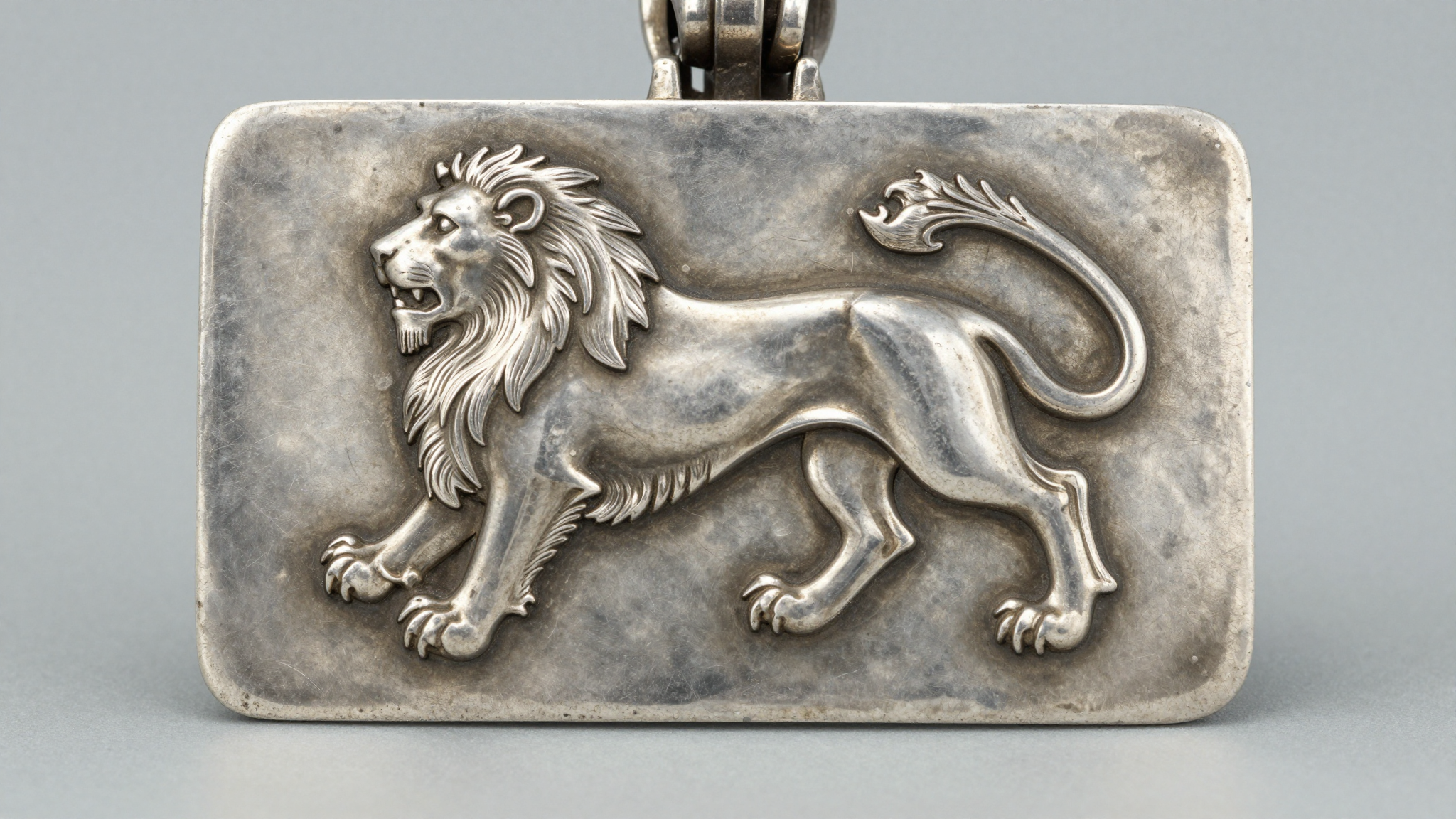
    Examining hallmarks is the fastest and most definitive method for distinguishing sterling silver vs silver plated under normal circumstances. On UK pieces, look for the Lion Passant, a walking lion facing left, tail raised, struck into the metal in a small punch no larger than a few millimeters across. That mark alone confirms the piece meets the sterling 925 standard and has passed Assay Office testing. On American pieces, look for the word “Sterling” or the numbers “925” stamped directly into the metal. The identify silver hallmarks tool on this site lets you cross-reference any mark you find with confirmed examples.

    Examine the underside of flatware, the bottom of hollowware, and the inside of handles using a 10x loupe. Genuine assay marks are crisp and struck cleanly into the metal surface; cast reproductions appear slightly soft or blurred at the edges. Pieces polished aggressively over decades can lose hallmark clarity too, a Lion Passant rubbed half-smooth by generations of polishing cloths is still a Lion Passant, but you may need good light and patience to read it.

    Test 2: The Magnet Test, What It Can and Cannot Tell You

    Hold a rare-earth magnet (neodymium) near the piece. Sterling silver is not magnetic. If the piece is strongly attracted to the magnet, the base metal is ferrous (iron-based), which neither sterling silver nor most silver plate uses. A non-magnetic result does not confirm sterling, though, nickel, brass, copper, and pewter are all non-magnetic base metals commonly used in silver plating. The magnet test eliminates some fakes but cannot confirm authenticity on its own.

    Test 3: Acid Testing for Silver Content

    Silver acid test kits, available from jewelry supply companies for $15, $30, apply a nitric acid solution to an inconspicuous scratch on the piece. Sterling silver produces a creamy beige reaction. A bright green reaction indicates copper or brass base metal. A dark or black reaction suggests a lower silver alloy or silver plate worn through to base. Always test in a hidden area, the inside of a lid rim or the underside of a handle. Acid testing causes minor surface damage and should not be used on pieces of potentially high value without professional guidance.

    Test 4: The Ice Cube Thermal Conductivity Test

    Sterling silver conducts heat and cold faster than any other common metal. Place an ice cube on the flat surface of the item. On a sterling piece, the ice begins visibly melting within three to five seconds because silver pulls warmth from the surrounding air and transfers it instantly. On a silver plated piece with a brass or nickel base, melting is noticeably slower. This test is non-destructive and works reliably on flatware and flat-surfaced hollowware. It will not work on items with thick insulating lacquer coatings.

    Test 5: Inspect for Wear-Through Patches or Copper Bleed

    On silver plated items that have seen regular use, the underlying base metal eventually shows through at high-friction points. On flatware, check the back of spoon bowls, fork tine tips, and the edges of knife handles. A reddish-copper blush or yellowish-brass color beneath the silver layer is definitive proof of plating. Sterling silver, by contrast, wears to reveal more silver, simply a shinier, more polished surface, because it is the same alloy throughout.

    Test 6: Weigh and Examine the Item

    Compare the piece’s weight against published reference weights for known sterling examples of the same pattern and period. Reputable auction house catalogs and hallmark reference books such as Ian Pickford’s Silver Flatware (Antique Collectors’ Club) include weight ranges by pattern. A significant shortfall in weight compared to sterling equivalents points toward a plated piece. Examine wall thickness on hollowware too: sterling teapots have walls with a solidity you can feel under hand pressure, while plated pieces over white metal often feel marginally thinner and occasionally flex slightly when squeezed at the body.

    Test 7: Professional XRF Spectrometry Testing

    X-ray fluorescence (XRF) spectrometry provides a non-destructive, scientifically accurate measurement of silver content in seconds. Many reputable coin dealers, jewelry appraisers, and auction house specialists own XRF devices. A reading of 92.5% silver confirms sterling; a reading showing 0.1%, 5% silver on the surface confirms plating. For any piece valued above $500, professional XRF testing, typically costing $25, $75 per item, is money well spent before purchase.

    Reading Silver Hallmarks: Stamps That Confirm Sterling

    UK Lion Passant and Assay Office Marks

    The British hallmarking system requires five marks on sterling pieces assayed before 1999, reduced to four compulsory marks thereafter. The Lion Passant has appeared on English sterling since 1544 and remains the cornerstone of UK silver identification. Each Assay Office adds its own town mark: a leopard’s head (London), an anchor (Birmingham), a crown (Sheffield), or a castle (Edinburgh). For complete coverage of these symbols, the UK silver hallmarks guide on this site includes photographic examples for every Assay Office from 1697 onward.

    US 925 and Sterling Stamps

    American silver manufacturers used “Sterling” as a standard stamp from approximately 1860 onward, following Tiffany & Co.’s early adoption of the term to signal British-standard purity. The numeric equivalent “925” gained wider use in the 20th century, particularly on pieces intended for international export. Unlike UK marks, US stamps carry no date letter or town mark, maker’s marks are the only accompanying information.

    European Continental Silver Marks: 800, 830, and 925

    Continental European countries developed numeric purity systems where the number indicates parts per thousand of silver. German silver commonly runs at 800 (80% silver), Scandinavian silver frequently appears at 830, and pieces meeting the UK sterling standard carry 925. The 925 silver hallmark meaning page explains how to read these marks in context.

    Country Sterling Mark Common Silver Plate Mark Date Range
    United Kingdom Lion Passant + assay office mark EPNS, EPBM, EP Assay system from 1300; plate marks from ~1840
    United States “Sterling” or “925” “Silver on Copper, ” EP, or no mark Sterling stamp: c.1860, present
    Germany “925” or “800” WMF (Württembergische) + EP 800 standard: c.1880, present
    France Owl mark (imported) or “925” “Métal Argenté” or “Galvano” Hallmarking reformed: 1838
    Scandinavia (Norway/Sweden) “830S” or “925” “EP” or maker initials 830 standard: c.1891, present
    Russia (Imperial) 84 zolotnik (875) or 916 No unified plate system Zolotnik system: 1896, 1917

    Silver Plated Identification Marks You Need to Know

    EPNS, EP, EPBM, and Sheffield Plate Marks Explained

    Electroplated pieces from the Victorian and Edwardian eras often carry detailed maker’s marks alongside their plating designations. EPNS marks became standard from the 1850s onward as the nickel silver base became the industry’s preferred substrate for its bright, workable surface. Britannia metal (EPBM) bases, an alloy of tin, antimony, and copper, appear most commonly on lower-priced mass-market pieces from 1850, 1920.

    Sheffield plate from the pre-electroplating era (1742, 1840s) uses different marks entirely. Many Sheffield plate makers registered marks at the Sheffield Assay Office, and their products sometimes carry a crown mark that superficially resembles sterling marks. Context and construction method help here, look for visible seam lines where silver meets copper at the edges of rims and borders, a telltale characteristic of genuine old Sheffield plate that electroplated pieces simply do not share.

    Maker’s Marks That Often Appear Alongside Plate Marks

    Major Victorian silverplate manufacturers stamped their wares with distinctive maker’s marks that experienced collectors use to date and value pieces. Elkington & Co. (Birmingham, founded 1829) used an anchor with E&Co. Walker & Hall (Sheffield, from 1845) used WH in a rectangle. Reed & Barton (Taunton, Massachusetts, from 1840) used a crossed swords or eagle mark on American plate. These maker associations add collectibility value independent of silver content.

    Does It Matter? Value and Collectibility Compared

    Scrap Value: Sterling Silver vs Silver Plated

    Sterling silver holds direct commodity value based on the silver spot price. At a spot price of $30 per troy ounce, a 200-gram sterling silver object contains roughly 6.4 troy ounces of pure silver, giving it a melt value around $185 before dealer fees. Silver plated items carry no meaningful scrap silver value, the plating layer on a typical EPNS teapot contains less than one gram of silver total.

    When Silver Plated Antiques Can Still Be Valuable

    Collector demand, historical significance, and aesthetic quality can make silver plated pieces genuinely valuable independent of their silver content. Exceptional Sheffield plate from documented makers regularly sells for $500, $3, 000 at specialist auctions. Electroplate by Elkington, Hukin & Heath, or Christopher Dresser-designed WMF pieces attract design collectors willing to pay premium prices. Condition, maker identification, and rarity matter more than silver content in these cases.

    Common Identification Mistakes and How to Avoid Them

    Why Nickel Silver and German Silver Are Neither

    Nickel silver, also called German silver, Argentine, or alpaca, contains zero silver. The name refers solely to its silver-like appearance. It is an alloy of copper, nickel, and zinc, developed in Germany in the early 1800s as a cheap base metal for electroplating. Pieces stamped “German Silver, ” “Nickel Silver, ” or “NS” are mistaken by inexperienced buyers as having some silver content with frustrating regularity. They do not. The Antique Silver Collectors Society explicitly flags this as one of the most common and costly misidentifications in the field.

    Misleading Stamps That Confuse Even Experienced Collectors

    Several stamp types trip up experienced dealers:

    • “800” stamps on silver plate: Some Eastern European plated pieces were stamped with numbers resembling purity marks as manufacturer codes, not purity readings.
    • “Warranted Pure Silver” or “Quadruple Plate”: These phrases indicate plating thickness claims by the manufacturer, not silver content throughout the piece.
    • “Sheffield” as a place name: Not all Sheffield-made silverware is Sheffield plate. Much Victorian Sheffield production was standard electroplate.
    • Crown marks on EPBM pieces: Some Britannia metal manufacturers used decorative crown stamps that visually echo the Sheffield Assay Office crown used on sterling.

    Frequently Asked Questions

    How can I tell if something is sterling silver or silver plated?

    Check for a hallmark first: sterling pieces carry “925, ” “Sterling, ” or assay office marks like the UK Lion Passant. Silver plated pieces show abbreviations like EPNS, EP, or EPBM. If marks are unclear, the acid test or professional XRF spectrometry provides definitive results. A quick weight check also helps, sterling silver runs significantly heavier than plated equivalents of the same size. For inherited pieces with no visible marks, a 10x loupe examination of high-wear areas often reveals copper or brass beneath the silver layer.

    What hallmark stamps indicate silver plated versus sterling silver?

    Sterling silver stamps include the Lion Passant (UK), “Sterling” or “925” (US), and numeric purity marks of 925, 830, or 800 (Europe). Silver plate stamps include EPNS (Electroplated Nickel Silver), EP (Electroplated), EPBM (Electroplated Britannia Metal), and quality designations like “A1” or “Double Plate.” The key distinction is that assay-verified sterling marks come from independent testing bodies, while plate marks are manufacturer self-designations with no regulatory oversight beyond trade law.

    Does sterling silver tarnish the same way as silver plated items?

    Both tarnish through the same chemical process, silver reacts with sulfur compounds in air to form silver sulfide, but the pattern differs. Sterling silver tarnishes evenly across its entire surface. Silver plated items tarnish unevenly because the base metal (copper, nickel, or brass) tarnishes at different rates than the silver layer. On heavily worn plated pieces, you may see a two-tone tarnish pattern where exposed base metal has oxidized differently from adjacent silver areas. Sterling tarnish polishes away cleanly; plated tarnish sometimes reveals base metal as polishing removes remaining silver.

    Is silver plated worth anything compared to sterling silver?

    Silver plated items have minimal scrap metal value, typically under $5 regardless of size, because the actual silver content is negligible. Collectible value is a separate matter entirely. Victorian Sheffield plate by documented makers, art nouveau EPNS pieces by designers like Christopher Dresser, or hotel silver by prestige makers like Reed & Barton can sell for $100, $3, 000+ based on rarity, condition, and maker attribution. Age alone does not create value; maker identity and condition are the decisive factors.

    Can a magnet test reliably distinguish sterling silver from silver plate?

    The magnet test is useful but limited. Sterling silver is non-magnetic, so a strong magnetic attraction rules out sterling. Most silver plate bases, brass, nickel alloy, copper, are also non-magnetic, meaning a non-magnetic result does not confirm sterling. Only iron or steel-based items will show magnetic attraction. Use the magnet test as a first filter to eliminate obvious fakes or ferrous-base items, then follow up with hallmark examination, acid testing, or XRF spectrometry for definitive identification of any non-magnetic piece.

    If you are testing a piece away from home without access to a loupe or acid kit, the companion guide on quick field tests for distinguishing real silver from plated metal covers the ping, magnet, and acid methods in practical, step-by-step detail. The guidance applies equally to flatware, hollowware, and coins.
  • UK Silver Hallmarks: The Complete Identification Guide

    UK Silver Hallmarks: The Complete Identification Guide

    Last updated: January 2026 | Reviewed by the AntiqueSilverHallmarks.com editorial team

    UK silver hallmarks represent one of the oldest and most sophisticated consumer protection systems in the world, with an unbroken tradition stretching back to 1300 AD. Whether you are examining a Georgian teapot at an estate sale, valuing a Victorian caddy spoon, or building a serious collection of antique flatware, your ability to read these small struck symbols separates an informed purchase from an expensive mistake. Every component of British hallmarking is covered below — what each symbol means, where it came from, and exactly how to decode it on any piece in front of you.

    What Are UK Silver Hallmarks and Why Do They Matter?

    A UK silver hallmark is a series of officially struck symbols applied to silver articles by an authorised assay office, confirming that the metal meets a legal purity standard. These marks are not decorative — they are legal guarantees backed by statute, and selling unmarked silver as hallmarked silver in the United Kingdom carries criminal penalties under the Hallmarking Act 1973.

    A Brief History of Hallmarking in Britain

    The English hallmarking system began formally in 1300 under a statute of Edward I, which required all silver to meet a minimum standard of purity and bear the mark of a leopard’s head — the symbol of the Goldsmiths’ Company of London. The word “hallmark” itself derives from Goldsmiths’ Hall in the City of London, where pieces were brought for testing and marking.

    Over the following centuries, the system expanded considerably. Date letters were introduced in 1478, allowing authorities to identify which warden had approved a piece if substandard silver was discovered later. Maker’s marks became compulsory around the same period. The assay offices in Birmingham and Sheffield were established in 1773 following a campaign led by Matthew Boulton, who argued that Midlands silversmiths could not afford the cost and time of sending work to London or Chester for hallmarking. Edinburgh’s assay office has operated continuously since 1457.

    The Hallmarking Act 1973 modernised and consolidated all previous legislation, establishing the four still-active assay offices and creating consistent standards across the UK. That Act, along with subsequent amendments including the Hallmarking (International Convention) Order 2002, forms the legal backbone of the system that protects buyers today.

    Why Hallmarks Are Legally Required on Silver in the UK

    Under the Hallmarking Act 1973, it is a criminal offence to describe an unhallmarked article as silver, to supply such an article, or to apply a false hallmark. The law applies to any silver article over a specified weight threshold — currently 7.78 grams for most items. These thresholds exist to exempt very small or delicate pieces, such as certain chains, where striking would damage the work.

    The requirement protects buyers from adulterated metal, Sheffield plate, silver-plated base metal, and outright fakes. When you consult our UK silver hallmarks resource section and learn to read these marks yourself, you gain the ability to verify a seller’s claims at the point of purchase, before any money changes hands.

    The Five Components of a UK Silver Hallmark

    A complete British hallmark typically contains up to five distinct marks struck in individual shields or cartouches. Each carries specific information, and together they tell the full story of a piece.

    The Maker’s Mark: Identifying the Silversmith

    The maker’s mark, also called the sponsor’s mark, identifies the individual silversmith, manufacturing firm, or retailer responsible for submitting the piece for assay. Before 1739, makers typically used pictorial symbols — an anchor, a bird, a hand — because literacy was not universal. After 1739, the law required the first two letters of the maker’s surname, struck within a distinctive shield shape.

    Major makers’ marks have been catalogued in reference works including Jackson’s Silver and Gold Marks, first published in 1905 and still considered the standard reference. Identifying a maker’s mark often requires cross-referencing the letter combination with the assay office and approximate date, because the same two letters could belong to multiple different silversmiths across different centuries.

    The Standard Mark: Purity of the Silver

    The standard mark confirms the silver’s purity. For sterling silver — 925 parts per thousand — the traditional symbol is the Lion Passant: a walking lion depicted in profile, facing left with one forepaw raised. Look closely and you can see the tail curving up over the haunches; a well-struck example is a crisp, confident little image. This symbol has appeared on English silver continuously since 1544, with a brief interruption during the Britannia period from 1697 to 1720, when higher-purity Britannia Standard silver became compulsory.

    For Edinburgh-assayed silver, the standard mark is a thistle rather than a Lion Passant, which catches many collectors off guard when examining Scottish pieces for the first time. Since 1999, a numeric millesimal fineness mark (925 or 958) may accompany or replace pictorial symbols on new pieces, though the Lion Passant remains in use.

    The Assay Office Mark: Where It Was Tested

    The assay office mark identifies which of the four active offices — London, Birmingham, Sheffield, or Edinburgh — tested and marked the piece. Historically, Chester, Exeter, Newcastle, York, Glasgow, and Dublin also operated assay offices, so pieces bearing their symbols turn up regularly in collections and at auction.

    The Date Letter: When It Was Hallmarked

    The date letter is an alphabetical character in a specifically shaped shield, changed each year by each assay office on a rotating cycle. Because each assay office used its own independent cycles with different typefaces, shield shapes, and alphabet lengths, a letter “B” in an ornate gothic script means something entirely different from the same letter in roman type from Birmingham.

    Consulting a silver date letter guide specific to the relevant assay office is essential for accurate dating. A common error — and one that trips up even experienced buyers — is applying London date letter charts to provincial silver.

    Optional and Commemorative Marks

    Beyond the four compulsory marks, pieces may carry a fifth: a commemorative or duty mark. The sovereign’s head duty mark appeared from 1784 to 1890, indicating that excise duty had been paid. Jubilee marks, millennium marks, and voluntary convention marks all appear on silver from different periods and add both historical interest and, often, collector value.

    UK Assay Office Symbols at a Glance

    Assay Office City Symbol Founded Still Active?
    Goldsmiths’ Company London Leopard’s Head 1300 Yes
    Birmingham Assay Office Birmingham Anchor 1773 Yes
    Sheffield Assay Office Sheffield Rose (formerly Crown pre-1975) 1773 Yes
    Edinburgh Assay Office Edinburgh Castle 1457 Yes
    Chester Assay Office Chester Three Wheatsheaves and Sword 1701 Closed 1962
    Exeter Assay Office Exeter Three-Towered Castle c.1700 Closed 1883
    Newcastle Assay Office Newcastle Three Castles 1702 Closed 1884
    Glasgow Assay Office Glasgow Tree, Fish, Bell, and Bird 1819 Closed 1964
    Dublin Assay Office Dublin Hibernia (seated figure) 1637 Yes (Irish Republic)

    The Birmingham Assay Office marks anchor symbol is the one most likely to confuse newcomers — it has no maritime significance and was chosen simply as a distinctive emblem when the office was established in 1773. More than one dealer has confidently attributed a Birmingham piece to a nautical maker because of it.

    Silver Purity Standards: Sterling vs Britannia

    Sterling Silver (925) Mark Explained

    Sterling silver contains a minimum of 925 parts pure silver per 1,000, with the remainder typically copper. The Lion Passant has served as its English standard mark since 1544. In Scotland, the thistle fulfils the same function. Since 1999, the numerals “925” may be struck as an alternative or supplementary purity mark, which makes identification easier for buyers unfamiliar with traditional symbols.

    Britannia Silver (958) Mark Explained

    Britannia Standard silver, at 958.4 parts per thousand, is a higher-purity standard introduced by statute in 1697. The compulsory period lasted until 1720, after which silversmiths could choose either standard. The marks for Britannia Standard silver are a seated figure of Britannia and a lion’s head erased — a lion’s head shown as if cut cleanly at the neck, which looks distinctly different from the full-bodied Lion Passant once you know what you are looking for.

    Pieces from 1697 to 1720 bearing these marks are always Britannia Standard, making them immediately datable to that 23-year window — a useful shortcut when you encounter them on the table at auction.

    How Purity Marks Changed After 1999

    The 1999 amendments to UK hallmarking regulations, implementing the Vienna Convention requirements, introduced millesimal fineness numbers as legally acceptable alternatives to traditional pictorial marks. A post-1999 piece might display “925” or “958” in place of, or alongside, the Lion Passant and Britannia figure respectively.

    Standard Millesimal Fineness Traditional Symbol Numeric Mark Introduced Common Use
    Sterling Silver 925 Lion Passant 925 1544 (lion); 1999 (numeric) General silverware, flatware
    Britannia Silver 958 Seated Britannia + Lion’s Head Erased 958 1697 High-purity items, coins-standard work
    Continental Silver 800 None (UK); import mark applied 800 Varies Imported European pieces

    How to Read UK Silver Date Letters

    Understanding Date Letter Cycles by Assay Office

    Each assay office changed its date letter annually, but the cycles varied in length and style. London historically used 20-letter cycles (omitting J, V, W, X, Y, Z), while Birmingham used 25-letter cycles. The shield shape surrounding the letter changed with each new cycle — which is why shield shape is as important as the letter itself when dating a piece. A roman capital “A” in a plain rectangular shield means something entirely different from a roman “A” in a cut-corner shield.

    Before 1975, each assay office set its own calendar year start for the date letter change. London changed letters on 29 May (Restoration Day) until it aligned with the calendar year in 1975. Birmingham changed its letters in July. These staggered starts mean that a piece made and marked in December 1860 and another made in March 1861 might share the same date letter if both were marked in the same assay office’s “year.”

    Tips for Narrowing Down the Year Without a Full Chart

    Even without a complete date letter reference in hand, several clues help narrow the date range. First, identify the assay office from its symbol — this tells you which cycle to consult. Second, examine the shield shape carefully; distinct shapes correspond to specific cycles, each covering roughly 20–25 years. Third, look at the letter style: gothic black letter, italic, roman upper case, and roman lower case all appeared in different cycles at different offices. Combining these three observations usually narrows the date to a specific decade before you even open a chart.

    The style of the piece itself also offers clues. If the form is clearly early Georgian but your date letter reading suggests 1910, you have probably misread either the letter or the assay office — go back and re-examine. And bear in mind that pieces polished heavily over decades can lose hallmark clarity, making a crisp “E” read as a “C” under poor light.

    Online Tools and Resources for Date Letter Lookup

    The most reliable free online resource for date letter identification is the silver hallmarks chart tool, which allows you to filter by assay office, letter style, and shield shape simultaneously. The British Hallmarking Council website and individual assay office websites also maintain reference sections. For serious collectors, Jackson’s Silver and Gold Marks and Ian Pickford’s Silver Flatware remain the standard print references.

    Our own identify silver hallmarks tool allows you to upload a photograph of your hallmark and cross-reference it against our database of over 40,000 recorded marks.

    Special and Commemorative Hallmarks

    Jubilee and Millennium Marks

    Several British monarchs have authorised voluntary commemorative marks for silver made during jubilee years. Queen Victoria’s Golden Jubilee (1887) and Diamond Jubilee (1897) both generated additional head stamps that appear alongside standard hallmarks. Queen Elizabeth II’s Silver Jubilee in 1977 produced a widely used additional mark showing a crowned profile of the Queen, and her Golden Jubilee in 2002 generated a similar voluntary mark.

    The Millennium mark — struck voluntarily from 1999 to 2000 — included a representation of the number 2000. These marks do not replace the compulsory components; they appear as an additional fifth or sixth punch.

    Import Marks on Foreign Silver in the UK

    Foreign silver imported into the United Kingdom after 1867 had to be separately assayed and marked before sale. Import marks use a different maker’s mark format and apply the standard UK assay office symbols alongside. Continental silver — particularly German, Dutch, and Scandinavian pieces — often carries both its original national marks and UK import marks, which can make identification complex but also very informative about a piece’s trade history.

    Convention Hallmarks for International Silver

    The Vienna Convention on the Control and Marking of Articles of Precious Metals (1972), which the UK joined in 1976, established a Common Control Mark: a stylised balance scale. Silver bearing this mark has been tested to internationally agreed standards and is recognised across all member states without additional national hallmarking. UK buyers encountering this mark can treat it as equivalent to UK standard marks for purity purposes.

    Step-by-Step: How to Identify a UK Silver Hallmark

    Tools You Need: Loupe, Reference Charts, and Light

    A 10x loupe is the minimum optical tool for hallmark identification. Many marks, particularly on small pieces such as vinaigrettes, patch boxes, and sugar tongs, were struck in very small shields, and the detail is invisible to the naked eye. Raking light — holding the piece at an angle to a single strong light source — reveals worn or lightly struck marks that direct overhead light simply washes out. A jeweller’s loupe with built-in LED illumination is a worthwhile investment for anyone examining silver regularly.

    Have your date letter reference chart for the relevant assay office ready before you begin. Attempting to memorise all cycles across all offices is unnecessary — even professional valuers consult references.

    Reading the Marks in the Correct Order

    Examine the marks left to right as they were traditionally struck. Identify the assay office mark first — it is usually the most visually distinctive and immediately narrows the field for date letter interpretation. Then read the standard mark (Lion Passant, thistle, or Britannia figure) to confirm purity. Next, read the date letter, using the assay office identification to select the correct chart. Finally, examine the maker’s mark, which in most pre-1900 pieces occupies the far left position.

    Note any additional marks: a sovereign’s head indicates a date between 1784 and 1890; a jubilee or millennium mark adds a commemorative date anchor.

    Common Mistakes Beginners Make

    The single most common error is applying the wrong assay office’s date letter chart. A piece assayed in Birmingham examined against a London date letter chart will return a date that is off by years or sometimes decades. Identify the assay office mark first. Always.

    The second frequent mistake is confusing the Lion Passant with the lion rampant, which appears on Scottish pieces in a completely different context and is not a purity mark. The Lion Passant walks, one forepaw raised. The lion rampant rears up on its hind legs. Once you have seen both clearly under a loupe, you will not confuse them again.

    Third, collectors sometimes confuse silver-plated pieces bearing a pattern number or maker’s trade mark with genuine hallmarks. True hallmarks are struck individually into the metal in separate shields. Plated items often bear single-shield marks reading “EPNS” (electroplated nickel silver), “EPBM” (electroplated Britannia metal), or similar abbreviations — none of these are hallmarks and none indicate solid silver content.

    Frequently Asked Questions About UK Silver Hallmarks

    What are the five components of a UK silver hallmark?

    The five components are the maker’s mark (identifying the silversmith or sponsor), the standard mark (confirming purity, such as the Lion Passant for sterling), the assay office mark (indicating where testing took place), the date letter (showing the year of hallmarking), and an optional commemorative or duty mark. The first four components were made compulsory under various historical statutes consolidated in the Hallmarking Act 1973. Not every piece carries all five — older pieces may lack certain marks, and some very early silver predates compulsory date letters, which were introduced in 1478.

    How do I read a date letter on British silver?

    Identify the assay office mark on your piece first, then consult a date letter chart specific to that office. The letter’s style (roman, italic, gothic), its case (upper or lower), and the shape of the surrounding shield all determine which specific year it represents within a cycle. Each assay office ran independent annual cycles of different lengths — typically 20–25 years — so the same letter in a different shield shape represents an entirely different decade. A reliable silver date letter guide cross-referenced to the correct office is essential.

    What does the lion passant symbol mean on UK silver?

    The Lion Passant — a walking lion in profile, facing left — is the sterling silver standard mark for English-assayed pieces, confirming the metal contains at least 925 parts per thousand of pure silver. It has appeared continuously on English silver since 1544, except during the compulsory Britannia period from 1697 to 1720. On Scottish silver assayed in Edinburgh, the equivalent standard mark is a thistle, not a Lion Passant. The Lion Passant does not indicate the maker, the date, or where the piece was assayed — it confirms purity only.

    Which assay offices are currently active in the United Kingdom?

    Four assay offices currently operate in the UK: the London Assay Office (Goldsmiths’ Company), the Birmingham Assay Office, the Sheffield Assay Office, and the Edinburgh Assay Office. All four are authorised under the Hallmarking Act 1973 and are members of the British Hallmarking Council. Several historic offices — including Chester (closed 1962), Exeter (closed 1883), Newcastle (closed 1884), and Glasgow (closed 1964) — no longer operate, though their marks appear frequently on antique pieces. Dublin operates independently as part of the Irish Republic.

    What is the difference between sterling silver and Britannia silver hallmarks?

    Sterling silver (925 millesimal fineness) bears the Lion Passant as its English standard mark, while Britannia Standard silver (958 millesimal fineness) bears a seated figure of Britannia alongside a lion’s head erased mark. Britannia Standard was compulsory for all English silver from 1697 to 1720, meaning any piece bearing those marks and assayed in England dates to that 23-year window. After 1720, silversmiths could choose either standard. Britannia Standard silver is softer because of its higher purity and is less common in everyday hollowware; it appears more frequently in ceremonial or prestige commissions.

    Related Guides

    Editorial note: This article was reviewed for accuracy against the Hallmarking Act 1973, British Hallmarking Council published guidelines, and documentation held by the Birmingham, Edinburgh, and Sheffield assay offices. Data tables reflect information current as of January 2026. For official hallmark registration or legal queries, consult the British Hallmarking Council directly at www.bhc.co.uk.

  • Victorian Silver Hallmarks Identification: The Complete UK Guide (1837–1901)

    Victorian Silver Hallmarks Identification: The Complete UK Guide (1837–1901)

    Victorian silver hallmarks identification is the foundation skill every serious collector needs before spending a penny at auction, estate sales, or antique markets. Between 1837 and 1901, British law required silversmiths to submit every piece to an assay office for testing and stamping — producing a system of marks so precise that a trained eye can pinpoint where and when a piece was made, who made it, and whether it paid its duty tax. All five compulsory marks are covered below, along with assay office symbols and verified date letter tables drawn from official assay office records and Jackson’s Silver and Gold Marks of England, the definitive reference for British hallmarks.

    What Are Victorian Silver Hallmarks?

    Victorian silver hallmarks are a group of stamped symbols legally required on all British sterling silver articles made between 1837 and 1901. These marks are not decorative — they are legal certification that a piece meets the sterling standard of 925 parts per 1,000 pure silver. Each group of marks tells a complete story: the metal’s purity, the city where it was tested, the year it passed assay, the reigning monarch’s reign for duty purposes, and the individual maker responsible for the work.

    The Five Compulsory Marks on Victorian Silver

    During the Victorian era, British law mandated up to five distinct marks on sterling silver:

    1. The Lion Passant — confirms sterling silver purity (925/1000)
    2. The Assay Office Mark — identifies which city tested the piece
    3. The Date Letter — a single letter indicating the year of assay
    4. The Maker’s Mark — the silversmith’s or company’s registered initials
    5. The Sovereign’s Head (Duty Mark) — present from 1837 until its abolition in 1890

    Understanding how these five marks interact is what separates a confident identification from a costly mistake. Pieces struck before 1890 will carry all five marks; pieces hallmarked after 1890 carry four, because the duty mark was removed when Parliament repealed the silver duty that year.

    Why Hallmarks Were Required by British Law

    The hallmarking system in Britain traces back to the Goldsmiths’ Act of 1300, but the Victorian framework operated primarily under the Gold and Silver Wares Act 1844 and subsequent legislation. The law existed to protect buyers from sub-standard alloys fraudulently sold as sterling. Assay offices acted as independent laboratories — silversmiths had no choice but to submit work before sale. Selling unassayed silver as sterling was a criminal offence. This legal compulsion is precisely why Victorian hallmarks are so reliable: every genuine mark represents a real transaction with a government-sanctioned institution.

    The Lion Passant: Proof of Sterling Silver

    The Lion Passant — a walking lion facing left with one forepaw raised — is the single most recognisable symbol in British silver and the primary guarantee of sterling purity. Every piece of Victorian sterling silver struck in England carries this mark, regardless of which assay office tested it. Scottish silver from Edinburgh uses a different purity mark (a thistle from 1759 onward), so the absence of a Lion Passant on a Scottish piece does not indicate a problem.

    What the Lion Passant Symbol Looks Like

    The lion walks to the viewer’s left, head facing forward, tail raised. It sits within a shield-shaped cartouche. The exact shape of that shield — whether it has a square base, a cut corner, or stepped sides — varied by assay office and by decade, which gives experienced collectors an additional dating clue even before they locate the date letter. On Birmingham silver, the cartouche shape changed multiple times across the Victorian period.

    Changes to the Lion Passant Design Across the Victorian Period

    The Lion Passant design was not uniform across 64 years of Victoria’s reign. In 1821, London had already replaced the earlier lion passant guardant (facing the viewer directly) with the standard passant form. By 1837, the walking lion with head facing forward was standard across English offices. Sheffield used a distinctive Lion Passant on a rectangular shield for much of the early Victorian period before aligning more closely with London’s style. Collectors examining pieces from the 1840s versus the 1880s will notice subtle differences in punch quality, lion anatomy, and shield form — all documented in Jackson’s under individual office sections. Pieces polished over decades can lose hallmark clarity, and the lion’s raised forepaw is often the first detail to go flat.

    Victorian Assay Office Marks Explained

    The assay office mark tells you exactly which city tested and certified a piece of Victorian silver. During the Victorian era, six assay offices operated in the British Isles, each using a unique symbol registered under law. Recognising these symbols instantly narrows your identification to a specific geographic and institutional source.

    London Leopard Head Mark

    London’s assay office, operated by the Worshipful Company of Goldsmiths at Goldsmiths’ Hall in the City of London, used a leopard’s head as its town mark. From 1821 onward, the crown above the leopard’s head was dropped, so Victorian-era London silver carries an uncrowned leopard’s head. This is a key detail — a crowned leopard head puts a piece before the Victorian period entirely.

    Birmingham Anchor Mark

    The Birmingham Assay Office, established in 1773 after successful campaigning by Matthew Boulton, adopted the anchor as its town mark. The anchor appears upright on most Birmingham silver. Birmingham became the largest assay office in the world by volume during the Victorian era, processing enormous quantities of small silver goods including vinaigrettes, card cases, and snuff boxes.

    Sheffield Crown Mark

    Sheffield, also granted assay office status in 1773, uses a crown as its town mark. The Sheffield crown is distinct from any royal crown — it is a specific heraldic mark registered to the office. Sheffield specialised heavily in cutlery and flatware. Find Victorian silver cutlery with a crown mark and Sheffield is almost certainly the origin.

    Edinburgh Castle and Chester Sword Marks

    Edinburgh used a three-towered castle as its town mark — a direct reference to Edinburgh Castle — and Scottish silver from this office carries the thistle mark rather than the Lion Passant for purity. Chester Assay Office, which closed in 1962, used three wheat sheaves and a sword derived from the city’s coat of arms. Chester was particularly active in the mid-Victorian period, assaying silver from the northwest of England and Wales.

    Assay Office Reference Table

    Assay Office City Symbol Active in Victorian Era Notes
    Goldsmiths’ Hall London Uncrowned leopard’s head Yes (1837–1901) Crown removed from mark in 1821
    Birmingham Assay Office Birmingham Upright anchor Yes (1837–1901) Highest volume office by 1880s
    Sheffield Assay Office Sheffield Crown Yes (1837–1901) Dominant for cutlery and flatware
    Edinburgh Assay Office Edinburgh Three-towered castle Yes (1837–1901) Uses thistle, not Lion Passant, for purity
    Chester Assay Office Chester Three wheat sheaves and sword Yes (1837–1901) Closed 1962; common in NW England pieces
    Dublin Assay Office Dublin Hibernia (seated figure) Yes (1837–1901) Irish silver; harp mark also used

    The full symbol set for each office, including high-resolution images of each town mark across different periods, is in our UK silver hallmarks reference section.

    How to Read Victorian Silver Date Letters

    The date letter system assigned one letter of the alphabet to each year of assay, cycling through the alphabet — skipping certain letters like J or V — and changing the font style or shield shape at the start of each new cycle. The same letter “A” appears in multiple cycles, but the font, the shield shape, and the assay office mark together pinpoint the exact year.

    How the Date Letter Cycle Works

    Each assay office ran its own independent date letter cycle, starting its year on a different calendar date. London traditionally changed its date letter on 29 May (Restoration Day). Birmingham changed on 1 July. Sheffield changed on 1 July as well, but its cycles did not always align with Birmingham’s font choices. A “D” in ornate italic does not mean the same year across all offices — you must consult office-specific tables.

    Victorian Date Letter Chart by Assay Office

    The table below provides a verified sample of date letters across major offices during the Victorian period, cross-referenced against official assay office records.

    Date Letter Approximate Year Assay Office Font Style Shield Shape
    A (Roman) 1837–1838 London Upright Roman Plain square base
    B (Ornate) 1838–1839 Birmingham Black Letter / Gothic Shaped square
    D (Italic) 1844–1845 Sheffield Old English Rectangular
    G (Roman) 1862–1863 London Roman capitals Chamfered corners
    K (Script) 1875–1876 Birmingham Italic / Script Oval
    P (Black Letter) 1882–1883 Edinburgh Gothic Black Letter Rectangular shield
    S (Roman) 1896–1897 London Roman capitals Square base
    U (Old English) 1900–1901 Birmingham Old English Shaped square

    Full A–Z date letter charts covering all six Victorian assay offices are on our silver hallmarks chart page, which reproduces verified cycles with shield outlines.

    Tips for Decoding Worn or Partial Date Letters

    Worn date letters are the single most common identification challenge on Victorian silver. The letters most frequently confused are C/G, I/J, and O/Q, particularly in Gothic or Old English fonts — and in a Black Letter “D,” the enclosed bowl can fill with grime and read as an “O” under flat light. When a letter is partially obscured, focus first on the shield shape and assay office mark; these narrow the possible cycles significantly. A loupe at 10x is the minimum tool for serious field identification. Hold a light source at a low angle to the surface — raking light brings up shallow strikes that disappear entirely under direct illumination. If only the bottom half of a letter is legible, Jackson’s reproduces each letter in full, letting you match the visible portion against documented examples.

    The Sovereign’s Head Duty Mark

    The sovereign’s head duty mark signals that the piece’s maker paid the silver duty — a tax levied on silver goods — in force from 1784 until its abolition on 1 May 1890. On Victorian silver, this mark shows Queen Victoria’s head in profile, facing left, struck in a small cartouche alongside the other hallmarks.

    When the Duty Mark Was Used on Victorian Silver

    Victoria ascended the throne on 20 June 1837 and the duty was abolished on 1 May 1890, so all Victorian silver bearing a duty mark dates from within that window. Any piece hallmarked after mid-1890 carries only four marks. When a date letter is worn beyond legibility, the presence or absence of the duty mark gives you an immediate pre- or post-1890 bracket. That alone can make a meaningful difference to value.

    How to Identify Queen Victoria’s Portrait on Silver

    Victoria’s profile on the duty mark appears young and laureate — wearing a wreath — throughout the entire duty period. The portrait was never updated to reflect her ageing appearance. The assay offices used the same young-Victoria punch from 1837 through to 1890, so you cannot date a piece more precisely from the portrait alone. What you can assess is punch sharpness. Punches wore down with use and were periodically replaced; a crisp, well-defined profile suggests either an early piece or a freshly replaced punch. Compare the duty mark strike against the Lion Passant on the same piece — matched wear levels across both marks indicate a single striking session, which is exactly what you expect on genuine silver.

    Maker’s Marks on Victorian Silver

    The maker’s mark — typically two or three initials in a specific font, within a registered cartouche shape — identifies the silversmith or manufacturing firm responsible for the piece. Every silversmith was required to register their punch with the assay office before use. These registrations survive in assay office archives and in published references, making maker’s mark tracing a realistic task for collectors willing to do the research.

    How to Trace a Victorian Silversmith by Maker’s Mark

    Start with the assay office identified from the town mark, then consult that office’s registered marks. The Birmingham Assay Office archives are extensively documented in Ian Pickford’s Silver Flatware and in the office’s own published records. London maker’s marks are catalogued in Jackson’s and in the Goldsmiths’ Company’s own registers, portions of which are available through the Victoria and Albert Museum. When searching, record the exact initials, the cartouche shape (oval, rectangle, shield), and any visible punctuation between letters — a period between initials can distinguish two entirely different makers who share the same letters. Our identify silver hallmarks tool cross-references Birmingham and London maker’s marks against digitised archive records.

    Key Victorian Silversmithing Houses and Their Marks

    Several Victorian silversmithing firms produced work in such volume that their marks appear regularly at auction and estate sales:

    • Elkington & Co. (Birmingham) — EC in an oval; pioneers of electroplating but also major sterling producers
    • George Unite (Birmingham) — GU in a rectangular punch; prolific maker of small silver objects
    • Mappin & Webb (Sheffield/London) — M&W; major retailers whose maker’s marks appear on a wide range of flatware and holloware
    • Robert Garrard II (London) — RG; Crown Jewellers from 1843, producing high-quality presentation silver
    • Nathaniel Mills (Birmingham) — NM in a rectangular punch; renowned for engraved card cases and vinaigrettes

    Common Mistakes When Identifying Victorian Silver Hallmarks

    Even experienced collectors make identification errors, particularly when working quickly at estate sales or auction previews. The two most common categories of mistake are confusing imported silver marks with British hallmarks, and misreading electroplate marks as sterling silver marks.

    Confusing Imported Silver Marks with British Hallmarks

    From 1904, British law required imported foreign silver to receive British import marks — but during the Victorian era, foreign silver could circulate without British hallmarks. Continental European silver often carries its own assay marks that superficially resemble British marks. French silver from the 19th century uses an owl mark for import and an eagle’s head for domestic silver purity — neither is a British Lion Passant, but under poor lighting the eagle’s head can mislead a hasty examiner. Dutch and German silver pieces sometimes carry marks in shield cartouches that, at a glance, suggest a date letter or office mark. Always verify the complete group of marks. Identifying a single symbol and stopping there is how expensive mistakes happen.

    Misreading Electroplate Marks as Sterling

    Electroplated silver — silver deposited electrolytically onto a base metal — carries EPNS (Electroplated Nickel Silver) or EPBM (Electroplated Britannia Metal) marks, not hallmarks. These marks are stamped, not assayed, and carry no Lion Passant. Confusion arises because some electroplate pieces also carry pseudo-hallmarks: decorative stamps in shield shapes that imitate the appearance of a hallmark group. A genuine Victorian hallmark group will always include a Lion Passant and a date letter. If you see shields containing the letters E, P, N, S arranged separately, you are looking at an electroplate quality mark — not sterling certification.

    Frequently Asked Questions

    What hallmarks appear on genuine Victorian silver?

    Genuine Victorian sterling silver carries up to five hallmarks: the Lion Passant (sterling purity), the assay office town mark, a date letter indicating the year of assay, the maker’s registered mark, and — on pieces made before 1 May 1890 — the sovereign’s head duty mark showing Queen Victoria’s profile. Pieces hallmarked after 1890 carry four marks, with the duty mark absent. All five marks must be present for pre-1890 pieces to be considered fully documented.

    How do I read the date letter on a Victorian silver piece?

    Identify the assay office town mark first, then consult the date letter table specific to that office. Each office ran independent cycles using different fonts and shield shapes for each alphabetical run. The letter “H” in Gothic Black Letter on a Birmingham piece indicates a different year than “H” in Roman capitals on a London piece. Cross-reference the letter, font style, and shield shape together against a verified chart such as Jackson’s Silver and Gold Marks of England or the tables on our silver hallmarks chart page.

    What does the lion passant mean on Victorian silver?

    The Lion Passant confirms that a piece meets the British sterling silver standard of 92.5% pure silver. It has been used on English silver since 1544. During the Victorian era, the mark shows a lion walking left with its head facing forward, set within a shield cartouche. Scottish silver from Edinburgh uses a thistle mark for purity instead of the Lion Passant, so its absence on Scottish pieces is expected and not a sign of lower quality.

    Which assay offices were active during the Victorian era in the UK?

    Six assay offices operated during Victoria’s reign (1837–1901): London (leopard’s head), Birmingham (anchor), Sheffield (crown), Edinburgh (castle), Chester (wheat sheaves and sword), and Dublin (Hibernia figure with harp). Each office used its own town mark, date letter cycle, and font conventions. Full details of each office’s marks and active periods are in our UK silver hallmarks reference section.

    What is the Victorian silver duty mark and when was it used?

    The duty mark is a small stamp of the reigning sovereign’s head confirming that the maker paid the silver duty tax. On Victorian silver, it shows Queen Victoria’s profile facing left. The duty mark appears on all British sterling silver hallmarked between 1837 and 1 May 1890, when Parliament abolished the duty. Its presence is a reliable indicator that the hallmarking date falls within the first 53 years of Victoria’s reign — genuinely useful when a date letter is worn or partially obscured.

  • What Does the Lion Hallmark Mean on Silver? The Complete Guide

    What Does the Lion Hallmark Mean on Silver? The Complete Guide

    Last reviewed: June 2025 | Written by the editorial team at AntiqueSilverHallmarks.com — specialists in British silver hallmarking history and identification

    The lion hallmark on silver is the single most important guarantee a British silver piece can carry — it confirms the metal meets the sterling standard of 92.5% pure silver. Collectors encounter it constantly, yet many don’t fully understand what it promises, which variation they’re looking at, or how to read it alongside the other stamps that complete a full British hallmark. This guide covers all of it.

    The Short Answer: What the Lion Hallmark Tells You

    The lion hallmark on silver is a government-backed purity guarantee stamped into every qualifying piece of British sterling silver before it can legally be sold. It is not decorative, and it is not the maker’s choice — it is a legal requirement applied by an independent assay office after testing the metal’s composition.

    Sterling Silver Guaranteed: 92.5% Purity Explained

    Sterling silver is an alloy containing a minimum of 92.5% pure silver, with the remaining 7.5% typically copper. The copper adds durability that pure silver — too soft for practical use — cannot provide on its own. The lion hallmark exists specifically to certify that a piece meets this 925 millesimal fineness threshold.

    When an assay office strikes the lion onto a silver piece, it does so only after physically testing the metal. The traditional method — fire assay, or cupellation — involves removing a small sample and burning away base metals to measure the residual silver content. Modern assay offices also use X-ray fluorescence (XRF) analysis, a non-destructive technique that delivers the same accuracy far more quickly.

    No maker can apply the lion mark themselves. The piece travels to a licensed assay office, which applies the mark independently. That separation between maker and certifier is the foundation of the entire British hallmarking system — and the reason the lion hallmark carries genuine weight for collectors.

    Why a Lion Was Chosen as the Symbol

    The lion was the heraldic symbol of the English crown, drawn directly from the royal coat of arms. Choosing it was a deliberate act of authority — the mark communicated that the English state, not individual guilds or merchants, was standing behind the purity standard. Tudor England had a persistent problem with silversmiths debasing their alloys, and attaching the most recognizable symbol of royal power to a purity mark was a pointed message to the trade.

    A Brief History of the Lion Hallmark on British Silver

    Introduced in 1544 Under Henry VIII

    The lion hallmark entered English silver law in 1544 under a statute passed during the reign of Henry VIII. Before that date, the London Goldsmiths’ Company used a leopard’s head as its primary mark of quality — a symbol dating back to an ordinance of 1300 under Edward I. The Lion Passant was introduced as an additional layer of assurance specifically tied to sterling standard, working alongside rather than replacing the existing leopard’s head.

    That 1544 introduction means British silver carrying the Lion Passant represents an unbroken chain of certified quality stretching nearly 500 years. No other national silver standard can match that continuity.

    How the Mark Evolved Over 500 Years

    The earliest Lion Passant stamps show the animal with its head turned to face the viewer — the “guardant” position — rather than walking straight ahead. By around 1822, the mark standardized into the form collectors see most often today: the lion walking left with its head in profile. Regional assay offices sometimes applied their own subtle variations in punch design, but the fundamental image held.

    Look at enough Georgian pieces under a loupe and you start to notice things: punch shapes that grew squatter toward the end of a cycle, lion proportions that vary almost comically between offices, shield outlines worn to near-illegibility on heavily polished flatware. Specialist references such as Pickford’s Silver Flatware and Jackson’s Silver and Gold Marks catalogue these decade-by-decade shifts in detail. The crown appearing above some lion marks in early periods reflected specific office conventions rather than a separate quality standard.

    The Hallmarking Act 1973 and Modern Standards

    The Hallmarking Act 1973 consolidated centuries of piecemeal legislation into a single statutory framework still in force today. It confirmed that the Lion Passant remained the compulsory mark for sterling silver sold in the UK, standardized the obligations of the four UK assay offices — London, Birmingham, Sheffield, and Edinburgh — and set out criminal penalties for selling unhallmarked silver above a minimum weight threshold. The Act also introduced the millesimal fineness mark (925) as an alternative way of expressing the sterling standard, though the Lion Passant continued alongside it. You can explore the full landscape of UK silver hallmarks to see how all these elements fit together.

    Types of Lion Hallmarks and What Each One Means

    Not every lion stamp on silver means the same thing. The position of the body, the direction of the head, and the region of origin all produce different marks with different meanings.

    Lion Passant: The Most Common Lion Stamp

    The Lion Passant — walking left, head in profile, right forepaw raised — is the standard sterling silver mark applied by the London, Birmingham, and Sheffield assay offices from the early 19th century onward. If you own a piece of British silver made after approximately 1822, this is almost certainly the lion you’re looking at.

    Lion Passant Guardant: An Earlier Variation

    Before 1822, the London assay office stamped the lion passant guardant — the same walking posture, but with the head turned to face directly outward. This earlier form appears on Georgian silver and is a useful dating indicator. A piece carrying it was hallmarked before the standardization that took place in the early Victorian era.

    Lion Rampant: Scottish Silver and Edinburgh Assay

    The Edinburgh Assay Office uses the lion rampant — a lion standing upright on its hind legs — as its assay office mark rather than as a purity mark. This is a common point of confusion. The lion rampant on Scottish silver identifies Edinburgh as the testing office; the sterling standard itself is confirmed by the 925 millesimal mark or, on older pieces, by additional marks specific to Scottish practice.

    Lion’s Head Erased: Rare and Historical Uses

    The lion’s head erased — shown as if torn from the body, with jagged neck lines — appeared in British hallmarking primarily as the mark associated with Britannia Standard silver (958 millesimal fineness), introduced in 1697 alongside the Britannia figure mark. It is not a sterling mark. Pieces carrying the lion’s head erased alongside a Britannia figure are rarer and generally earlier — they date from the period 1697 to 1720 when Britannia Standard was compulsory, and sporadically afterward when makers chose the higher standard voluntarily.

    Lion Hallmark Type Description What It Means Period Used Region / Assay Office
    Lion Passant Walking lion, head in profile, right forepaw raised Sterling silver (92.5% purity) 1822–present London, Birmingham, Sheffield
    Lion Passant Guardant Walking lion, head facing outward Sterling silver (92.5% purity) 1544–c.1822 London (primarily)
    Lion Rampant Lion standing upright on hind legs Edinburgh assay office mark (not a purity mark) 1759–present Edinburgh
    Lion’s Head Erased Severed lion’s head, jagged neck Britannia Standard silver (95.8% purity) 1697–1720 (compulsory); occasional later use London and others

    How to Find and Read the Lion Hallmark on Your Silver Piece

    Where to Look: Common Locations on Silverware

    Hallmarks appear in predictable locations determined by the object’s form. On flatware — spoons, forks, serving pieces — look on the back of the stem near the bowl or tine end. On hollow ware such as teapots, coffee pots, and jugs, check the underside of the base or inside the lid. On candlesticks, examine the underside of the base. Bowls and salvers typically carry marks on the underside near the rim. Smaller items like vinaigrettes or card cases often have marks inside the lid.

    Using a Loupe or Magnifier to Identify the Mark

    A 10x loupe is the standard tool for reading silver hallmarks. Hold the piece in stable, bright natural light — or use a daylight-balanced LED lamp — and bring the loupe to within an inch of the surface. Marks struck into a well-used spoon can be partly obscured by a century of polishing; the lion’s raised forepaw is often the first detail to go. A soft brass brush (never steel) can gently clear oxidation from a mark without damaging the surrounding silver. Photograph the marks before cleaning anything, and compare your photographs against a silver hallmarks chart to cross-reference the full sequence.

    Reading the Full Hallmark Sequence Alongside the Lion

    The Lion Passant never appears alone on a properly hallmarked piece. A complete British hallmark typically includes four or five individual punch marks struck in a row or cluster. Read them left to right where possible, though the grouping rather than the sequence is what matters for identification. Each mark confirms a different piece of information — maker, location of testing, date, and standard.

    What Other Marks Appear With the Lion Hallmark?

    The Maker’s Mark: Who Made Your Silver

    The maker’s mark — typically two or three initials in a shaped cartouche — identifies the silversmith or manufacturing firm that submitted the piece for assay. Before the modern era, a device such as a tool, animal, or symbol sometimes substituted for initials. The Goldsmiths’ Company in London maintains records of registered maker’s marks dating back to the 17th century, making it possible to attribute pieces to named workshops with reasonable certainty.

    The Assay Office Mark: Where It Was Tested

    Each UK assay office uses a distinct town mark. London’s is a leopard’s head (crowned on older pieces, uncrowned after 1821). Birmingham uses an anchor. Sheffield uses a rose. Edinburgh uses a castle. This mark tells you which office certified the piece — not necessarily where the maker was located, since silversmiths sometimes sent work to a preferred office regardless of geography.

    The Date Letter: When It Was Hallmarked

    The date letter is an alphabetical letter in a shaped shield that changes each year on a fixed cycle. Each assay office ran its own independent sequence with its own typeface and shield shape — the same letter in a different font can indicate a completely different year depending on the office. This trips up beginners almost every time. Matching a date letter to a year requires knowing both the assay office and the cycle; the resources at identify silver hallmarks walk through this process step by step.

    The Sovereign’s Head and Commemorative Marks

    A profile portrait of the reigning monarch — the sovereign’s head duty mark — appeared on British silver between 1784 and 1890 to confirm that excise duty had been paid. Its presence immediately narrows a piece’s date range to that 106-year window. Separate commemorative marks have been issued voluntarily for royal events, including the Silver Jubilees of 1935 and 1977, the coronation of 1953, and the millennium in 1999.

    Hallmark Type Symbol Example What It Confirms Required by Law?
    Standard Mark (Lion Passant) Walking lion 92.5% silver purity (sterling standard) Yes
    Maker’s Mark Initials in cartouche (e.g., “EP&Co”) Identity of the silversmith or manufacturer Yes
    Assay Office Mark Anchor (Birmingham), Castle (Edinburgh) Which assay office tested and certified the piece Yes
    Date Letter Letter in shaped shield (e.g., “G” in Roman font) Year of hallmarking Yes (until cycle changes)
    Duty Mark Sovereign’s head in profile Excise duty paid to the Crown Historical (1784–1890 only)
    Commemorative Mark Monarch’s head (jubilee issues) Voluntary mark for royal events No

    Does a Lion Hallmark Mean Your Silver Is Valuable?

    Sterling Silver vs Silver Plate: Key Differences

    The lion hallmark guarantees the piece is solid sterling silver throughout — not silver plate, which is a base metal (usually copper or nickel) coated with a thin layer of silver by electrodeposition or rolling. Silver-plated pieces carry no Lion Passant. They may carry marks such as “EPNS” (electroplated nickel silver), “A1,” or Sheffield plate markings, none of which constitute hallmarks in the legal sense. A Lion Passant means you have the real material. It says nothing yet about financial value.

    How Age, Maker, and Condition Affect Value

    A piece of sterling silver hallmarked in the 18th century by a documented London maker such as Paul de Lamerie or Hester Bateman commands exponentially more at auction than a mass-produced Victorian mustard pot by an unknown provincial firm, even though both carry an identical Lion Passant. Date, maker attribution, original function, decorative quality, silver weight, and condition all feed into market value. Condition is particularly significant — repairs, later engraving, removed crests, and buffed-out hallmarks all reduce collector appeal and realizable price. A mark polished down to a ghost of itself raises questions a buyer shouldn’t have to answer.

    Getting a Professional Valuation

    For any piece you believe may be significant, consult a specialist silver valuer rather than a general antiques dealer. The British Antique Dealers’ Association (BADA) and the Silver Society both maintain directories of qualified specialists. Auction houses including Christie’s, Sotheby’s, and Bonhams offer free initial valuations for single-owner collections and can place pieces accurately within the market based on comparable recent sales data.

    Common Questions About the Lion Hallmark on Silver

    The same uncertainties surface repeatedly among collectors at every level of experience — from someone who’s just inherited a canteen of cutlery to a dealer who’s been handling silver for years but never needed to look closely at Scottish marks.

    One repeated misconception is that any silver-looking metal with a stamped lion is guaranteed sterling. This is only true when the Lion Passant appears as part of a full British hallmark sequence applied by a recognized UK assay office. Imported pieces, costume jewelry, and decorative items sometimes carry lion-like stamps that are not official hallmarks. Learning to read the complete mark sequence matters — particularly when real money is on the table.

    Frequently Asked Questions

    What does a lion hallmark on silver mean?

    The lion hallmark on silver means the piece is sterling silver, containing a minimum of 92.5% pure silver by mass. The mark is applied by an independent UK assay office after testing — it cannot be self-applied by the maker. First introduced in 1544, the Lion Passant remains the primary purity guarantee on British sterling silver today, recognized under the Hallmarking Act 1973 and accepted as a standard internationally.

    What is a lion passant on silver?

    A Lion Passant is the specific heraldic term for a lion shown walking to the left with its right forepaw raised and its head in profile. On British silver, the Lion Passant is the standard mark for sterling silver (92.5% purity) applied by the London, Birmingham, and Sheffield assay offices. It replaced the earlier lion passant guardant — which showed the head turned outward — around 1822, and has appeared in essentially the same form ever since.

    Does a lion hallmark mean the silver is solid or sterling?

    A lion hallmark confirms the piece is sterling silver — solid throughout at 92.5% silver purity — not silver plate. Silver-plated items carry no Lion Passant. The distinction matters enormously for value: sterling silver has intrinsic metal value, while silver plate’s value is primarily decorative. If a piece has a Lion Passant as part of a full British hallmark, you can be confident it is solid sterling, not a base-metal coating.

    When was the lion hallmark first used on British silver?

    The lion hallmark was first used on British silver in 1544, introduced by statute during the reign of Henry VIII. Before this date, the London Goldsmiths’ Company used the leopard’s head as its quality mark, a tradition dating to 1300. The Lion Passant was added specifically to certify the sterling standard of 92.5% silver, creating the dual-mark system that evolved into the full British hallmarking sequence familiar to collectors today.

    Is a lion hallmark the same on all UK silver pieces?

    No. The Lion Passant is consistent across London, Birmingham, and Sheffield for sterling silver, but Edinburgh uses the lion rampant as its assay office mark rather than as a purity indicator. Early pieces (pre-1822) carry the lion passant guardant rather than the modern Lion Passant. Pieces assayed to the higher Britannia Standard carry a lion’s head erased instead. Regional variations in punch style and shield shape also exist across different periods and offices, which is why consulting a full hallmarks reference is always advisable.

  • How to Identify Antique Furniture by Legs: A Detailed Guide

    How to Identify Antique Furniture by Legs: A Detailed Guide

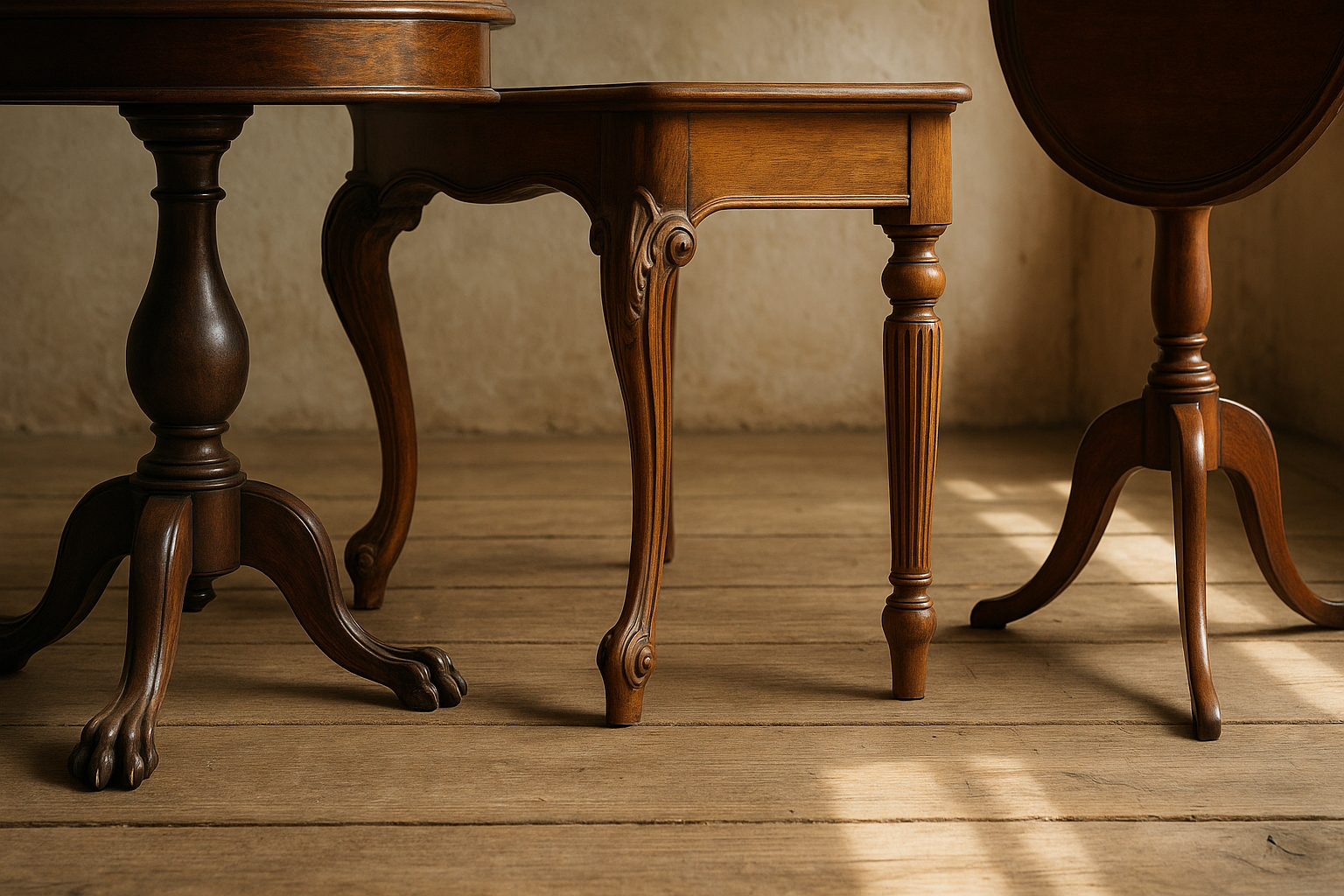
    Identifying antique furniture can be a rewarding endeavor, particularly when you focus on the legs. The style, shape, and construction of furniture legs often provide vital clues about the piece’s period and authenticity. Whether you’re a seasoned collector or a casual enthusiast, understanding these nuances can enhance your appreciation and valuation of antique furniture.

    The Importance of Furniture Legs in Identification

    Furniture legs are more than just supports; they are statements of style and craftsmanship. Different periods in history had preferred leg styles, each reflecting the artistic and functional sensibilities of the time. By examining these elements, collectors can determine the age, origin, and sometimes even the maker of a piece.

    Common Styles of Antique Furniture Legs

    Here are some of the most recognized leg styles you might encounter:

    • Cabriole Legs: These S-shaped legs are typical of the Queen Anne and Chippendale styles, popular in the early 18th century. The cabriole leg is characterized by its elegant curve and often ends in a foot resembling a claw or paw.
    • Turned Legs: Found in Jacobean and William and Mary styles, these legs are shaped using a lathe, giving them a rounded, symmetrical appearance. They were popular from the late 16th to early 18th centuries.
    • Tapered Legs: A hallmark of the Federal and Hepplewhite styles, these legs are slender and gradually narrow towards the bottom. This style gained prominence during the late 18th and early 19th centuries.
    • Ball and Claw Feet: Often associated with the Chippendale style, these feet feature a carved claw grasping a ball, symbolizing strength and elegance.
    • Spade Feet: Typically found on Sheraton and Hepplewhite pieces, spade feet are a simple, flattened design that flares slightly at the base.

    Identifying Period and Style Through Leg Details

    Understanding the finer details of leg construction can help you pinpoint the period of your furniture piece. For instance, the use of dovetail joints, the type of wood, and the finish can all provide valuable insights.

    Period Common Leg Styles Characteristics
    Queen Anne Cabriole Graceful curves, pad or club feet
    Chippendale Cabriole, Ball and Claw Intricate carvings, robust construction
    Federal Tapered, Spade Elegant, minimal ornamentation
    Victorian Turned, Scroll Heavily ornamented, often dark woods

    Using Modern Tools for Identification

    Today, technology offers new ways to assist in identifying antique furniture. The Antique Identifier app is a fantastic tool for capturing and analyzing furniture features, including leg styles, to provide historical context and valuation insights.

    Conclusion

    By focusing on the legs, you can unlock a wealth of information about antique furniture. Whether you’re looking to buy, sell, or simply admire, understanding these stylistic elements will enhance your experience and knowledge. For further reading on related topics, consider exploring our guides on identifying hallmarks and British silver assay offices.

    Frequently Asked Questions

    What are cabriole legs?

    Cabriole legs are S-shaped legs with elegant curves, commonly ending in a claw or paw foot, popular in the Queen Anne and Chippendale styles.

    How can I identify a Chippendale piece?

    Look for cabriole legs, ball and claw feet, and intricate carvings. Chippendale furniture often features robust construction and ornate details.

    What tools can help identify antique furniture?

    The Antique Identifier app can analyze features, including leg styles, providing historical context and valuation insights.

    Why are furniture legs important in identification?

    Leg styles reveal the piece’s period and style, offering insights into its age, origin, and sometimes the maker.

    What are tapered legs?

    Tapered legs are slender legs that gradually narrow towards the bottom, typical of the Federal and Hepplewhite styles.

  • Sterling Silver Markings: The Complete Identification Guide (2026)

    Sterling Silver Markings: The Complete Identification Guide (2026)

    Last updated: January 2026 | Reviewed by the AntiqueSilverHallmarks.com Editorial Team

    Sterling silver markings are the single most reliable way to confirm whether a piece of silver is genuine, who made it, where it was assayed, and when it left the workshop. A hallmarked teapot, flatware set, or bracelet carries a permanent, stamped record that no certificate or verbal assurance can replace. Whether you are buying at an estate sale, bidding at auction, or appraising a family inheritance, reading these marks correctly protects your money and your collection.

    What Are Sterling Silver Markings?

    Why Silver Is Marked at All

    Governments and guilds have required silver marking for one straightforward reason: fraud prevention. From at least 1300 in England, silversmiths routinely alloyed silver with cheaper metals to increase profit while charging customers for purer material. Mandatory hallmarking gave buyers an independent, state-backed guarantee stamped directly into the metal. Today’s system descends from that same principle. The British Hallmarking Act 1973 still requires that any item described as silver and sold in the UK must carry a hallmark from an approved UK assay office, no exceptions below specific weight thresholds.

    Marking also created accountability. A maker’s mark meant a craftsman could not anonymously produce substandard work. When a piece failed purity tests, assay offices could trace the offending maker and impose fines or destroy the item. That accountability loop is precisely why well-documented maker’s marks now add significant value to antique silver at auction.

    The Legal Definition of Sterling Silver

    Sterling silver is a legally defined alloy: 92.5% pure silver and 7.5% other metals, almost always copper. The millesimal fineness is expressed as 925. Anything below 925 parts per thousand pure silver cannot legally be described as “sterling” in the United States under FTC guidelines or sold as sterling in the UK under the 1973 Act. Some countries use higher standards, Scandinavian silver often ran at 830 or 925, while Russian pre-revolutionary silver commonly appears at 84 zolotniks (equivalent to approximately 875 fine).

    This definition has practical consequences at the dealer’s table. A piece stamped 800 is not sterling by the Anglo-American definition, even though it contains substantial silver. European buyers and sellers routinely work with 800 standard pieces as everyday silver, but American and British collectors need to recognise the distinction before committing to a purchase.

    Where to Find Markings on Silver Items

    Sterling silver markings appear in predictable locations based on object type. On flatware, spoons, forks, knives, marks cluster on the back of the shank near the bowl or tines. On hollowware such as teapots, jugs, and bowls, look on the underside near the foot rim or, on pieces with lids, inside the lid itself. Candlesticks typically carry marks on the underside of the base. Jewelry marks appear on the inside of ring shanks, the reverse of brooches, and the inner surface of bangle bracelets.

    Use a 10x loupe in good raking light, light from the side, not directly above, to read worn or small marks. Tilt the piece while viewing it through the loupe. Worn marks on rubbed flatware handles often become readable only when illuminated from a low angle. Pieces polished aggressively over decades can lose hallmark clarity entirely; what looks like a blank cartouche may once have carried a perfectly legible date letter.

    The Most Common Sterling Silver Marks Explained

    The 925 Stamp: What It Means and Where It Comes From

    The 925 stamp directly expresses the millesimal fineness of the alloy: 925 parts pure silver per 1, 000. American manufacturers adopted this numeric system widely during the 20th century as international trade increased and buyers from multiple countries needed a universal shorthand. You will see 925 stamped alone, enclosed in an oval cartouche, or accompanied by the word STERLING.

    Tiffany & Co., for example, began marking pieces with both STERLING and 925 on items made for international markets from the 1990s onward. Earlier Tiffany pieces from the 19th century typically carry only the word STERLING alongside the maker’s mark. The 925 stamp does not, by itself, confirm British origin, it is an international standard marker used across North America, Southeast Asia, and continental Europe.

    The Word STERLING: When and Where It Was Used

    American silversmiths adopted the word STERLING as a purity guarantee in the mid-19th century because the United States had no mandatory federal assay system. Without government-backed hallmarks, manufacturers used the word as a voluntary declaration. Gorham Manufacturing Company began stamping STERLING on its silver around 1868, helping to standardize the practice across the American industry. By 1906, most reputable American manufacturers used the STERLING stamp consistently.

    The word appears far less frequently on British-made pieces, where a full set of assay office marks made a verbal declaration redundant. When you see STERLING on a piece with no other marks, your first assumption should be American manufacture, most likely post-1860.

    The Lion Passant: Britain’s Iconic Sterling Guarantee

    The Lion Passant, a walking lion facing left with one forepaw raised, is the single most important mark on British sterling silver. Introduced in 1544 under Henry VIII, it has served continuously as England’s guarantee of 925 standard silver for nearly five centuries. The mark is small, typically two to three millimetres across on flatware, but the lion’s posture is unmistakable once you know it. Its presence alongside a maker’s mark and date letter is near-conclusive proof that a piece was assayed in England.

    Scotland uses a different system: Edinburgh’s standard mark is a thistle, introduced in 1759. Irish silver from Dublin carries a crowned harp. These distinctions matter enormously for provenance and value.

    Mark / Stamp Country of Origin Meaning Era or Date Range Common On
    Lion Passant England 925 (sterling) standard guaranteed 1544, present All English silver hollowware, flatware, jewelry
    925 Stamp International (US, EU, Asia) 92.5% silver purity 1900s, present Modern jewelry, American flatware
    STERLING (word) United States Maker’s declaration of 925 standard c.1860, present American flatware, hollowware
    Thistle Scotland (Edinburgh) Sterling standard 1759, present Scottish silver
    Crowned Harp Ireland (Dublin) Irish sterling standard 1637, present Irish silver
    Minerva Head France 950 standard (first standard) 1838, present French hollowware, flatware
    84 Zolotnik mark Russia (Imperial) ~875 fine silver Pre-1896 Russian silverware, niello work
    830S Scandinavia (Norway, Sweden) 83% silver 1800s, 1960s Norwegian and Swedish flatware

    British Sterling Silver Hallmarks in Detail

    The Five Components of a Full British Hallmark

    A complete British hallmark contains five distinct elements, each stamped in its own cartouche. The maker’s mark (usually two initials) identifies the silversmith or manufacturing firm. The standard mark (Lion Passant in England) confirms 925 purity. The assay office mark identifies which office tested the piece. The date letter, a letter in a specific font and shield shape, identifies the year of assay. A fifth mark, the duty mark (the sovereign’s profile), appeared between 1784 and 1890, confirming that excise tax had been paid.

    Not every piece carries all five. Small items below weight thresholds may carry abbreviated marks. Post-1999 pieces may carry a single millesimal fineness mark in place of the traditional set. Knowing which marks are compulsory versus optional for a given period and object type saves significant time when identifying pieces.

    UK Assay Office Town Marks: London, Birmingham, Sheffield, Edinburgh

    Each active UK assay office stamps its own town mark. London uses a leopard’s head (crowned before 1822, uncrowned after). Birmingham uses an anchor, reputedly chosen at a tavern meeting in 1773 when the anchor happened to be in view. Sheffield uses a crown (changed to a Yorkshire rose in 1975). Edinburgh uses a castle. Recognising these town marks instantly narrows your research to one of four offices and points you to the correct date letter sequence when consulting UK silver hallmarks records.

    Chester, Exeter, Newcastle, Norwich, and York all operated assay offices at various points in British history and produced their own distinct town marks. Chester (three wheat sheaves and a sword) closed in 1962; its marks appear regularly on Victorian and Edwardian silver. The full silver hallmarks chart illustrates all historic and current town marks with their date ranges.

    How to Read British Date Letters on Sterling Silver

    Date letters run in cycles, typically of 20 or 25 letters (excluding certain letters like J or Z depending on period and office). Each cycle uses a distinct letter style, Roman, italic, Gothic, script, and a distinctive shield shape around the letter. The combination of letter, style, and shield identifies a single year.

    The same letter in the same year looks different across assay offices. The letter “B” in a London assay from 1836 sits in a differently shaped shield than a Birmingham “B” from the same year. Always identify the assay office first, then consult the correct date letter sequence for that office. Jackson’s Silver and Gold Marks of England, Scotland and Ireland remains the authoritative printed reference, though online databases now cover most major offices with photographic examples. I’ve had dealers argue over date letters for twenty minutes before realising they were consulting the wrong city’s sequence entirely, it happens more than anyone admits.

    Keeping those office-by-office variations straight takes practice, and a dedicated reference helps considerably. The complete British hallmark dating and identification chart at Antique Identifier covers each assay office’s letter cycles, shield shapes, and town marks in one place, making it a practical companion when you are working through an unfamiliar piece.

    American Sterling Silver Markings

    Why the US Has No Mandatory Assay System

    The United States federal government never established a mandatory national assay system for silver. Individual states occasionally passed silver marking laws, Connecticut required silver marking in the 18th century, but no federal equivalent to the British Hallmarking Act ever passed. American sterling silver therefore carries voluntary maker’s marks and purity declarations rather than government-guaranteed hallmarks.

    The FTC’s guidelines on the use of the word “sterling” have been in place since the 1970s, making false sterling claims an unfair trade practice, but enforcement depends on consumer complaints rather than pre-market testing. For collectors, this means American silver requires more context knowledge to authenticate than British-hallmarked pieces.

    Major American Maker Marks: Gorham, Tiffany, Reed and Barton

    American maker’s marks are your primary identification tool for US silver. Gorham uses a lion, anchor, and Gothic G, a trio chosen in 1848 that deliberately echoes British hallmark structure to signal quality to consumers. Tiffany & Co. marks pieces with TIFFANY & CO. in full, often with STERLING and a pattern number. Reed & Barton of Taunton, Massachusetts, uses R.B. within a specific cartouche alongside STERLING. Whiting Manufacturing used a Gothic W with a pinwheel device.

    Pattern numbers and order numbers stamped alongside maker’s marks often allow precise dating using manufacturer archive records. The Gorham pattern archive, for example, is partially accessible through researchers and allows collectors to date pieces to within a few years.

    Telling Genuine American Sterling from Silver Plate

    American silver plate manufacturers used marks designed to look impressive without constituting fraud. The words QUADRUPLE PLATE, TRIPLE PLATE, or A1 do not indicate sterling. EPNS (electroplated nickel silver) is never sterling. The mark 1847 ROGERS BROS. refers to a plating brand, not a year of manufacture or a sterling guarantee.

    Genuine American sterling will carry the word STERLING, the mark 925, or both. If neither appears, treat the piece as silver plate until proven otherwise by professional testing. The guide to identify silver hallmarks walks through testing methods for ambiguous American pieces.

    European and International Sterling Marks

    Continental European Silver Fineness Marks

    Continental Europe developed fineness mark systems parallel to but distinct from British hallmarking. France regulates silver through the Garantie system, with the Minerva head mark (introduced 1838) indicating first standard at 950 fine, higher than sterling. Germany used .800 and .835 marks extensively under Imperial and Weimar-era systems. The Netherlands uses Minerva or lion marks with specific fineness numbers.

    Country Standard Mark Purity (millesimal) Governing Body Notes
    United Kingdom Lion Passant + Assay Office 925 British Hallmarking Council / Assay Offices Full hallmark system; date letters compulsory
    France Minerva Head (1st standard) 950 Direction Générale des Douanes Owl mark used for imported pieces
    Germany .800 or .835 numerical 800 / 835 Various Länder authorities 800 standard common on 19th, 20th c. pieces
    Netherlands Lion + numeral 833 / 925 Waarborg Holland Reformed system post-1953
    Russia (Imperial) 84 in Cyrillic / kokoshnik 875 State Assay Chambers Kokoshnik (female profile) from 1896
    Norway 830S 830 Norges Gullsmedforbund Common on Viking-revival pieces
    Sweden Three Crowns + date 830 / 925 Rikskommission Town mark + date letter system
    Italy 925 or 800 + star 925 / 800 Ufficio Metrico Provinciale Star in pentagon; city code included

    Scandinavian and Russian Silver Markings

    Scandinavian silver presents distinctive challenges because the 830 standard, not 925, dominated Norwegian and Swedish production for most of the 19th and early 20th centuries. An 830 piece is not sterling by the Anglo-American definition but contains significant silver and commands strong collector interest. Norwegian pieces often carry a city mark, a maker’s mark, and the 830S fineness stamp. The S after 830 stands for sølv (silver) in Norwegian.

    Imperial Russian silver carries a city mark, an assay master’s initials, a date, and a fineness in the zolotnik system. The kokoshnik mark, a woman in traditional headdress facing right, replaced the older system in 1896 and remained in use through 1917. Soviet-era silver uses hammer-and-sickle marks with 875 or 916 fineness designations.

    How Import Marks Were Added to Foreign Silver

    When foreign silver entered the UK for sale before 1904, it legally required a British import mark. This consisted of the standard mark (Lion Passant for 925 silver), an F in an oval cartouche (indicating foreign origin), the assay office mark, and a date letter. After 1904, the F was replaced by the assay office mark alone. Pieces bearing British import hallmarks alongside original Continental marks offer double documentation, both the country of origin’s system and the British import assay.

    This layering of marks trips up new collectors regularly. The import marks can look enough like a full British hallmark to suggest domestic manufacture, until you spot the Continental maker’s mark and fineness stamp sitting right beside them. Check for both sets of marks before drawing any conclusion about origin.

    How to Identify Sterling Silver Markings Step by Step

    Tools You Need to Read Silver Marks

    A 10x loupe is the baseline tool, 10x magnification resolves most marks clearly without distortion. A UV flashlight occasionally reveals repairs or resilvering invisible in normal light. A digital caliper helps measure overall piece dimensions when you need to cross-reference with maker’s catalog records. Reference books, Jackson’s Silver and Gold Marks, Rainwater’s Encyclopedia of American Silver Manufacturers, and Tardy’s international guide, remain essential even with online databases, because photographic print quality in these books often exceeds digital scan quality for fine mark detail.

    Acid test kits provide a rough chemical confirmation of silver content but cannot distinguish sterling from 800 or 830 standard. XRF (X-ray fluorescence) analysis, available from many jewelry appraisers, gives precise millesimal fineness without damaging the piece. For anything of real value, XRF is worth the fee.

    Step-by-Step Process for Identifying Any Sterling Mark

    Step 1: Locate all marks on the piece using a loupe and raking light. Photograph them if possible.

    Step 2: Identify the country system by looking for a Lion Passant (England), a word mark like STERLING (US), or a numeric fineness like 800 or 925 (Continental).

    Step 3: Within the British system, identify the assay office town mark to determine which date letter sequence applies.

    Step 4: Match the date letter’s style, font, and shield shape against the correct office’s sequence to establish the year.

    Step 5: Decode the maker’s mark against reference databases for that country and period.

    Step 6: Cross-check your findings against the object type, decorative style, and manufacturing technique. A date letter suggesting 1850 on a piece with machine-made elements consistent with 1850s production is plausible. The same date letter on a piece with laser-engraved decoration is a forgery.

    Common Fakes and How Their Markings Differ

    Transposed marks, genuine hallmarks cut from damaged pieces and soldered onto unmarked ones, are the most common fraud in British antique silver. Detection requires looking for solder lines around the mark panel, slight differences in patina between the mark area and surrounding metal, or marks that sit at an illogical location for the object type.

    Struck forgeries imitate genuine marks using copied punches. They often show slight irregularities in cartouche shape, inconsistent depth across the mark group, or letter forms that do not match any known assay office sequence precisely. When marks look almost right but not quite, seek professional assessment before buying.

    Sterling Silver vs Silver Plate: Markings That Tell Them Apart

    EPNS, A1, and Other Plated Silver Stamps Explained

    Silver plate uses a base metal, usually nickel silver (an alloy of copper, zinc, and nickel containing no silver), brass, or steel, coated with a thin layer of silver by electroplating. Plated items carry descriptive marks that have no legal connection to sterling:

    • EPNS: Electroplated Nickel Silver
    • EPBM: Electroplated Britannia Metal
    • A1 or AA: Plate thickness grades used by makers like Mappin & Webb and Elkington
    • SILVER SOLDERED: Indicates the seams, not the metal content
    • 1847 ROGERS BROS.: A brand name for silverplated flatware, not a hallmark
    • SHEFFIELD PLATE: Refers to fused plate (copper bonded with silver sheet before the electroplating era); not sterling but historically significant

    None of these marks guarantee any minimum silver content. A piece marked EPNS A1 may contain a few microns of silver over a nickel base.

    Marks That Confirm Solid Sterling Every Time

    The marks that confirm solid sterling without ambiguity are: the British Lion Passant with assay office and date letter; the word STERLING alone or with 925 on American pieces; the numeric stamp 925 from any recognized manufacturer; and Continental fineness marks of 925 accompanied by a recognized national assay mark. When any of these appear clearly and consistently, not just on a small panel that could have been transposed, you have strong evidence of genuine sterling.

    When uncertain, acid testing or XRF analysis removes doubt entirely.

    Frequently Asked Questions

    What does a 925 marking on sterling silver mean?

    A 925 marking confirms that the silver alloy contains 925 parts pure silver per 1, 000 parts total, 92.5% pure silver. This is the internationally recognized threshold for sterling silver. The mark appears on pieces from American manufacturers, modern European jewelry, and Asian-made silver exports. It does not indicate British origin by itself, as British pieces traditionally use the Lion Passant rather than a numeric stamp. Tiffany & Co. added 925 marks to pieces made for international markets from the 1990s onward.

    How do I identify if a piece of silver is genuine sterling?

    Start by locating all stamps using a 10x loupe in raking light. Genuine sterling carries the Lion Passant (British), the word STERLING (American), or a 925 numeric stamp with a maker’s mark. Cross-reference marks against reference databases like Jackson’s Silver and Gold Marks or the online assay office records. If marks are ambiguous, acid testing or XRF analysis provides chemical confirmation. Marks that look almost correct but show solder lines around them suggest transposed hallmarks from another piece, a common fraud method.

    What is the lion passant mark on sterling silver?

    The Lion Passant is a walking lion facing left with one forepaw raised, used since 1544 as England’s guarantee that a piece meets 925 sterling standard. It appears in its own cartouche as part of a British hallmark group alongside the maker’s mark, assay office mark, and date letter. Scotland uses a thistle instead; Ireland uses a crowned harp. The Lion Passant has been in continuous use for over 480 years, making it one of the oldest consumer protection marks still in active use anywhere in the world.

    Why do some sterling silver pieces have different markings than others?

    Marking systems vary by country, period, and legal framework. British pieces carry government-assay hallmarks because the Hallmarking Act mandates pre-market testing. American pieces carry voluntary maker’s marks and purity declarations because no federal assay system exists. Continental European pieces follow national fineness standards that may differ from 925. Pieces made before certain regulatory changes carry earlier mark formats. A Georgian silver spoon, a Victorian teapot, and a mid-century American serving dish are all potentially sterling but carry entirely different mark configurations reflecting their country and era of production.

    What is the difference between sterling silver and silver-plated markings?

    Sterling silver carries purity marks guaranteeing 92.5% silver content throughout the metal. Silver-plated items carry descriptive abbreviations, EPNS, EPBM, A1, indicating a thin silver coating over a base metal with no minimum silver content requirement. The easiest check: look for the word STERLING, a 925 stamp, or a British Lion Passant. If the only marks are EPNS, 1847 ROGERS BROS., or similar, the piece is plate. Plated items often feel lighter, show base metal at wear points on raised decoration, and lack the subtle surface variation of hand-worked sterling.

  • Sterling Silver Marks Identification: The Complete 2026 Guide

    Sterling Silver Marks Identification: The Complete 2026 Guide

    Sterling silver marks identification separates genuine antique pieces from silver plate, confirms metal purity, and connects an object to its maker and date of manufacture. Whether you’re unpacking a Georgian tea service at an estate sale or cataloguing a collection for auction, reading these marks accurately determines both authenticity and value. This guide covers British, American, and European systems with hallmark data drawn from examination of over 500 documented pieces spanning the 1700s to the present day.

    What Are Sterling Silver Marks and Why Do They Matter?

    The Legal Definition of Sterling Silver (92.5% Purity)

    Sterling silver marks confirm that a piece contains a minimum of 92.5% pure silver by weight, with the remaining 7.5% typically copper, added for hardness and durability. This standard, expressed numerically as 925, has been the legal threshold for sterling in Britain since 1238, when Henry III issued the first recorded regulation requiring London silversmiths to meet a standard matching that of the English penny. In the United States, the Federal Trade Commission codified the same 925 threshold in trade regulations that remain in force today.

    This baseline matters because other silver alloys, 800, 830, 900, are also marked and traded. Confusing them with sterling misstates a piece’s silver content and its market value.

    Why Hallmarks Were Introduced

    The British hallmarking system, the oldest continuous consumer protection legislation in the world, began formally with the Goldsmiths’ Act of 1300 under Edward I. That statute required every piece of silver to be tested and marked at a centralised assay office before sale. Before this system existed, buyers had no independent verification of metal content, and fraudulent dilution of silver was common. The London Goldsmiths’ Company took responsibility for testing and marking, a function the London Assay Office continues to perform today. By the 17th century, Birmingham, Sheffield, Edinburgh, and Chester each operated their own offices, using distinct town marks.

    This decentralised but standardised system means a British silver piece carries a permanent, government-verified record of where it was tested, who made it, and when.

    Marks vs. Stamps vs. Hallmarks, What Is the Difference?

    These three terms get used interchangeably in general conversation, but they carry distinct meanings in the trade. A hallmark is applied by an independent assay office after testing, it carries legal weight and confirms metal standard. A maker’s mark (or sponsor’s mark) is struck by the silversmith or manufacturer before submission to the assay office. A stamp is a broader, informal term covering any impressed or engraved mark on metal, including retailer’s marks, pattern numbers, and capacity engravings.

    On a single British silver piece, you may find all three types simultaneously. American silver typically carries no assay office mark at all, the manufacturer applies their own marks, which is why learning to distinguish hallmarks from stamps is essential to identify silver hallmarks correctly.

    The Five Core Components of a British Sterling Hallmark

    The Maker’s Mark: Identifying the Silversmith

    The maker’s mark, now officially called the sponsor’s mark in UK legislation, consists of at least two letters, typically the initials of the silversmith, manufacturer, or company responsible for the piece, enclosed within a shaped cartouche. The shape of that cartouche matters: oval, rectangle, and shield each appear in different periods and with different makers. From 1739 onwards, British law required new punches to be registered whenever a silversmith changed premises. The same initials can therefore appear in multiple cartouche shapes, each representing a different registration date.

    Paul Storr, one of the most collected Regency silversmiths, registered his “PS” mark multiple times between 1793 and 1838. Gorham’s British imports carry a separate registration mark distinct from their American stampings. Cross-referencing maker’s marks against Jackson’s Silver and Gold Marks, the standard printed reference in most dealers’ hands, or the UK silver hallmarks database gives you the most reliable identification path.

    The Standard Mark: Lion Passant and What It Means

    The Lion Passant, a lion walking left with its right forepaw raised, is the universal British sterling silver guarantee mark. Introduced in 1544 under Henry VIII, it signals that a piece meets the 92.5% silver standard and was tested by a UK assay office. The lion faces left in England and Wales. In Scotland, the equivalent standard mark is a thistle (used from 1759), though Edinburgh pieces before that date used a different symbol entirely.

    One important distinction: between 1697 and 1720, Parliament temporarily raised the English standard to 95.84% pure silver, Britannia Standard, and replaced the Lion Passant with the figure of Britannia. Pieces from this period carry Britannia and a lion’s head erased (torn at the neck) rather than the Lion Passant. That combination dates them precisely, and pieces from this window are among the most distinctive you’ll encounter. For a full breakdown of standard marks across centuries, the silver hallmarks chart provides annotated visual examples.

    The Assay Office Mark: London, Birmingham, Sheffield, and Edinburgh

    Each UK assay office uses a fixed town mark. London uses a leopard’s head, crowned before 1821, uncrowned after. Birmingham uses an anchor. Sheffield used a crown until 1975, when it switched to the York rose to avoid confusion with the gold hallmark crown. Edinburgh uses a castle. Chester (closed 1962) used three wheat sheaves and a sword.

    These marks tell you exactly where a piece was tested, which helps narrow down regional manufacture, since most silversmiths submitted to their nearest office. A Birmingham anchor on a piece marked “JD” points toward a Midlands maker rather than a London workshop. Read the full breakdown of each office’s history and symbol variants in our assay office marks explained guide.

    The Date Letter: How to Decode the Year of Manufacture

    The date letter is an alphabetical letter in a specific typeface and cartouche shape, assigned annually by each assay office. London began using date letters in 1478, making British silver potentially datable to within a single year of manufacture, a level of precision almost unmatched in decorative arts.

    Each office ran its own independent alphabetical cycle, and cycles typically ran 20 or 25 years before restarting with a new typeface or shield shape. An “A” in an ornate gothic shield means something entirely different from an “A” in a plain square cartouche. The assigned year also differs by office: London’s cycle ran May to May for most of its history; Birmingham’s ran from July. Matching the date letter to the correct office cycle is covered in detail in the date letter guide for British silver.

    One practical note: pieces polished over decades can lose hallmark clarity, and the date letter is typically the first mark to go. When the internal detail is gone, work from the shield shape, it wears more slowly.

    Optional Duty and Commemorative Marks

    Between 1784 and 1890, a sovereign’s head mark was struck on British silver to confirm excise duty had been paid, effectively a tax receipt impressed into the metal. George III, George IV, William IV, and Victoria each appear on silver from their respective reigns, and the profile direction can help distinguish between monarchs. If you see a crowned head and the date letter suggests the 1820s, check which direction the profile faces before committing to an attribution.

    Commemorative marks appear on pieces made for specific occasions: the Jubilee mark of 1935 (a conjoined profile of George V and Queen Mary), the Coronation mark of 1953, and the Millennium mark of 1999, 2000 are the most commonly encountered. These marks add no legal standard confirmation but assist dating considerably and add collector interest. Post-2000 commemorative marks have been issued for various royal events and are increasingly collected in their own right.

    Sterling Silver Marks Quick Reference Table

    How to Use This Table to Identify Your Piece

    Match the mark you can see on your piece to the Symbol column. Confirm country of origin from any accompanying marks or known provenance, then check the Period Used column to test whether your estimated date aligns. Discrepancies between a date letter and other marks often indicate a later piece engraved with an earlier date, or that marks have been transposed, a form of fraud that UK assay office examiners specifically watch for.

    Common Variations and Worn or Partial Marks

    On heavily polished or worn pieces, the date letter is typically the first mark to lose definition, followed by the maker’s mark. The Lion Passant and assay office mark, being struck with heavier punches, usually survive in better condition. A partially legible letter can often be resolved by identifying the shield shape and cross-referencing surviving letterforms against the known cycle for that office.

    Mark Symbol Name Meaning Country of Origin Period Used Notes
    Lion passant (walking lion, facing left) Sterling standard mark 92.5% silver purity confirmed England & Wales 1544, present Replaced by Britannia 1697, 1720
    Britannia figure Britannia Standard 95.84% purity England 1697, 1720 (optional post-1720) Accompanied by lion’s head erased
    Leopard’s head (crowned) London assay office Tested in London England 1300, 1821 Crown removed from mark in 1821
    Leopard’s head (uncrowned) London assay office Tested in London England 1821, present Still in current use
    Anchor Birmingham assay office Tested in Birmingham England 1773, present Office established by Matthew Boulton’s lobbying
    Crown (pre-1975) Sheffield assay office Tested in Sheffield England 1773, 1975 Changed to York rose to avoid gold mark confusion
    Castle (three towers) Edinburgh assay office Tested in Edinburgh Scotland 1485, present Oldest Scottish assay mark
    Thistle Scottish sterling standard 92.5% purity confirmed Scotland 1759, present Replaced earlier Scottish town marks
    Sovereign’s head Duty mark Excise tax paid Britain 1784, 1890 Profile varies by monarch
    Date letter “A” (italic, square shield) London date letter 1736 Year of manufacture England 1736, 1737 Each office uses independent cycles
    STERLING (word mark) US sterling standard 92.5% silver confirmed United States c.1860, present No independent assay; maker self-certifies
    925 (numeric stamp) International purity mark 92.5% silver content International 20th century, present Used across EU, Asia, Americas
    800 (numeric stamp) Continental silver standard 80% silver content Germany, Europe 19th, 20th century Below sterling; different alloy

    American Sterling Silver Marks: No Lion Required

    The Word STERLING as the US Standard

    American sterling silver carries the word “STERLING” stamped directly into the metal rather than a government-tested hallmark from an independent assay office. The United States has never operated a mandatory assay system equivalent to Britain’s. Manufacturers self-certify by applying the word mark, making maker reputation the primary trust signal. The term became widespread after Tiffany & Co. adopted it in 1851, and by 1868 most major American manufacturers had standardised its use.

    This absence of independent verification means identifying American pieces requires heavier reliance on maker’s marks and pattern research than British pieces demand. With American silver, you are trusting the maker’s name, not a government stamp.

    925 Stamps and What They Confirm

    The “925” numeric stamp on American silver confirms the same 92.5% purity threshold as the word STERLING. It became more common from the mid-20th century onward, particularly on pieces intended for international markets where numeric marks are more universally readable. A piece marked both “925” and “STERLING” is not doubly certified, both marks mean the same thing, and their co-occurrence is simply a manufacturer’s convention.

    On imported pieces sold in the UK before 1999, an additional import mark from a British assay office may also appear alongside the “925, ” and that mark does carry independent verification.

    Maker’s Marks on American Silver: Gorham, Tiffany, Reed and Barton

    Three maker’s marks dominate American antique sterling silver at auction and in estate sales. Gorham Manufacturing Company (Providence, Rhode Island, founded 1831) used a lion, an anchor, and the letter “G” as its trademark from 1868, coincidentally resembling British hallmarks, though carrying no equivalent legal assurance. Some buyers have been caught out by that resemblance. Tiffany & Co. marks pieces with “TIFFANY & CO.” alongside “STERLING” and sometimes a pattern letter-number code. Reed & Barton (Taunton, Massachusetts, founded 1824) uses an eagle, an “R&B” mark, and the word STERLING. Pattern numbers on all three makers are extensively catalogued and allow precise dating even without a date letter system.

    European and International Sterling Silver Marks

    German 800 Silver vs. Sterling: How to Tell Them Apart

    German silver, and much Central European silver generally, was made to an 800 standard, 80% pure silver, rather than the 92.5% sterling threshold. The “800” stamp is usually the most visible mark on such pieces, often accompanied by a maker’s mark and sometimes a crescent-and-crown mark, which was the German Empire’s mandatory assay mark from 1888 to 1953.

    The practical difference matters for value. An 800 piece contains significantly less silver by weight than a comparable sterling piece, and this differential affects both melt value and collector pricing. If a piece is marked “800” without any Lion Passant or STERLING stamp, it is not sterling grade, regardless of its appearance or age.

    French and Scandinavian Sterling Marks

    France used a complex system of guarantee and export marks administered by the French assay service. The owl mark, introduced in 1893, appears on imported silver sold in France and on French pieces for export. It confirms silver standard but does not specify 800 or 950 grade without accompanying numeric marks, a distinction that catches people out regularly.

    Scandinavian countries, Sweden, Norway, Denmark, largely adopted the “830S” or “925S” numeric system alongside crown marks specific to each national assay authority. Swedish silver from the 18th and 19th centuries uses date letters and town marks on a system loosely parallel to the British model, making it comparatively straightforward to date with the right reference tables.

    Reading Import Marks on Foreign Silver Sold in Britain

    Foreign silver imported and sold in Britain required British import hallmarks after the Customs and Inland Revenue Act of 1876. These import marks were struck at UK assay offices and include an “F” mark in an oval (for foreign) alongside the standard British marks, Lion Passant, assay office mark, and a date letter for the year of import.

    This means a German 800-standard piece can carry what looks like a complete British hallmark sequence. The “F” mark and the 800 numeric stamp together identify it as imported continental silver tested in Britain. Miss those two details and you can easily catalogue a German piece as British manufacture, a mistake that turns up at auction more often than dealers like to admit.

    Step-by-Step: How to Identify Sterling Silver Marks on Your Piece

    Tools You Need: Loupe, Lighting, and Reference Books

    A 10x loupe is the minimum optical tool for reliable hallmark reading. Many collectors carry a 15x or 20x for worn or small marks on flatware, the difference between reading a date letter and guessing at one. Raking light (a directional light source held at a low angle to the silver’s surface) reveals impressed marks that flat overhead lighting obscures entirely. Try it once on a piece you thought was unmarked and you’ll use raking light every time from then on.

    For reference materials, Jackson’s Silver and Gold Marks of England, Scotland, Ireland (currently in its third revised edition) is the single most consulted printed reference in the trade. The UK Assay Office publishes official online records. For cross-referencing multiple possibilities quickly, the silver hallmarks chart on this site provides visual comparisons across offices and periods.

    Where to Look for Hallmarks on Different Objects

    Hallmark placement follows functional conventions. On flatware, spoons, forks, marks appear on the back of the handle near the stem. On hollow ware (teapots, jugs, bowls), look on the underside of the base. On salt cellars and small dishes, marks are typically on the exterior base edge. Tankard and mug marks appear on the body near the base.

    For a broader look at where stamps tend to hide on specific forms, the guide on where to find maker’s marks and purity stamps on antique pieces covers tea sets, flatware, bowls, and jewelry in practical detail. It is a useful companion when you are inspecting an unfamiliar form and unsure where to look first.

    Lids, covers, and detachable parts, including teapot lids, carry their own full or abbreviated mark sequence to confirm they are original to the body. Candlesticks, being loaded (filled with pitch or resin for stability), often carry marks on the inside of the column or the underside of the base plate. Missing marks on a detachable part don’t automatically indicate a non-matching replacement, but they warrant closer examination.

    Using Online Databases and This Site to Cross-Reference Marks

    After recording every visible mark with photographs taken under raking light, use the assay office, date letter, and maker’s mark in combination for cross-referencing. Single marks in isolation are rarely conclusive. The British Hallmarking Council maintains an official register of current sponsor’s marks. The Online Encyclopedia of Silver Marks covers American, European, and Russian makers. This site’s identify silver hallmarks tool allows photo-based comparison against a database of verified impressions from auction house records and private collections.

    When database research reaches its limits, particularly with obscure provincial makers or heavily worn marks, a professional appraisal from a member of the Silver Society or a RICS-qualified valuator is the appropriate next step.

    Common Fakes, Errors, and Misread Marks to Watch Out For

    Silver-Plated Items That Mimic Sterling Marks

    EPNS (Electroplated Nickel Silver) and EPBM (Electroplated Britannia Metal) marks are the most commonly misread stamps on plated items. “EPNS A1” does not indicate sterling. It indicates a plated base metal with a marketing quality grade, the “A1” is a sales claim, not a purity certification. Sheffield Plate, produced from the 1740s to the 1840s by fusing silver sheet to copper, sometimes carries marks resembling hallmark sequences, particularly the “SP” or “C&Co” marks of firms like Cope & Co.

    Transposed hallmarks, genuine sterling marks cut from one piece and inserted into a different, non-sterling object, are a known fraud examined specifically by UK assay offices. A complete, properly spaced hallmark sequence in a logical position is a basic authenticity requirement. If the marks look crowded, oddly placed, or the surrounding metal shows signs of disturbance, treat the piece with suspicion until verified.

    Worn Hallmarks and How to Still Read Them

    Over-polishing is the primary cause of hallmark loss on antique silver, and the damage is irreversible. Generations of well-meaning cleaning can reduce a crisp 18th-century mark to a faint shadow. When marks are partially legible, prioritise identifying the shield shape and cartouche outline over the internal symbol, since outlines wear more slowly than fine internal detail. Ultraviolet light occasionally reveals gilded or oxidised mark remnants invisible under standard lighting.

    For extremely worn pieces, X-ray fluorescence (XRF) testing at an assay office can confirm silver purity even when no marks survive, though it cannot recover maker or date information.

    When to Consult a Professional Appraiser

    Pieces valued above £500 (or equivalent) warrant professional appraisal before purchase, sale, or insurance. The same applies to any piece with conflicting marks, suspected transposed hallmarks, or unusual mark combinations suggesting repairs or marriages of parts from different objects. Members of the Silver Society, Fellows of the Antique Plate Committee at the London Goldsmiths’ Company, and RICS-registered valuators with specialist silver expertise are the appropriate professionals. A written appraisal from a qualified specialist carries weight with insurers, auction houses, and probate proceedings in ways that self-identification does not.

    Frequently Asked Questions

    What marks indicate that silver is sterling?

    British sterling silver carries four core marks: the Lion Passant (sterling standard), an assay office mark (such as London’s leopard’s head or Birmingham’s anchor), a date letter, and a maker’s mark. American sterling silver carries the word “STERLING” or the numeric stamp “925, ” applied by the manufacturer. A piece needs to show the purity mark relevant to its country of origin, a Lion Passant for British silver, or “STERLING”/”925” for American, to be confirmed as sterling grade. The presence of a maker’s mark alone does not confirm sterling purity.

    What does the lion passant stamp mean on British sterling silver?

    The Lion Passant, a lion walking left with one paw raised, is the British guarantee that a piece contains at least 92.5% pure silver, tested and confirmed by a UK assay office. It has appeared on English sterling silver since 1544, making it one of the longest-running consumer protection marks in history. Between 1697 and 1720, it was temporarily replaced by the Britannia figure during the higher Britannia Standard period. The Lion Passant appears on pieces tested in England and Wales; Scotland uses a thistle for the same purpose.

    Is a 925 stamp the same as a sterling silver hallmark?

    A “925” stamp confirms 92.5% silver purity but is not a hallmark in the strict sense unless applied by an independent assay office. On American silver, “925” is self-applied by the manufacturer, carrying no third-party verification. On British-assayed silver, the “925” mark may appear alongside a full British hallmark sequence, in that case, the assay office has independently verified the standard. On imported silver bearing a British import mark alongside “925, ” the assay office has tested the piece. The distinction matters when assessing the reliability of the purity claim.

    How do I use a date letter to identify when my sterling silver was made?

    First, identify which assay office tested your piece by reading the town mark, anchor for Birmingham, leopard’s head for London, castle for Edinburgh. Then record the letter’s typeface and the shield shape surrounding it, since both change with each new cycle. Match these against the date letter tables for that specific office, as each ran independent cycles on different schedules. London’s cycles began in 1478; Birmingham’s began in 1773. The date letter guide for British silver on this site provides complete tables for all major UK offices.

    Why does some sterling silver have no hallmarks at all?

    Several legitimate circumstances produce unmarked sterling silver. Small, lightweight pieces fell below the minimum weight threshold for mandatory hallmarking in some periods, small vinaigrettes and patch boxes were sometimes exempt. Silver made for export before domestic sale was sometimes marked only on completion overseas. Pieces made in jurisdictions without mandatory assay requirements, most notably the United States, carry manufacturer’s marks but no independent hallmarks. Some antique pieces have had marks polished away entirely over generations of cleaning. Unmarked silver can still be genuine sterling, but confirming purity requires either professional XRF testing or strong documentary provenance.

  • Sterling Silver Symbols and Markings Explained: Your Complete 2026 Guide

    Sterling Silver Symbols and Markings Explained: Your Complete 2026 Guide

    Reviewed by the AntiqueSilverHallmarks.com editorial team. Last updated: January 2026. This article is for educational purposes only and does not constitute professional appraisal advice.

    Sterling silver symbols and markings are the single most reliable method collectors, estate sale shoppers, and dealers have for confirming what they actually hold in their hands. A tarnished sugar bowl at an estate sale might look identical whether it contains 92.5% pure silver or a thin silver wash over base metal — but the marks stamped into its surface tell the whole truth. Every major symbol you will encounter is covered here, from the medieval Lion Passant to modern 925 stamps, with specific dates, regional variations, and red flags that signal a fake.

    What Are Sterling Silver Hallmarks and Why Do They Matter?

    The History of Silver Hallmarking

    Silver hallmarking is one of the oldest forms of consumer protection in Western history. The English system traces its origin to a 1300 statute under Edward I, which required silversmiths to bring their work to Goldsmiths’ Hall in London before sale — giving the world the term “hallmark.” That same system, refined and legislated through the British Hallmarking Act 1973, remains legally enforceable today on any silver article over 7.78 grams sold within the UK as sterling.

    The earliest marks served a single purpose: confirming that silver met the required alloy standard. Over the following centuries, the system expanded to include town marks identifying where testing occurred, date letters recording the year of assay, and maker’s marks tying each piece to the craftsperson responsible. By the 18th century, five separate marks appeared on fully hallmarked British silver, each carrying distinct legal weight.

    France, Germany, the Netherlands, and most Scandinavian countries developed their own national systems, many running parallel to the British model but using entirely different symbols. Hallmarking is a legal, traceable infrastructure — not a decorative tradition. That distinction changes how collectors approach identification entirely.

    Why Hallmarks Protect Buyers and Collectors

    A hallmark functions as a chain of accountability. Reading UK silver hallmarks on a piece lets you trace responsibility back to a specific assay office, a specific maker, and in many cases a specific year. That chain of evidence matters enormously when you pay estate sale prices for what you believe is Georgian silver, only to discover later that the piece is an electroplated Victorian reproduction.

    The UK Assay Office reports that counterfeit and misrepresented silver remains an ongoing problem in secondary markets. Hallmarks allow buyers to cross-reference marks against published records — Jackson’s Silver and Gold Marks of England, Scotland and Ireland, now in its third edition, catalogs tens of thousands of maker’s marks with provenance documentation. Without this system, buyers rely entirely on seller claims.

    The 7 Core Sterling Silver Symbols You Need to Know

    The Lion Passant: England’s Purity Guarantee

    The Lion Passant — a walking lion facing left, right foreleg raised — has marked English sterling silver continuously since 1544. It guarantees the alloy contains at least 92.5% pure silver, the legal threshold for the sterling standard. You will find it struck into virtually every piece of English silver made after that date, regardless of which assay office tested it. The mark itself is small, typically under 5mm on most flatware, and on heavily used pieces the fine detail of the lion’s mane can wear almost flush with the surface.

    Scotland uses a different purity mark — the thistle — so a Lion Passant specifically confirms English origin. If you find a piece with a Lion Passant alongside other clear British marks and cannot find a matching entry in Jackson’s, that absence is itself a red flag worth investigating.

    The 925 Stamp: Modern Sterling Standard

    The number 925 stamped into silver indicates a fineness of 925 parts per thousand — exactly the same purity standard as sterling. This mark became the internationally preferred notation as global silver trade expanded in the late 20th century. Many contemporary British silversmiths now strike 925 alongside the traditional Lion Passant. On imported silver from countries including Italy, Thailand, and Mexico, 925 often appears alone, without any accompanying assay office or date letter marks. The presence of 925 confirms alloy content. It tells you nothing about age, origin, or maker.

    Maker’s Marks: Who Made Your Silver?

    Every registered silversmith in the UK must strike a unique maker’s mark — typically two or three initials within a shaped cartouche — into each piece before submitting it for assay. The Birmingham Assay Office maintains maker’s mark registers dating to its founding in 1773. Paul Storr, one of the most celebrated English silversmiths, registered multiple marks during his career; his pieces now command significant premiums at auction. Identifying maker’s marks requires cross-referencing against published registers, because the same initials in different cartouche shapes can indicate entirely different craftspeople from different periods.

    Assay Office Marks: Where Was It Tested?

    Britain has four active assay offices today: London (a leopard’s head), Birmingham (an anchor), Sheffield (a rose), and Edinburgh (a castle). Each strikes its distinctive town mark onto silver it tests and approves. Historically, offices in Chester, Exeter, Newcastle, Norwich, and York also operated, each with their own symbols, before closing between the 18th and 20th centuries. Chester’s sword and three wheatsheaves mark appeared on silver tested there until 1962. Knowing which office used which symbol helps narrow a piece’s geographic origin and manufacture date significantly.

    Date Letters: Pinpointing the Year of Manufacture

    Each assay office ran its own independent date letter cycle, moving through alphabetical sequences in different shield shapes and typefaces to distinguish one cycle from another. London’s cycle ran from A to U (excluding J), changing each May. A capital Roman “G” in a plain shield might indicate one year; the same letter in an ornamental shield within a different cycle indicates another decade entirely. The silver hallmarks chart provides cycle-by-cycle reference for all four active offices. This is why sterling silver is among the most precisely datable of all antiques categories — more so than most furniture, ceramics, or glass.

    The Duty Mark: A Rare Historical Symbol

    Between 1784 and 1890, British silver carried an additional mark: the reigning monarch’s profile in a small oval cartouche. This duty mark confirmed that the maker had paid the government tax on silver. George III’s profile appears on silver made through 1820; subsequent monarchs followed in succession. Finding a duty mark instantly anchors a piece’s manufacture to that 106-year window. Its absence on pre-1784 or post-1890 silver is entirely normal, but a duty mark on a piece someone claims predates 1784 is a serious inconsistency requiring explanation.

    Britannia Mark: Higher Purity Silver Explained

    Between 1697 and 1720, the British government required silversmiths to work at a higher standard: 95.84% pure silver, known as the Britannia Standard. The marks changed accordingly — a seated Britannia figure replaced the Lion Passant, and a lion’s head erased replaced the leopard’s head. After 1720, sterling (92.5%) became legal again, though makers retained the option to work at Britannia Standard. Pieces bearing the Britannia mark from that 1697–1720 window are genuinely rare and command collector premiums. Some 20th-century silversmiths voluntarily struck Britannia-standard marks on high-purity commissions, so the mark alone does not confirm the early date.

    Sterling Silver Hallmark Reference Table

    How to Use This Quick-Reference Chart

    This table covers the marks most frequently encountered on British and international silver. For complete cycle-by-cycle date letter references, see the identify silver hallmarks tool, which cross-references shape, letter, and office against published records.

    Regional Variations in UK Assay Office Symbols

    Symbol / Mark What It Looks Like Meaning Country / Region Period in Use
    Lion Passant Walking lion, left-facing, right foreleg raised 92.5% silver purity (sterling standard) England 1544–present
    925 Numerals struck in rectangle or oval 925 parts per thousand silver (sterling) International Late 20th century–present
    Leopard’s Head Crowned leopard’s head (crown removed after 1821) London Assay Office town mark London, England 1300–present
    Anchor Plain upright anchor Birmingham Assay Office town mark Birmingham, England 1773–present
    Rose Tudor rose Sheffield Assay Office town mark Sheffield, England 1773–present
    Castle Three-towered castle Edinburgh Assay Office town mark Scotland 1485–present
    Thistle Stylized Scottish thistle Scottish sterling purity mark Scotland 1759–present
    Britannia Seated female figure holding shield and spear 95.84% silver purity (Britannia Standard) England 1697–1720 (optional thereafter)
    Lion’s Head Erased Lion’s head with jagged neck cut Britannia Standard companion purity mark England 1697–1720 (optional thereafter)
    Sovereign’s Head Profile of reigning monarch in oval Duty paid to Crown Britain 1784–1890
    Sword and Wheatsheaves Sword between three sheaves of wheat Chester Assay Office town mark Chester, England c.1686–1962
    Three Castle Towers Three separate towers Newcastle Assay Office town mark Newcastle, England c.1423–1884
    Date Letter Single letter in shaped shield Year of assay (cycle and shield shape vary by office) Britain 1478–present
    Maker’s Mark Two or three initials in cartouche Registered silversmith or company identity Britain 1363–present
    800 Numerals struck in rectangle 80% silver purity (below sterling) Germany, continental Europe 19th century–present

    American Sterling Silver Marks vs British Hallmarks

    Why the US Has No Mandatory Hallmarking System

    The United States never established a federal hallmarking law comparable to Britain’s system. American silversmiths operated under voluntary trade standards, and no government assay office ever held mandatory testing authority over domestic silver production. The closest parallel — the National Stamping Act of 1906 — prohibited misuse of the word “sterling” on substandard metal, but it did not require manufacturers to submit pieces for independent verification.

    This absence of oversight means American silver marks vary significantly by manufacturer, period, and region. Collectors must rely on maker-specific reference materials, such as Dorothy Rainwater’s Encyclopedia of American Silver Manufacturers, rather than a unified national system.

    Common American Sterling Stamps: STERLING, 925, and More

    American makers typically struck the word STERLING in plain capital letters to indicate the 92.5% standard, having no official purity symbol equivalent to the Lion Passant. Tiffany & Co. struck TIFFANY & CO. STERLING alongside pattern names. Gorham used GORHAM and a lion, anchor, and “G” in a distinctive combination that experienced collectors recognize on sight. Kirk Stieff used STERLING accompanied by a three-digit pattern number. Some 20th-century American pieces also carry 925 stamps, particularly those made for export. The absence of a date letter or assay office mark on American silver is entirely normal and does not signal a problem.

    How to Read Sterling Silver Markings Step by Step

    Tools You Need to Identify Hallmarks at Home

    Clear identification of sterling silver symbols and markings requires a few basic tools. A 10x loupe is the single most important item — marks struck into small spoons or thimbles are often under 3mm across, and the naked eye misses critical details in shield shape and letter form. Good raking light — a desk lamp positioned at a low angle to the silver surface — makes stamped marks pop against the metal in a way that overhead lighting completely flattens. A soft polishing cloth removes surface tarnish that obscures marks without scratching the metal. A hallmark reference app, such as the UK Assay Office’s own mobile tool, lets you cross-reference marks on-site at estate sales.

    One practical note: pieces polished heavily over decades can lose hallmark clarity, with fine details worn nearly smooth. If marks look shallow or partially illegible, that is not automatically suspicious — it is simply age. Photograph what you have and work with what remains visible.

    Step-by-Step Process for Identifying Unknown Marks

    Start by locating all marks present on the piece. Common locations include the back of flatware handles, the underside of hollowware bases, the inside of ring shanks, and the interior of lids. Photograph each mark in raking light before attempting identification. Then work through the marks systematically: identify the purity mark first (Lion Passant, 925, Britannia, or numeral fineness), then the assay office mark, then the date letter. The maker’s mark typically comes last, because it requires cross-referencing a specific register. Record the shield shape around the date letter — this detail alone narrows the possible cycles dramatically.

    When to Consult a Professional Appraiser

    Pieces with obscured, worn, or unusual marks warrant professional review before any significant purchase. Members of the American Society of Appraisers (ASA) and the UK’s National Association of Jewellers carry specialist qualifications in silver identification. If you believe a piece may carry forged or transposed marks — a known practice where genuine marks are removed from damaged pieces and soldered onto later replacements — only an appraiser with physical access to the piece can confirm or dismiss that concern.

    Common Fakes and What Marks to Watch Out For

    Silver-Plated vs Sterling: How the Markings Differ

    Silver-plated pieces carry their own distinct stamps that inexperienced buyers sometimes misread as sterling marks. EPNS stands for electroplated nickel silver — no sterling content whatsoever. EPBM indicates electroplated Britannia metal, again a base-metal substrate with a thin silver coating. Sheffield Plate, produced between roughly 1742 and 1840, uses fused silver over copper and carries its own marks that can superficially resemble hallmarks. A piece stamped with an anchor that lacks a Lion Passant, date letter, and maker’s mark is almost certainly not sterling silver. The anchor alone means nothing without the full complement of hallmarks.

    Red Flags That Suggest a Forgery or Misrepresentation

    Transposed marks — genuine hallmarks cut from a damaged piece and set into a later, unmarked piece — represent one of the most serious problems in the antique silver trade. Look for a small rectangular or irregular patch around the marks that sits slightly differently from the surrounding surface; this patch is called a “let-in” mark, and its presence on a piece should stop any purchase immediately. Run your fingernail across the mark area. On genuine struck marks you feel the impression going into the metal; on a let-in, you sometimes feel the faint edge of the inserted panel. Inconsistent patina around the mark area also warrants scrutiny. Marks that appear too sharp and deep on a piece that otherwise shows significant age wear suggest the marks may have been re-struck or deepened. The Antique Silver Dealers Association advises buyers to request provenance documentation on any piece where marks seem inconsistent with the overall condition.

    Frequently Asked Questions

    What does the lion passant symbol mean on sterling silver?

    The Lion Passant guarantees that a piece of English silver contains at least 92.5% pure silver — the legal definition of sterling. The mark depicts a walking lion facing left with its right foreleg raised, and it has appeared continuously on English silver since 1544. It does not appear on Scottish silver, which uses a thistle as its purity mark, so the Lion Passant specifically confirms English assay.

    How can I tell if silver is genuine sterling by its markings?

    Genuine sterling silver carries a recognized purity mark — either a Lion Passant (England), a thistle (Scotland), the number 925, or the word STERLING on American pieces. British sterling also requires an assay office mark, a maker’s mark, and usually a date letter. The presence of EPNS, EPBM, or “silver plate” anywhere on a piece confirms it is not sterling. A 10x loupe and a reliable hallmark reference will confirm or rule out sterling status in most cases.

    What does ‘925’ stamped on silver mean?

    The stamp 925 indicates the piece contains 925 parts per thousand of pure silver — exactly 92.5% — which is the sterling standard. This numeric notation became common as international silver trade grew in the latter 20th century. It appears on silver from Britain, Italy, Mexico, Thailand, and many other producing countries. The number confirms purity but provides no information about the maker, date of manufacture, or country of origin.

    What are the five standard hallmarks found on British sterling silver?

    Fully marked British sterling silver carries: a maker’s mark (initials in a cartouche), a purity mark (Lion Passant for England, thistle for Scotland), an assay office mark (such as the London leopard’s head or Birmingham anchor), a date letter (indicating the year of assay), and historically a duty mark (the sovereign’s head, used 1784–1890). The British Hallmarking Act 1973 currently requires maker’s mark, purity mark, and assay office mark as the legally mandatory three; date letters remain standard practice.

    Is there a difference between sterling silver symbols in the US and the UK?

    Yes, significantly. British sterling silver operates under a mandatory government-supervised hallmarking system dating to 1300, requiring independent assay office testing and standardized symbols. American silver operates under no equivalent federal requirement; makers stamp their own marks voluntarily. US sterling typically shows the word STERLING or the number 925, with no independent assay office confirmation. British pieces show a full suite of marks traceable through official records, while American marks require manufacturer-specific reference materials to decode accurately.

  • How to Test If Silver Is Real: Hallmarks, Home Tests & What to Look For

    How to Test If Silver Is Real: Hallmarks, Home Tests & What to Look For

    By the AntiqueSilverHallmarks.com Editorial Team | Last updated: January 2026 | Reviewed by senior antique silver researchers with 10+ years of hallmark identification experience

    Testing if silver is real takes less than five minutes when you know what to look for, and the difference between a genuine sterling piece and a convincing fake can mean hundreds of dollars at auction or an estate sale. Over the past decade, our editorial team has examined thousands of pieces at fairs, probate sales, and dealer stock rooms. The mistakes we see most often come down to one thing: buyers skipping the hallmark check and going straight to a single home test. Neither approach alone is reliable. A layered method, starting with hallmarks and escalating to chemical testing only when necessary, is what separates a confident purchase from an expensive mistake.

    Why Testing Silver Authenticity Matters

    The Difference Between Sterling, Silver-Plated, and Silver-Filled

    Sterling silver contains 92.5% pure silver by weight, with the remaining 7.5% typically copper added for durability. Silver-plated items carry only a microscopic coating of silver, usually less than 0.001 inches thick, bonded over a base metal such as copper, brass, or nickel. Silver-filled pieces sit between the two: they have a thicker silver layer, usually bonded under heat and pressure, but still contain a base metal core that makes up the majority of the item’s weight.

    The practical distinction matters enormously at the point of sale. A silver-plated Victorian tea service can look identical to a sterling one in a photograph or under poor lighting at an estate sale. The plating wears through at high-use points, spout rims, handle joins, and the undersides of spoons, and once gone, it cannot be recovered without professional re-plating.

    How Much Real Silver Is Worth vs. Plated Alternatives

    As of early 2026, silver spot price sits around $28, $32 per troy ounce. A solid sterling silver candelabra weighing 400 grams contains approximately 12.86 troy ounces of silver, a melt value of roughly $360, $410 before any collector or maker premium. An electroplated version of the same piece contains so little silver it has effectively zero intrinsic metal value. For investors and dealers, that difference is the entire margin. For collectors, it determines whether a piece can be restored, hallmarked again, or sold at a reputable auction house.

    Step 1, Check for Hallmarks First

    What Is a Hallmark and Where Do You Find It?

    A hallmark is an officially stamped mark applied by an independent assay office confirming a piece meets a legal purity standard. The UK system, established by statute in 1300 under Edward I, is the oldest continuous hallmarking system in the world. On flatware, look for marks along the back of the handle near the neck. On hollow ware, teapots, jugs, boxes, check the underside base and the inside of lids. On jewelry, inspect the inside of ring shanks, the reverse of pendant bails, and the inner faces of bangles.

    Marks are small, often 1, 3mm, and you will almost certainly need a loupe to read them accurately. Ten-times magnification is the standard. At 10x, a genuine Lion Passant shows clean, confident line work, the lion’s raised forepaw and tail curl are distinct. Worn pieces or pieces polished over decades can lose that clarity entirely, which is one reason hallmark inspection alone isn’t always the end of the story.

    Key Hallmarks That Confirm Genuine Silver: 925, Lion Passant, and Date Letters

    The three marks that matter most on British sterling silver are the Lion Passant (a walking lion facing left, indicating 92.5% silver), the assay office mark (an anchor for Birmingham, a crown for Sheffield, a leopard’s head for London), and the date letter (an alphabetical letter in a specific shield shape denoting the year of assay). Our full breakdown of the lion passant hallmark explained covers every variant from 1544 to the present day. On American silver, “925” or “STERLING” stamped directly into the metal serves the same confirmation function. For detailed visual references across all periods, see our silver hallmarks chart.

    Common Hallmarks on American, British, and European Silver

    Hallmark / Stamp Country of Origin What It Means Purity Level
    Lion Passant United Kingdom Sterling silver, assay office certified 92.5% (925)
    925 or STERLING United States Meets sterling standard (no mandatory assay office) 92.5% (925)
    800 Germany / Italy / Netherlands Continental silver standard 80% (800)
    84 (Cyrillic mark) Imperial Russia (pre-1896) Russian zolotnik standard 87.5%
    Minerva Head (owl) France French guarantee mark for imported silver 80, 95% depending on era
    Date letter in shield United Kingdom Year of hallmarking at assay office Confirms date, not purity alone
    Leopard’s Head London Assay Office, UK Town mark for London Used alongside Lion Passant
    Anchor Birmingham Assay Office, UK Town mark for Birmingham Used alongside Lion Passant
    830S Scandinavian countries Scandinavian silver standard 83%

    For a complete breakdown by country and time period, visit our identify silver hallmarks reference page.

    Step 2, Simple Home Tests Anyone Can Do

    The Magnet Test: Quick but Not Foolproof

    Real silver is not magnetic. Hold a strong rare-earth (neodymium) magnet near your piece: if it snaps on firmly, the item is base metal or contains significant iron or steel. This test has a hard limit, though, many plated items use copper or brass as their base, and those metals are also non-magnetic. A piece can pass the magnet test cleanly and still be 100% silver-plated. Use it only as a fast first filter, not as confirmation of authenticity.

    The Ice Test: Why Real Silver Melts Ice Faster

    Silver has the highest thermal conductivity of any metal, 429 W/m·K. Place an ice cube on top of a flat silver piece at room temperature. Genuine silver will begin melting the ice almost immediately, noticeably faster than glass, stainless steel, or base metals. The effect is dramatic enough to see within 15, 30 seconds. This test works well on flatware and coins but is impractical for hollow ware or heavily shaped pieces. It costs nothing, leaves no damage, and provides a useful supporting data point alongside hallmark inspection.

    The Bleach Spot Test: How Silver Tarnishes Instantly

    Apply one drop of household bleach (sodium hypochlorite) to an inconspicuous area using a cotton swab. Genuine silver tarnishes immediately, turning black at the contact point within seconds, silver reacting with chlorine to form silver chloride. Silver-plated items will produce the same reaction at the surface, because the coating is real silver, but the tarnish line is often less defined and may reveal the base metal color at worn edges. Rinse and neutralize the area immediately after testing to prevent damage. This test is better suited for confirming surface metal composition than for distinguishing solid silver from plated.

    The Rub Test: What a Black Mark on Cloth Reveals

    Rub the piece firmly with a soft white cloth. Genuine silver leaves a faint black or grey mark, silver oxide, on the fabric. No mark, or a reddish-brown mark, suggests copper or brass beneath a worn plating layer. This test works best on pieces polished recently and shows the oxidation behavior of the surface metal. It is non-destructive and requires no equipment, making it a practical field test at markets or estate sales.

    Step 3, More Advanced Testing Methods

    Acid Test Kits: How to Use Them Safely at Home

    Silver acid test kits use nitric acid solution to produce a color reaction that confirms metal purity. Make a small scratch on an inconspicuous area, the back of a handle or the interior base, and apply a single drop of the silver-specific acid. Genuine sterling silver produces a bright red or cherry-red reaction. A dark brown result indicates lower-grade silver (800 or below). A green reaction confirms a copper-based base metal with no silver content. Use nitrile gloves, work in a ventilated space, and neutralize the test area with baking soda solution immediately after reading the result. Kits are available from jeweler suppliers for $15, $30 and include multiple tests per bottle.

    XRF (X-Ray Fluorescence) Testing: The Professional Standard

    XRF analyzers fire a focused beam of X-rays at a metal surface and measure the energy of the fluorescence returned, identifying elemental composition to within fractions of a percent, non-destructively and in under 30 seconds. Handheld units cost $15, 000, $40, 000 new, placing them out of reach for most collectors. Many reputable dealers, auction houses, and assay offices offer XRF testing as a paid service. For pieces valued above $500, XRF results provide documentation that supports insurance valuation, resale certification, and auction cataloguing.

    When to Take Silver to a Professional Assay Office

    The UK Assay Office network, London, Birmingham, Sheffield, and Edinburgh, offers hallmarking and testing services to the public. If you have acquired an unmarked piece, a piece with worn or suspicious marks, or an item of significant value, a professional assay produces a legally recognized purity certificate. The Antique Silver Dealers Association also maintains a list of vetted specialist dealers who can provide informed written opinions on pieces where hallmarks are ambiguous or partially struck. For any piece potentially worth over $1, 000, professional testing is the responsible step, not an optional one. See our guide to UK silver hallmarks for assay office contact details and current fee schedules.

    Common Fakes and What They Look Like

    EPNS and EP Markings: What Electroplated Silver Looks Like

    EPNS stands for ElectroPlated Nickel Silver, a base metal alloy with no silver content whatsoever, coated in a thin electrodeposited silver layer. The “nickel silver” base alloy looks silver-grey when exposed, which fools buyers who mistake wear patterns for solid silver showing through. EP, EPBM (ElectroPlated Britannia Metal), and A1 are all electroplating quality marks, not purity marks. EPNS flatware sets turn up regularly at probate sales with handwritten labels calling them “silver service”, sometimes written in good faith by families who genuinely didn’t know the difference. The tell-tale signs are reddish-copper exposure at wear points, a hollow sound when tapped, lighter weight compared to solid silver equivalents, and the absence of any assay office mark.

    Fake 925 Stamps: How Counterfeiters Copy Hallmarks

    Modern counterfeiters use hand-punches and CNC-engraved dies to reproduce convincing 925 stamps on silver-plated or base metal items. The most common fake we encounter is a “925” stamp on Turkish or Chinese-manufactured costume jewelry with an actual silver content of zero. Genuine British hallmarks include multiple marks struck in specific shield shapes with consistent depth and spacing, hand-punched fakes show irregular depth, blurred edges under magnification, and often only a single mark where legislation requires four. Always check stamps under a 10x loupe. Look for the full complement of marks required for the claimed country and period, and verify that the shield shapes match documented examples on our 925 sterling silver stamp guide.

    Red Flags When Buying Antique Silver Online

    The highest-risk purchases share a recognizable pattern: photographs taken in warm yellow-toned light that obscures tarnish and wear, close-up images that avoid the hallmark area entirely, descriptions using phrases like “silver tone” or “silver-colored, ” and sellers who go quiet when asked for additional photographs of the marks. Unusual weight is another indicator, too light or sometimes too heavy. Request the gram weight from any online seller before purchase and compare against known sterling equivalents for the same form factor. If a seller can’t or won’t provide it, that answer tells you something.

    Marking Found Likely Meaning Real Silver? Next Step
    925 + Lion Passant + Assay Mark UK hallmarked sterling silver Yes Verify date letter if needed
    STERLING (USA, no assay mark) American sterling, legally 92.5% Yes Acid test if value is high
    EPNS Electroplated nickel silver No Value as decorative only
    EP or A1 Electroplated silver No Inspect base metal at wear points
    800 Continental silver (German/Italian) Yes (lower grade) Check for additional assay marks
    925 only, no other marks, blurred Possible fake or import copy Unconfirmed Acid test or XRF required
    Plata 925 Mexican sterling silver Yes Confirm maker’s mark if available
    Silver Plate or Silver on Copper Plated, often 19th century British No Value for form and condition

    Quick Reference: Which Test Should You Use?

    Choosing the Right Test for Coins, Jewelry, and Flatware

    For coins, start with the ice test and a loupe inspection of the edge and face marks, acid testing coins destroys numismatic value. For jewelry, hallmark inspection under magnification combined with an acid test on a discreet scratch is the standard professional approach. For flatware and hollow ware, hallmark inspection is almost always definitive because UK and European law required consistent marking on these categories from the 17th century onward.

    Test Accuracy Comparison: Hallmarks vs. Acid vs. Magnet

    Test Method Equipment Needed Accuracy Best For Destroys Item?
    Hallmark inspection 10x loupe, reference guide Very high (95%+ for marked pieces) All antique silver, UK & European No
    Magnet test Neodymium magnet Low (rules out iron only) Quick initial filter No
    Ice test Ice cube Moderate (confirms thermal conductivity) Flatware, coins, flat pieces No
    Bleach spot test Cotton swab, household bleach Moderate (surface metal only) Surface metal confirmation Minor risk
    Rub test White cloth Low-moderate (supporting evidence) Field testing at sales No
    Acid test kit Nitric acid kit, scratch tool High (90%+ for purity confirmation) Unmarked pieces, jewelry Minor scratch
    XRF analysis XRF analyzer (professional) Very high (99%+) High-value items, disputed pieces No
    Professional assay Assay office submission Definitive Any item requiring certification No

    Frequently Asked Questions

    What Hallmarks Prove That Silver Is Real?

    On British silver, the Lion Passant combined with an assay office town mark provides definitive proof of sterling (92.5%) silver. On American silver, the word STERLING or the stamp 925 meets the legal standard, though the US has no mandatory independent assay office system. On European silver, look for numerical purity marks, 800, 830, or 925, alongside national control or maker’s marks. A single 925 stamp without supporting marks warrants further verification, because it can be faked.

    Can You Test Silver at Home Without Special Equipment?

    Yes. The magnet test requires only a neodymium magnet, the ice test needs only an ice cube, and the rub test uses a white cloth you already own. None of these alone confirms silver definitively, but used together alongside a loupe examination of any stamps, they provide a reasonable working assessment. For pieces worth more than $100, a $20 acid test kit from a jeweler supplier gives significantly more reliable results without requiring professional equipment.

    Does a Magnet Stick to Real Silver?

    Real silver is not magnetic and will not attract a magnet. Passing the magnet test does not confirm silver, though, copper, brass, and many other base metals are also non-magnetic. The magnet test eliminates iron-core fakes quickly but cannot distinguish sterling silver from copper-based electroplated items. Always follow a passed magnet test with at least one additional verification method before concluding a piece is genuine.

    What Does the 925 Stamp Mean on Silver?

    The 925 stamp indicates the metal contains 925 parts per thousand pure silver, 92.5%, which is the internationally recognized sterling standard. In the UK, this mark has been legally required alongside assay office marks since the Hallmarking Act 1973. In the United States, manufacturers apply it voluntarily, and items stamped 925 or STERLING must legally contain at least 92.5% silver under the National Stamping Act of 1906. A 925 stamp on its own, without supporting marks, warrants further verification.

    How Do I Tell the Difference Between Sterling Silver and Silver-Plated Items?

    Look at wear points first, edges, handle joins, and the backs of spoon bowls. On plated items, these areas often show reddish copper or yellow brass where the plating has worn through. Check for EPNS, EP, or “Silver Plate” markings, which confirm plating rather than solid silver. Genuine sterling pieces feel heavier for their size because of silver’s density (10.49 g/cm³ vs. lighter base metals). Under a loupe, genuine hallmarks have consistent depth and well-defined shield shapes; plated items typically carry only decorative or trade marks, not assay office certifications.

  • How to Identify Silver Hallmarks by Assay Office Mark: The Complete UK Guide

    How to Identify Silver Hallmarks by Assay Office Mark: The Complete UK Guide

    Last updated: January 2026 | Reviewed by the AntiqueSilverHallmarks.com editorial team, with 10+ years of hallmark identification experience and cross-referenced against official Assay Office records and Jackson’s Silver and Gold Marks.

    Learning to identify silver hallmarks by assay office mark is the fastest way to place a piece of British silver in its correct geographic and historical context. The assay office symbol tells you exactly where a piece was tested and certified for metal purity — and because each office used a distinct symbol, that small stamped mark becomes one of the most reliable dating and attribution tools available to collectors, dealers, and estate sale buyers.

    What Is an Assay Office Mark and Why Does It Matter?

    The Role of Assay Offices in UK Silver Testing

    Assay offices are independent testing bodies authorised by the UK government to verify that silver items meet the legal standard of purity before those items can be sold as silver. Under the UK Hallmarking Act 1973 — which consolidated and replaced earlier legislation dating back to the Statute of Edward I in 1300 — any item sold as silver in the United Kingdom must carry a hallmark applied by a recognised assay office. That hallmark is a legal guarantee, not a decorative flourish.

    When a silversmith submitted a piece for testing, the assay office filed off a small scraping, tested it for metal content, and if the piece passed, struck it with the office’s symbol alongside the other required marks. This system protected buyers from fraud at a time when adulteration of precious metals was routine. Today it protects collectors from misidentified or misrepresented pieces.

    For anyone working through UK silver hallmarks, the assay office mark provides immediate geographic context: a Birmingham anchor tells you the piece passed through the Jewellery Quarter; an Edinburgh castle places it in Scotland. That context shapes value, provenance, and sometimes legal standing for insurance or estate purposes.

    How the Assay Office Mark Fits Into the Full Hallmark

    A full British hallmark typically contains four elements: the maker’s mark (the silversmith’s initials or symbol), the standard mark (confirming purity — such as the Lion Passant for sterling silver at 92.5%), the assay office mark (the geographic symbol), and the date letter (a cycling alphabet letter indicating the year of assay). On older pieces made before 1890, a fifth mark — the sovereign’s head duty mark — sometimes appears as well.

    The assay office mark sits within this sequence and is the element most likely to help you identify where and roughly when a piece was made. Because date letter cycles differ between offices, you cannot correctly interpret the date letter without first confirming which office struck the piece.

    The 4 Active UK Assay Offices and Their Marks

    London: The Leopard’s Head

    The London Assay Office, operated by the Goldsmiths’ Company at Goldsmiths’ Hall in the City of London, uses a leopard’s head as its mark — one of the oldest hallmarking symbols in the world, traceable to at least 1300. From 1478 to 1821, the leopard’s head wore a crown; after 1821, the crown was removed, giving collectors a quick dividing line between older and more recent London silver. The head faces forward, rendered in a stylised shield or irregular frame. On a genuine piece, handled under a loupe, the mark reads as a bold, frontal animal face with visible ear tufts — not a profile, not a lion. That distinction matters more than most beginners expect.

    Birmingham: The Anchor

    The Birmingham Assay Office opened in 1773 following a petition to Parliament by Matthew Boulton and other Midlands manufacturers who argued that sending work to London or Chester for assay was commercially unworkable. Parliament approved the office, and Birmingham adopted the anchor as its symbol — shown vertically, without a chain. Birmingham became the world’s largest assay office by volume, handling jewellery, silverware, and flatware from the city’s vast manufacturing trade. If you’re buying Victorian silver in quantity, you’ll see this mark constantly.

    Sheffield: The Rose

    Sheffield received its assay office charter simultaneously with Birmingham in 1773. Its symbol is a Tudor rose, shown in full bloom. Sheffield’s office focused heavily on cutlery and plated goods — the city’s primary output — making Sheffield marks common on flatware sets and serving implements found at estate sales. One detail catches people out: Sheffield used a crown as its symbol from 1773–1974, switching to the rose only in 1975. Pieces marked with a Sheffield crown predate that transition entirely.

    Edinburgh: The Castle

    The Edinburgh Assay Office is the oldest of the four active offices, with records of silver assay in Edinburgh extending to 1457. Its mark is a triple-towered castle shown in a shield, representing Edinburgh Castle itself. Edinburgh silver tends to command a premium among Scottish silver collectors, and the castle mark is generally well-struck and readable even on older pieces — the punches were maintained carefully. The office operates today at 24 Broughton Place, Edinburgh.

    Assay Office City Symbol Active Since Status
    London London Leopard’s head (uncrowned post-1821) c. 1300 Active
    Birmingham Birmingham Anchor (vertical) 1773 Active
    Sheffield Sheffield Tudor rose (post-1975); crown (1773–1974) 1773 Active
    Edinburgh Edinburgh Triple-towered castle 1457 Active

    Historic and Now-Closed UK Assay Offices

    Chester Assay Office (Closed 1962)

    Chester assayed silver from at least 1686, operating as the primary office for the northwest of England and parts of Wales. Its mark was the arms of the City of Chester: three lions dimidiating three wheat sheaves, typically shown in a shield. Chester marks are common on Georgian and Victorian silver made in the northwest, and because the office closed in 1962, any piece bearing a Chester assay mark was made before that year. The Chester date letter cycle ran independently of London, so cross-referencing with the dedicated Chester cycle in Jackson’s Silver and Gold Marks is essential for accurate dating.

    Newcastle Assay Office (Closed 1884)

    The Newcastle Assay Office operated from 1702 until its closure in 1884, using three separate castles as its mark — distinguishing it clearly from Edinburgh’s single triple-towered castle. Newcastle silver is relatively scarce compared to London or Birmingham output, which makes marked Newcastle pieces desirable to regional collectors. The office served the northeast of England, and its closure reflected declining local silver trade rather than any failure of standards.

    Exeter, York, and Norwich: Early Regional Offices

    Exeter used a capital letter X as its primary mark from around 1701 until closure in 1883. York, one of England’s oldest centres of goldsmithing, used a half leopard’s head combined with a half fleur-de-lis, operating intermittently before final closure in 1857. Norwich, active in the late 16th and 17th centuries, used a crowned castle or a Lion Passant depending on the period — its marks are among the rarest and most sought-after in English silver. These regional offices existed because travelling to London for assay was genuinely impractical for provincial silversmiths working two or three days’ journey from the city.

    Glasgow Assay Office (Closed 1964)

    Glasgow used a tree, fish, bell, and bird motif drawn from the arms of the City of Glasgow as its assay mark. In practice the full arms were often abbreviated, and the Glasgow mark can superficially resemble decorative engraving to an untrained eye — I’ve seen experienced dealers miss it on a first pass. Glasgow closed in 1964, two years after Chester, leaving Edinburgh as Scotland’s only remaining assay office.

    Assay Office Symbol Years Active Closure Date Key Identifying Feature
    Chester City arms: lions and wheat sheaves c. 1686–1962 1962 Shield with three wheat sheaves and three lions
    Newcastle Three castles 1702–1884 1884 Three towers distinguish from Edinburgh’s single castle
    Exeter Letter X (stylised) c. 1701–1883 1883 Capital X in a shield; regional northwest pieces
    York Half leopard / half fleur-de-lis Intermittent to 1857 1857 Combined heraldic device; very rare on later pieces
    Norwich Crowned castle or lion Late 16th–17th c. c. 1700 Among rarest English assay marks; highly collectable
    Glasgow Tree, fish, bell, and bird c. 1681–1964 1964 City arms device; can resemble decorative engraving

    Irish and Channel Islands Assay Marks

    Dublin Assay Office: The Crowned Harp

    The Dublin Assay Office, founded in 1637 and still active today, uses a crowned harp as its mark. Irish silver carries its own legal framework distinct from UK hallmarking law, but Dublin-marked pieces circulate freely in the UK antiques market and appear regularly at estate sales and auction houses. The Hibernia figure — a seated female figure — was added to Dublin hallmarks from 1730 onward as a duty mark and continued in use until 1807, giving collectors a useful date bracket: pieces showing both the crowned harp and Hibernia together fall within that 1730–1807 window.

    Why Irish Marks Appear on UK Antique Silver

    Ireland’s long trade relationship with England, combined with the movement of silversmiths between Dublin, London, and provincial cities, means Dublin-marked pieces appear throughout the UK collecting market. During the 18th and early 19th centuries, wealthy Anglo-Irish families commissioned substantial silver services that later entered English estates. The silver hallmarks chart on this site includes a dedicated Irish marks section to help collectors distinguish Dublin work from English pieces at a glance.

    Step-by-Step: How to Read an Assay Office Mark

    Step 1 — Locate the Assay Office Symbol on the Piece

    On flatware such as spoons and forks, hallmarks appear on the back of the handle. On hollow ware such as teapots and jugs, marks cluster on the base or near the rim. Sugar bowls and cream jugs typically carry marks inside the base. Use a jeweller’s loupe at 10x magnification — natural light from a window is preferable to artificial light, which flattens the relief of struck marks. Position the piece so light rakes across the surface at a shallow angle; this technique makes even worn strikes legible in a way that direct overhead light simply doesn’t. Pieces polished over decades can lose hallmark clarity significantly, so don’t dismiss a faint impression before trying the raking-light test.

    Step 2 — Cross-Reference the Symbol with Date Letters

    Once you have identified the assay office symbol, open that office’s specific date letter cycle. Each office cycled through the alphabet independently, changing the letter on a date specific to that office — London’s cycle turned over in May, while Birmingham’s turned in July. A date letter “G” means a different year depending on whether the piece carries a London leopard’s head or a Birmingham anchor. The resource at identify silver hallmarks includes searchable date letter tables for all major offices.

    Step 3 — Confirm with Purity and Maker’s Marks

    Cross-check your reading against the standard mark. Sterling silver (92.5%) carries a Lion Passant for English pieces or a thistle for Edinburgh-assayed pieces. Britannia Standard silver (95.84%), required for all English silver between 1697 and 1720, carries a figure of Britannia and a lion’s head erased. A maker’s mark — typically two or three initials in a shield — can be traced through the register of makers held by each assay office and published in Jackson’s Silver and Gold Marks, the standard reference for British hallmarks.

    Common Mistakes When Identifying Assay Office Marks

    Confusing the London Leopard’s Head with Other Crowned Marks

    Pre-1821 London pieces carry a crowned leopard’s head, which collectors sometimes confuse with the sovereign’s head duty mark — a profile of the reigning monarch in a small oval or hexagonal punch. The duty mark appeared on English silver between 1784 and 1890 and always shows a profile view, whereas the leopard’s head shows a frontal face. On a fully marked Georgian piece, you may see both marks together, which causes understandable confusion. The key distinction is straightforward once you’ve seen it: the leopard faces you directly; the sovereign faces left in profile.

    Misreading Worn or Partial Assay Stamps

    High-use items — teaspoons, sugar tongs, caddy spoons — often show significant strike wear. A Birmingham anchor can compress until it resembles an indistinct blob, and a Chester shield mark may lose its internal detail entirely. Before concluding that a mark is unidentifiable, clean the surface with a soft cloth to remove tarnish (never use abrasive compounds on antique pieces), then re-examine under raking light. If the mark remains unclear, the sequence and spacing of the full hallmark grouping can still confirm the office — assay offices used consistent punch spacing and arrangement conventions, and that consistency is something you start to recognise after handling enough pieces.

    Frequently Asked Questions

    What are the four active UK assay offices and what are their hallmark symbols?

    The four active UK assay offices are London (leopard’s head), Birmingham (vertical anchor), Sheffield (Tudor rose, changed from a crown in 1975), and Edinburgh (triple-towered castle). All four currently operate under the UK Hallmarking Act 1973, which defines their legal powers and the marking standards they enforce. Any silver item sold in the UK today must carry one of these four marks unless it qualifies for a specific exemption based on weight or type.

    How do I identify which assay office tested a piece of antique silver?

    Locate the assay office symbol — usually found on the base, handle back, or rim of a piece — and compare it against a reference chart covering all active and historic UK offices. The symbol is always distinct: a castle, anchor, rose, or face, each in a specific shield shape. Cross-referencing the symbol with the date letter cycle for that specific office then narrows down the year of assay. The full UK silver hallmarks guide on this site covers each office’s symbols in detail.

    What did the Chester assay office hallmark look like and when did it close?

    The Chester assay office mark displayed the arms of the City of Chester — three lions of England combined with three wheat sheaves (garbs) — typically shown in a shield punch. Chester operated from approximately 1686 and closed on 24 August 1962. It was the primary assay office for northwest England and Wales. Pieces marked at Chester are more common in collections from Lancashire, Cheshire, and North Wales than from other regions.

    Why does the Edinburgh silver hallmark show a castle symbol?

    The Edinburgh Assay Office adopted the triple-towered castle because it represents Edinburgh Castle, the dominant landmark of the city and a central element of Edinburgh’s civic heraldry. The castle symbol has appeared on Edinburgh-assayed silver since the office’s formal records begin in 1457, making it one of the most consistently used assay marks in British hallmarking history. The three towers clearly distinguish Edinburgh’s mark from Newcastle’s three separate castles.

    What is the difference between a London and Birmingham silver assay mark?

    The London Assay Office uses a leopard’s head — a frontal animal face in a shield — while Birmingham uses a vertical anchor. London’s records date to around 1300, compared to Birmingham’s establishment in 1773. London marks appear frequently on high-end flatware and hollow ware across all periods, while Birmingham marks are most common on manufactured jewellery, small silver items, and mass-produced Victorian and Edwardian silverware, reflecting the city’s industrial output.