Last updated: April 2026 | Reviewed by the AntiqueSilverHallmarks.com Editorial Team
---
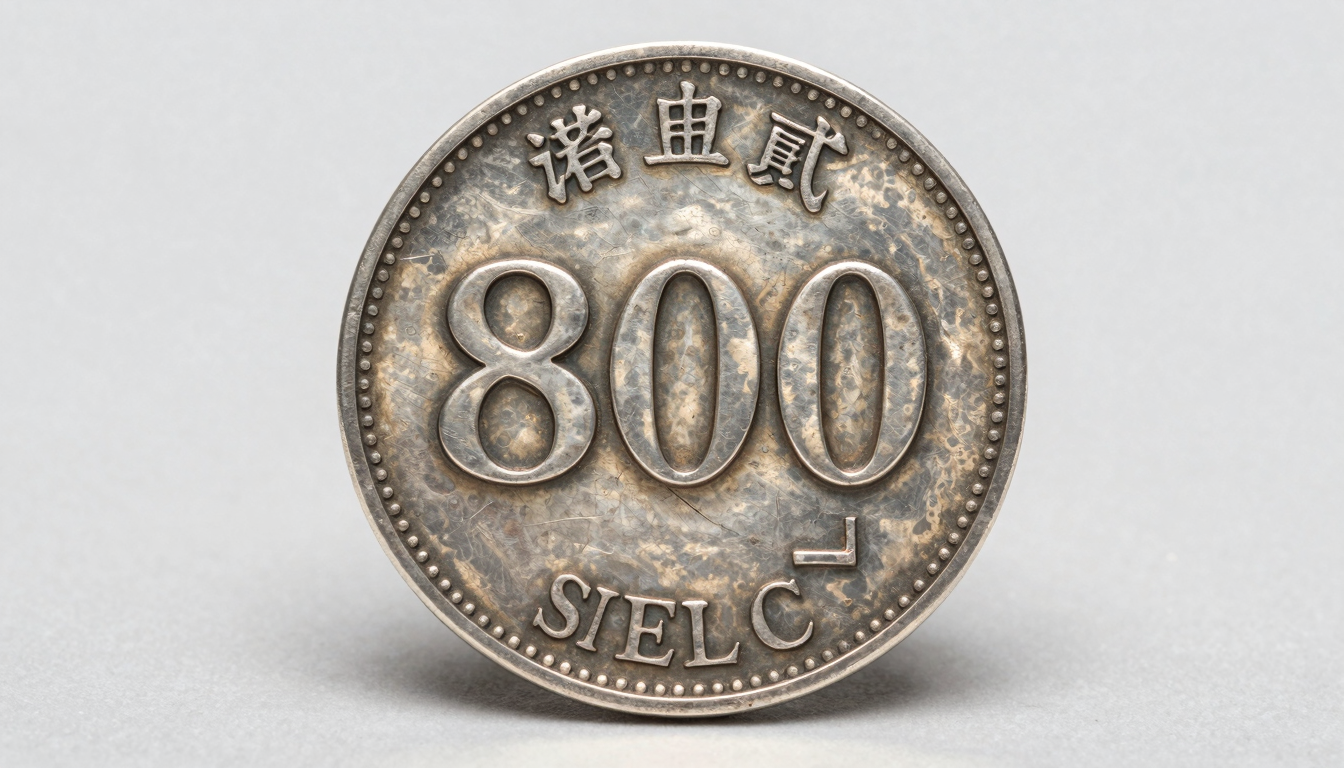
The 800 silver mark meaning is straightforward: a piece stamped 800 contains 80% pure silver by weight, with the remaining 20% made up of copper or other base metals. That single three-digit number is a fineness mark, part of a continental European hallmarking tradition stretching back to the early nineteenth century. If you've picked up a German coffee pot, an Italian brooch, or a Dutch sugar bowl at an estate sale and spotted those three digits, you're holding legitimate continental silver — not sterling, but genuine silver nonetheless.
---
What Does the 800 Silver Mark Mean?
Understanding Silver Fineness and Purity Numbers
Silver fineness expresses purity in parts per thousand. A mark of 800 means 800 parts out of 1,000 are pure silver — exactly 80%. The system replaced older, less standardized regional systems across continental Europe and gave assay offices, merchants, and buyers a common numerical language. British hallmarking uses a different approach, relying on symbols like the Lion Passant rather than numbers (see our UK silver hallmarks guide for the full breakdown), but European countries converged on numeric fineness marks by the mid-1800s.
Common fineness marks you'll encounter include 800, 830, 925, and 950. Each number tells you precisely what percentage of the object is silver. The 800 mark sits below sterling (925) but well above the threshold most countries set for objects legally described as silver — typically 500 or 600 fineness.
How the 800 Standard Developed in Europe
Germany formalized the 800 standard in 1884, when the newly unified German Empire introduced a nationwide hallmarking law requiring all silver goods to meet a minimum fineness of 800 parts per thousand. Before unification, German states each maintained their own guild-based marking systems, producing a confusing patchwork of regional symbols and standards. The 1884 law created consistency and made German silver exportable with a recognized quality guarantee.
Other European nations adopted or tolerated 800 as a legal minimum around the same period. Austria, the Netherlands, and parts of Italy all incorporated the 800 threshold into their assay regulations during the latter half of the nineteenth century. Most European 800 silver pieces encountered by collectors today date from 1880 to 1960.
Where You Typically Find the 800 Mark on a Piece
Makers and assay offices punched the 800 mark into inconspicuous but accessible locations. On flatware, look on the back of the handle near the stem. On hollowware — teapots, jugs, sugar bowls — check the underside of the base or the inner rim of the foot ring. Lids often carry a separate mark. On jewelry, examine the reverse of a brooch or the inner surface of a bangle.
The numeral 800 almost never appears alone on a genuine piece. Expect to find it alongside a maker's mark (initials or a symbol), and often an assay office mark or date letter. German pieces frequently carry a crescent moon and crown alongside the 800 — that combination was the official German imperial guarantee mark from 1888 onward. Pieces polished over decades can lose hallmark clarity, so always examine under a loupe before concluding a mark is absent.
---
800 Silver vs. Sterling Silver: Key Differences
Purity Comparison: 800 Fineness vs. 925 Sterling
Sterling silver contains 92.5% pure silver — the 925 mark confirms this. The sterling silver 925 mark meaning article covers the British and American sterling tradition in depth. By comparison, 800 silver contains 12.5 percentage points less pure silver per unit of weight. That gap is real and matters when calculating melt value, but it doesn't automatically make 800 silver inferior as an antique or collectible.
Which Is More Valuable: 800 or 925 Silver?
On raw metal content alone, 925 sterling is worth more per gram than 800 silver. That said, antique 800 silver pieces — particularly German Jugendstil flatware, Italian baroque-style serving pieces, or Dutch repoussé boxes — routinely sell for multiples of their melt value at auction. Collector demand, maker identity, condition, and rarity drive prices far above any metal content calculation. A signed WMF piece in 800 silver from 1905 can outperform a plain 925 sterling spoon with no provenance. The metal standard is the starting point, not the conclusion.
Appearance and Tarnish Differences Between the Two Standards
Higher copper content in 800 silver means it tarnishes slightly faster than 925 sterling under equivalent conditions. The tarnish layer on 800 silver can also take on a warmer, more yellowish-brown tone compared to the cooler grey tarnish typical on sterling. Many collectors find the patina on well-aged 800 silver genuinely appealing — there's a depth to it that fresh-polished sterling doesn't replicate. The color of a polished piece is nearly identical to sterling. Only a trained eye or a fineness test distinguishes them visually.
---
Which European Countries Used the 800 Silver Standard?
Germany and Austria: The Heartland of 800 Silver
Germany produced more 800 silver than any other nation. The crescent-and-crown mark, introduced in 1888, appears on tens of millions of German pieces. Major producing centers included Hanau, Augsburg, and Berlin. Austria used 800 alongside its own 13-loth and later metric fineness marks. Our German silver hallmarks guide provides maker-by-maker identification resources for this category.
Italy, France, and the Netherlands
Italy used 800 as its primary silver standard from the late nineteenth century through much of the twentieth. Italian pieces carry the fineness number inside a shaped cartouche, often with a star or a fasces symbol depending on the period. France primarily used 950 and 800 standards, with 800 designated as "deuxième titre" (second standard) and marked with a weevil or an owl assay symbol depending on the region and period. The Netherlands adopted 800 fineness for domestic silver from the 1950s onward, having used 833 as the standard for most of the nineteenth and early twentieth centuries — on older Dutch pieces, you'll see the numeral 2 rather than 800 itself.
Scandinavian and Eastern European 800 Silver Marks
Scandinavian countries leaned toward higher standards — Sweden used 830 and 916, Norway used 830 — but 800 appears on imported and some exported pieces. Poland, Czechoslovakia, and Hungary all produced 800 silver under Austro-Hungarian and later national regulations. Bulgarian and Romanian silver from the interwar period also carries 800 marks, often with Cyrillic or Latin maker's initials alongside.
| Country | Standard Used | Common Date Range | Typical Accompanying Marks | Notes |
|---|---|---|---|---|
| Germany | 800 | 1884–present | Crescent & crown (1888+), maker's initials | Crescent & crown = guarantee of 800 minimum |
| Austria | 800 | 1866–present | Diana head (post-1866), maker's mark | Earlier pieces use loth marks (13 loth = 812.5) |
| Italy | 800 | 1873–present | Star in cartouche, provincial assay mark | Fasces mark used 1934–1944 |
| France | 800 | 1838–present | Weevil (import/export), owl (small guarantee) | 950 was primary domestic standard |
| Netherlands | 800 | 1953–present | Lion mark, year letter | 833 used before 1953 |
| Poland | 800 | 1920s–1960s | Eagle mark, city initial | Austro-Hungarian marks on pre-1918 pieces |
| Czechoslovakia | 800 | 1921–1948 | Lion mark, maker's punch | Bohemian pieces often carry earlier Habsburg marks |
| Hungary | 800 | 1866–present | Artemis head, assay office letter | Continues in use for modern production |
How to Identify a Genuine 800 Silver Mark
Tools You Need: Loupe, Acid Test Kit, and Magnet
A 10x loupe lets you read the numerals clearly and examine the sharpness of the strike. Genuine hallmarks punched into silver show clean, compressed metal edges — the metal is pushed aside, not cut away. There's a slight raised border around a properly struck punch that you learn to recognize after handling a few dozen pieces. An acid test kit (using nitric acid solution) confirms silver content: genuine 800 silver produces a cream-colored reaction, while base metal or silver-plated pieces react differently. A strong magnet rules out steel or iron cores immediately — silver is not magnetic. These three tools, costing under $50 combined, handle the majority of field identification tasks.
Common Assay Office Symbols Found Alongside 800
The 800 numeral rarely stands alone on genuine European silver. German pieces carry the crescent-and-crown guarantee mark. Italian pieces show a star within a shaped punch. French pieces show the weevil (for export) or owl (small wares guarantee). Dutch pieces after 1953 carry a stylized lion. Refer to our silver hallmarks chart to cross-reference these symbols visually. If a piece shows only the number 800 with no maker's mark and no assay symbol, treat it with suspicion — that's not how legitimate assay offices worked.
Red Flags: Signs of a Fake or Plated Piece
Watch for 800 marks stamped onto a separate cartouche soldered to the object — a technique sometimes used to attach genuine marks to plated bodies. Look for wear through the silver layer at high-contact points like the back of spoon bowls or the rim of a tray; worn-through areas expose yellow or reddish base metal beneath. Acid testing those worn spots produces a distinctly different reaction than the marked area if the piece is plated. Also watch for marks that appear too shallow, too perfectly uniform, or laser-engraved rather than struck. A struck mark under magnification has character — slight variation, compressed grain. An engraved or printed fake looks almost too clean.
---
What Is 800 Silver Worth in 2026?
Calculating Melt Value of 800 Silver by Weight
Melt value calculation: multiply the weight of the piece in grams by 0.800 (the silver content percentage), then multiply by the current silver spot price per gram. In April 2026, silver spot price sits at approximately $1.05 USD per gram ($32.70 per troy ounce). A 200-gram 800 silver tray contains 160 grams of pure silver, giving a melt value of approximately $168 USD at current prices. Spot prices shift daily, so treat any figure here as a baseline for the calculation method rather than a fixed number.
Collector and Antique Premium Above Melt Value
Most antique 800 silver pieces sell above melt value. Well-made German Jugendstil pieces from makers like Bruckmann & Söhne or Wilkens command premiums of 200–500% above melt. Italian baroque-revival silver and Dutch engraved pieces from the late nineteenth century attract strong collector interest at specialist auctions. Plain, unmarked, or damaged pieces may trade closer to melt — sometimes uncomfortably close, if the market is soft.
| Silver Standard | Purity % | Silver Content per 100g | Est. Melt Value per 100g (USD, Apr 2026) | Typical Collector Premium |
|---|---|---|---|---|
| 800 | 80.0% | 80g | ~$84 | 150–500% above melt for antique pieces |
| 830 | 83.0% | 83g | ~$87 | 150–400% above melt |
| 925 (Sterling) | 92.5% | 92.5g | ~$97 | 100–300% above melt |
| 950 | 95.0% | 95g | ~$100 | 200–600% above melt for fine pieces |
| 999 (Fine) | 99.9% | 99.9g | ~$105 | Varies; often traded near melt |
Best Places to Sell or Appraise 800 Silver Pieces
Specialist auction houses with dedicated silver departments — Sotheby's, Christie's, Lyon & Turnbull, and Dorotheum in Vienna — handle significant 800 silver pieces. For everyday items, established antique dealers who specialize in continental silver offer fair assessments. Online platforms like eBay provide useful price comparables, but shipping costs and fee structures reduce net returns, sometimes sharply. A certified appraiser through the American Society of Appraisers or the Silver Society (UK) produces documentation useful for insurance or estate purposes.
---
Common Types of 800 Silver Antiques and Collectibles
Flatware and Cutlery Sets
European 800 silver flatware is the single largest category collectors encounter. German factories produced enormous quantities of complete service sets from the 1880s through the 1930s, often in patterns reflecting Historicism, Jugendstil, or Art Deco design movements. Complete sets of 12 place settings in a named pattern by a documented maker retain strong value. Partial sets and orphaned pieces sell for much less per item but remain accessible entry points for new collectors — a single Jugendstil dessert fork in good condition is a reasonable way to start learning the marks before committing to a full set.
Tea Services and Serving Pieces
800 silver tea and coffee services — four- or five-piece sets including teapot, coffeepot, sugar, creamer, and waste bowl — represent the prestige objects of continental silversmithing. Italian services from the early twentieth century often incorporate elaborate floral repoussé work. German services range from restrained Biedermeier-influenced forms to ornate Baroque revival pieces. Provenance and completeness significantly affect value; a matched five-piece set commands a clear premium over assembled orphan pieces, regardless of how well the styles align.
Jewelry, Brooches, and Decorative Objects
800 silver jewelry — particularly Scandinavian filigree brooches, German enamel pendants, and Italian cameo settings — attracts jewelry collectors as well as silver specialists. Decorative objects including picture frames, vanity sets, cigarette cases, and card holders in 800 silver appear regularly at estate sales. These smaller pieces make ideal entry-level collectibles: prices stay accessible, the 800 mark is easy to verify with a loupe, and condition issues are usually visible to the naked eye. A cigarette case with a clear crescent-and-crown and initials punch is about as straightforward a learning piece as you'll find.
---
How to Care for and Clean 800 Silver
Safe Cleaning Methods for 800 Silver Pieces
The safest routine cleaning method uses warm water, a small amount of mild dish soap, and a soft cloth or natural-bristle brush. Work gently, rinse thoroughly, and dry immediately with a lint-free cloth — never air-dry silver, as water spots etch the surface over time. For heavier tarnish, a paste of baking soda and water applied with a soft cloth and rinsed off completely removes oxidation without abrasive damage. Avoid commercial dip-type cleaners on pieces with gilded interiors, niello decoration, or enamel inlay — these products strip or damage decorative finishes, sometimes irreversibly.
Storage Tips to Prevent Tarnish
Tarnish results from silver reacting with sulfur compounds in the air. Anti-tarnish strips placed inside storage drawers or bags absorb airborne sulfur and extend the polish between cleanings. Pacific Silvercloth-lined rolls or pouches provide both physical protection and tarnish resistance. Store flatware sets in their original cases whenever possible — the felt lining in period cases often contains anti-tarnish agents that modern replacements don't replicate as well. Keep 800 silver away from rubber bands, latex gloves, and wool, all of which accelerate tarnishing noticeably.
When to Consult a Professional Conservator
Any 800 silver piece with significant historical value, complex mixed-media construction (enamel, ivory, tortoiseshell, or parcel gilt), or structural damage warrants professional assessment before cleaning. A conservator certified through the American Institute for Conservation (AIC) or the Institute of Conservation (ICON) in the UK can stabilize corrosion, repair splits and dents without removing metal, and advise on long-term preservation. Attempting to buff out dents or repair joints at home risks permanent damage that reduces both condition grade and monetary value. The cost of a conservator's assessment is almost always less than the cost of reversing an amateur repair.
---
Frequently Asked Questions
What does the 800 mark on silver mean?
The 800 mark on silver means the piece contains 800 parts per thousand of pure silver — exactly 80% silver by weight. This 800 silver mark is part of a European continental hallmarking tradition standardized in the nineteenth century. Germany formalized the 800 standard in 1884, and numerous other European countries adopted it as their legal minimum silver standard. The remaining 20% of the alloy is typically copper, added to improve hardness and durability.
Is 800 silver the same as sterling silver?
No. Sterling silver has a fineness of 925 — meaning 92.5% pure silver — while 800 silver is 80% pure. The two standards developed in different parts of the world: sterling is the British and American benchmark, while 800 is the dominant continental European standard. Both are genuine silver. Sterling contains more pure silver per gram. A piece marked 800 is not inferior as an antique, but it carries less metal value per unit of weight than a comparable sterling piece.
Which European countries used the 800 silver standard?
Germany, Austria, Italy, France, the Netherlands, Poland, Hungary, and Czechoslovakia all used the 800 silver standard at various points from the 1860s onward. Germany became the most prolific producer of 800 silver hallmark european antiques after the 1884 imperial hallmarking law. Italy used 800 as its primary domestic standard throughout the twentieth century. France designated 800 as its "second standard." Many Eastern European nations adopted 800 through Austro-Hungarian influence and continued using it after independence.
How can I tell if an 800 silver mark is genuine or fake?
Examine the mark under a 10x loupe — genuine struck hallmarks show sharp, compressed metal edges with no signs of engraving or paint. Test a worn area with a silver acid test kit: genuine 800 silver produces a cream-colored reaction. Check that a maker's mark and assay office symbol accompany the 800 fineness mark, since an isolated numeral raises suspicion. A magnet instantly eliminates steel-core fakes. For identify silver hallmarks resources, cross-reference your symbols against documented assay office records.
What is 800 silver worth compared to 925 sterling silver?
At April 2026 silver spot prices of approximately $1.05 per gram, 100 grams of 800 silver contains 80 grams of pure silver worth about $84 USD, while 100 grams of 925 sterling contains 92.5 grams worth about $97 USD. That $13 per 100 grams melt difference narrows considerably when antique premiums apply. Collector demand, maker reputation, design quality, and condition all affect final sale prices — significant 800 silver pieces regularly sell for several times their melt value at specialist auction. The continental silver 800 stamp is a mark of legitimate craftsmanship, not a consolation prize for pieces that missed the sterling standard.