
Identify silver hallmarks instantly.
A quiet, thorough reference for reading the small stamps on antique silver — what they certify, who struck them, how to date a piece in minutes rather than hours, and what those marks do to its value.
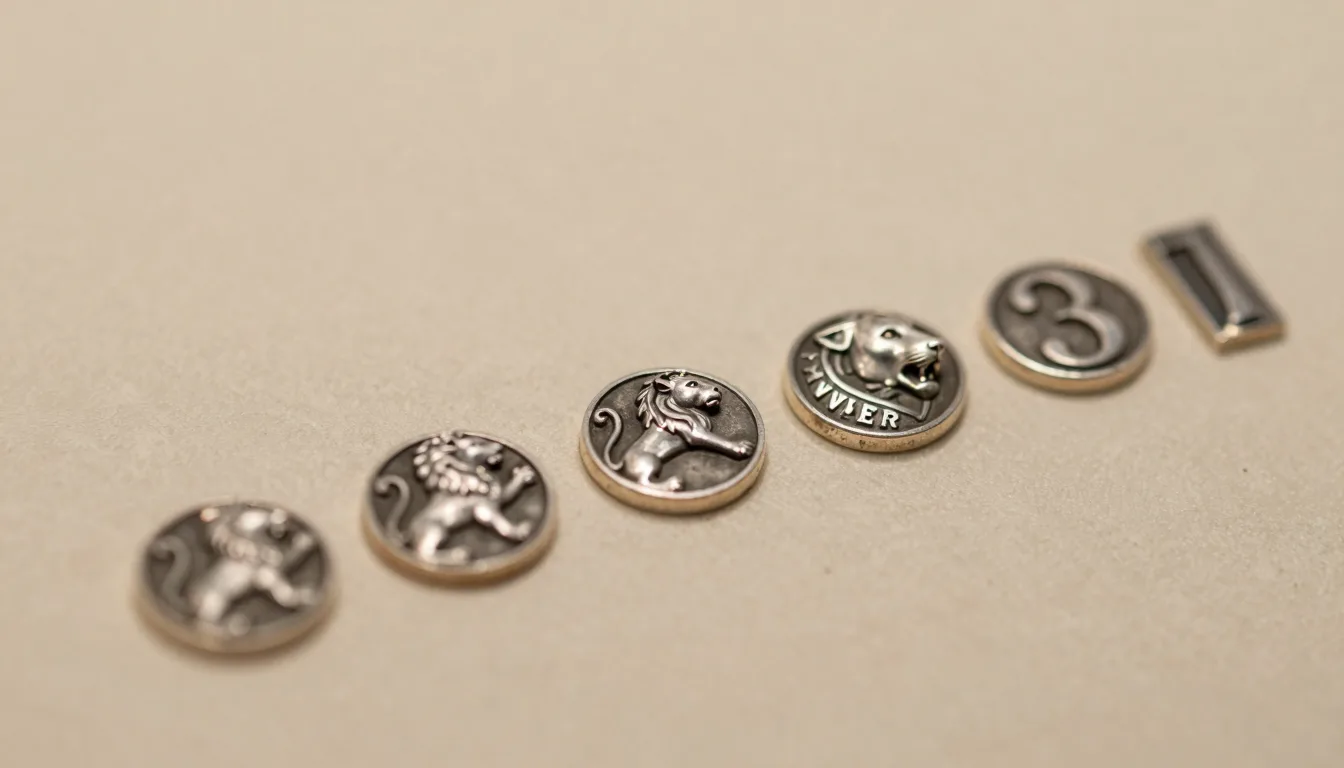
Explore by region
Hallmarking traditions differ sharply across countries. Begin where your piece was likely made.
01
United Kingdom
The world’s oldest assay system — leopard’s head, lion passant, town marks and date letters.
UK hallmarks
02
United States
No central assay office — the word STERLING, the figure 925, COIN silver, and maker’s marks.
US marks
03
Continental Europe
National standards — the French Minerva, German crescent & crown, Russian kokoshnik and more.
European marks
Reference tools
Three ways to look something up, depending on what you already know.
A
Marks Guide
A plain-language explanation of every mark and how the system fits together.
Read the guide
B
Hallmarks Chart
A scannable table of town marks, standard marks and common date letters.
Open the chart
C
Identify a Mark
A step-by-step walkthrough that takes you from a blurry stamp to a confident answer.
Start the walkthrough
What are silver hallmarks?
A hallmark is not a decoration. It is a small legal certificate, struck in metal, that has guaranteed the purity of precious objects for more than seven hundred years. The earliest English statute requiring it dates to 1300, under Edward I, and the essential idea has barely changed since: a piece is tested, and if it passes, it is marked.
Most antique silver carries a short row of these stamps. Read together, they answer four questions — how pure the metal is, where it was tested, when, and by whom it was made. Learn to separate those four and almost any British piece becomes legible.
Elsewhere the conventions differ, but the instinct is the same. A French Minerva, an American STERLING, a German 800 — each is a promise about what the metal actually is.
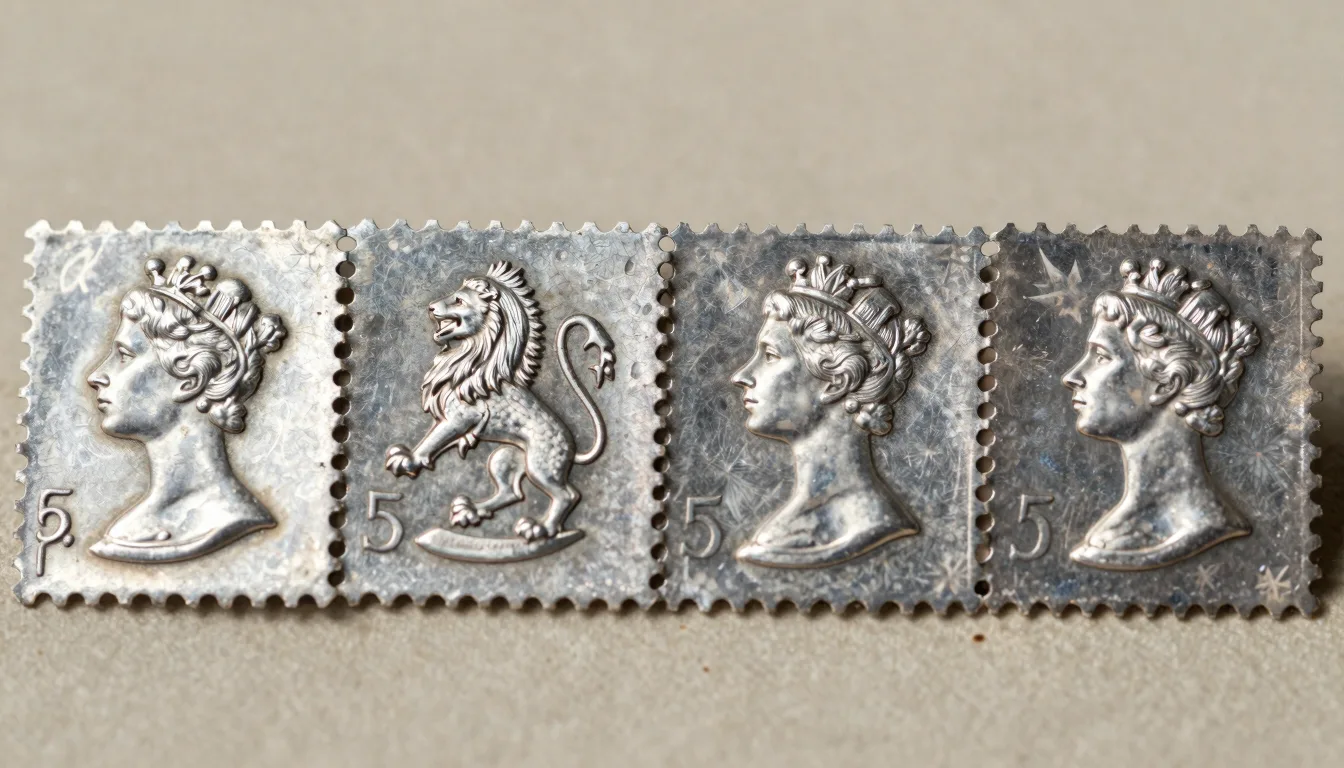
The anatomy of a British hallmark
Four compulsory marks, read left to right. A fifth — the sovereign’s head — appears on pieces made between 1784 and 1890.
Maker’s mark
The initials of the person or firm legally responsible for the piece — the oldest required mark of all.
Standard mark
The lion passant certifies sterling (92.5%). A seated Britannia signals the higher 95.8% standard.
Town mark
The assay office: a leopard’s head for London, an anchor for Birmingham, a rose or crown for Sheffield.
Date letter
A single letter, its font and shield changing each year, that fixes the year of assay precisely.
The word “sterling” may derive from the Easterlings — North German traders whose silver coin was so reliably pure that its name became the standard itself.
A mark is the difference between a guess and a fact
Unmarked, a silver bowl is just a bowl. Marked, it carries its own biography — a city, a year, a workshop. That biography is what separates a confident attribution from wishful thinking, and it is what underpins value, insurance, and provenance.
Hallmarks also protect you. A convincing imitation can fool the eye, but the assay system was built precisely to be hard to forge, and the small inconsistencies in a faked mark are often the clearest sign that something is wrong. Knowing what a genuine mark should look like is the most reliable defence a collector has.
“Read the marks before you read the price. The metal will tell you the truth, if you know how to listen.”
— A working principle of the trade
Point your camera at a mark, get an answer.
This reference is, and stays, free. For hands-on identification, the Antiqly app reads a hallmark from a photo and suggests likely matches — a separate iOS app with its own pricing, not part of this guide.
Free reference guide · Antiqly is a separate app · No account needed to browse this site.
Scan to download
Frequently asked
What is a silver hallmark?
A silver hallmark is an official set of small stamps struck into a piece of silver to certify its purity — and, in many countries, the place and year it was tested and the maker responsible for it. It is effectively a guarantee made in metal.
How can I tell if my silver is sterling?
Look for a standard mark. On British silver this is the lion passant; on American and most modern pieces it is the word STERLING or the number 925. Each certifies a minimum purity of 92.5% silver.
Are hallmarks the same in every country?
No. Britain uses a centuries-old assay-office system with multiple marks; the United States relies mainly on the word sterling and maker’s marks; and Continental Europe uses national standard marks such as the French Minerva head or the German crescent and crown.
Can hallmarks be faked?
They can, but well — and the assay system was designed to make convincing forgery difficult. Inconsistent fonts, wrong combinations of marks, or a date letter that doesn’t match its town mark are common giveaways. Comparing against a reliable chart is the best first check.