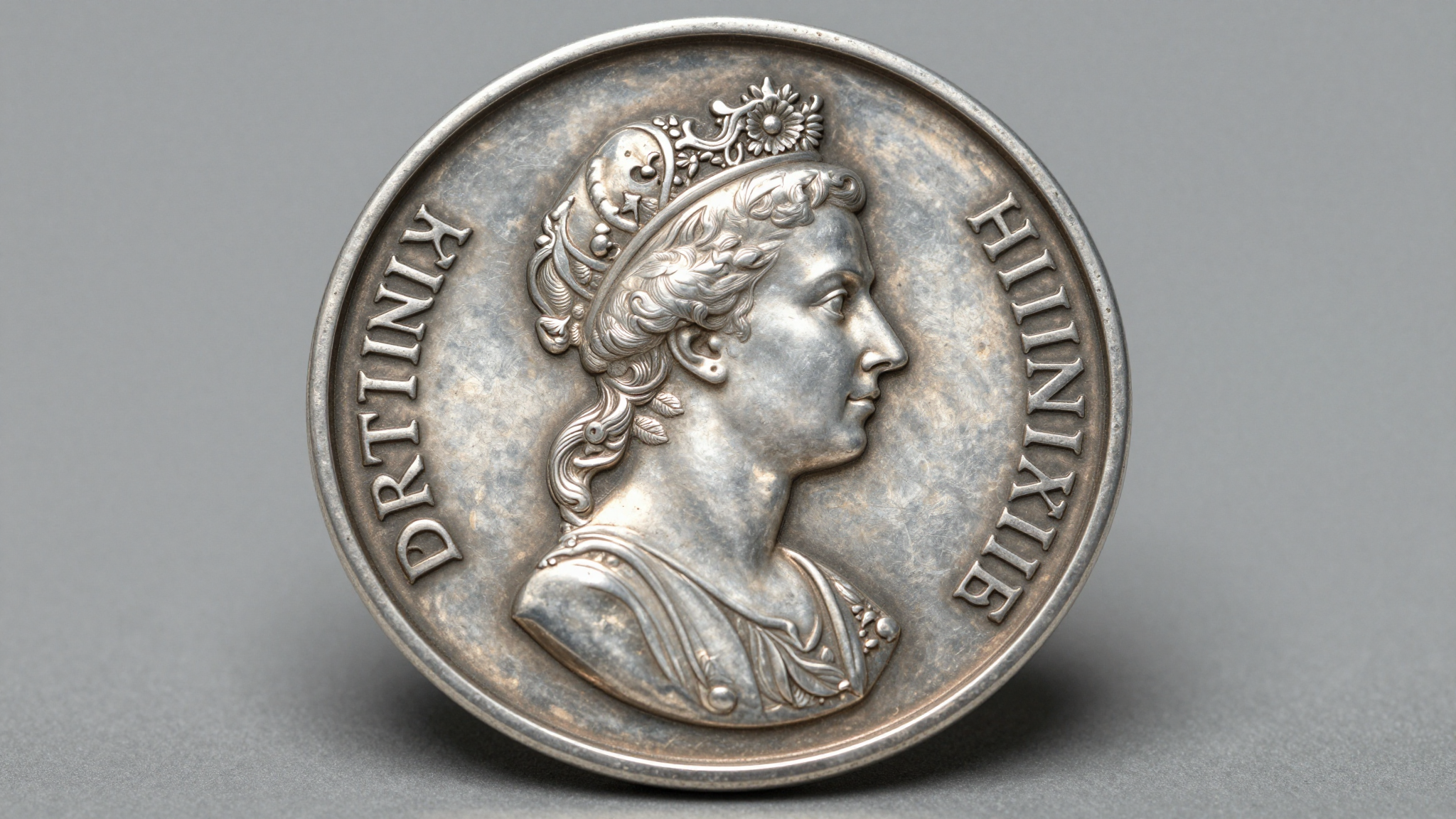
The Britannia silver hallmark meaning is straightforward once you know what to look for: it certifies that a piece contains at least 95.8% pure silver, making it significantly purer than the more familiar sterling standard. Silversmiths have applied this mark — in various forms — since Parliament mandated it in 1697, and pieces bearing it represent some of the finest wrought silver in British history. Whether you're examining a Queen Anne porringer at an estate sale or a modern commission from a London silversmith, understanding what the Britannia marks tell you can mean the difference between a confident purchase and a costly mistake.
---
What Is the Britannia Silver Standard?
The 95.8% Purity Threshold Explained
Britannia silver contains a minimum of 95.8 parts pure silver per 1,000 parts of total metal, which is why modern pieces carry the numeric stamp 958. The remaining 4.2% consists of other metals — typically copper — added to give the alloy enough structural integrity to be worked and used. Without that small addition, pure silver would be far too soft to hold a crisp engraved edge or survive daily use as flatware.
To put the figure in context: sterling silver sits at 92.5% purity (the 925 mark), while fine silver reaches 99.9%. Britannia occupies the space between those two standards, offering greater purity than sterling while remaining workable enough for skilled craftsmen. The Assay Office measures purity using fire assay or, in modern operations, X-ray fluorescence spectrometry — both methods capable of detecting whether a piece meets the 958 threshold with high precision.
When you handle a Britannia silver piece, you may notice the metal feels slightly different from sterling — marginally lighter in colour, with a subtle visual warmth that collectors often describe as a softer sheen. That difference reflects the higher silver content directly.
How Britannia Silver Differs from the Sterling Standard
Sterling silver — hallmarked at 925 — has been the baseline British standard since at least the 12th century. Britannia silver sits 33 parts per thousand purer, a gap that sounds small in percentage terms but has meaningful practical and historical consequences. The higher purity makes Britannia silver notably softer and more susceptible to denting, which is why most Victorian and Edwardian domestic silverware — tea sets, serving dishes, cutlery — was made to the sterling standard rather than Britannia.
You can find a detailed breakdown of how British purity standards compare on the silver hallmarks chart, which covers every recognised UK standard from Britannia through to electroplated wares. Understanding where Britannia sits on that spectrum helps collectors calibrate their expectations around condition and wear before they buy.
---
A Brief History of the Britannia Silver Hallmark
The 1697 Coinage Crisis That Created the Standard
Parliament introduced the Britannia silver standard through the Plate (Offences) Act of 1697, and the reason was entirely practical: silversmiths were melting down sterling silver coins to obtain the metal they needed for their work, causing a serious shortage of currency in circulation. By raising the required silver content for wrought plate from 925 to 958 parts per thousand, Parliament made it economically pointless to melt coins — Britannia-standard silver was actually purer than the coinage, so using coins as a source material would have reduced purity rather than meeting the legal threshold.
The Act simultaneously replaced two familiar marks. The Lion Passant (the sterling mark) disappeared from plate, replaced by a seated figure of Britannia. The lion's head guardant (the previous standard mark) was replaced by a lion's head erased — a lion's head shown with a jagged neck, as if torn rather than cut. Goldsmiths' Company records from 1697 document the transition in detail, noting that existing tools were recalled and new punches issued to assay offices across England.
The Return of Sterling in 1720 and Britannia's Survival
The compulsory Britannia standard lasted just 23 years. In 1720, Parliament restored the sterling standard as the primary requirement for wrought silver, responding to persistent lobbying from silversmiths who found the softer Britannia alloy difficult to work into the increasingly elaborate baroque and rococo forms fashionable at the time. Sterling's Lion Passant returned to British silver.
Critically, however, the 1720 legislation did not abolish Britannia silver — it simply made sterling the default again. Silversmiths could still choose to work in the higher standard, and a small number did. The marks remained legally valid and continued to appear on voluntarily produced Britannia pieces throughout the 18th and 19th centuries, though far less frequently than before 1720.
The Modern Revival: Britannia Silver Since 1999
The UK Hallmarking Act 1973 codified the existing standards but did not significantly change Britannia's status. A more visible shift came in 1999, when updated regulations formalised the numeric 958 stamp as the modern expression of the Britannia standard — reflecting European harmonisation of precious metal markings. Since then, a small but dedicated group of British silversmiths have chosen the Britannia standard for prestige commissions, limited editions, and commemorative pieces. The numeric stamp appears alongside a contemporary Britannia figure or the traditional marks depending on the maker's preference and the assay office used.
---
How to Identify a Britannia Silver Hallmark
The Seated Figure of Britannia Symbol
The most distinctive Britannia silver mark is the seated figure of Britannia herself: a female figure shown in profile, facing left, wearing a helmet and holding a shield and trident. On pre-1720 pieces, this image appears in a shaped punch — typically an octagonal or irregular surround on very early examples — struck alongside the date letter, maker's mark, and assay office mark. The figure is small, often no larger than 3–4mm on flatware, so a loupe of at least 10× magnification is essential for confident identification. Pieces polished repeatedly over decades can lose hallmark clarity, so don't be surprised if you're squinting at a ghost of an impression rather than a crisp strike.
On pieces from the post-1999 revival, the Britannia figure appears in updated punch designs but retains the same essential iconography. If you want a side-by-side visual reference for comparing period marks, the identify silver hallmarks resource includes photographs of genuine punched examples from London and Birmingham pieces.
The Lion's Head Erased Mark
Alongside the Britannia figure, pre-1720 pieces carry the lion's head erased — a lion's head shown in full face with a roughly torn or jagged base to the neck, distinguishing it from the lion's head guardant used earlier. This mark served as the assay standard confirmation, equivalent to the role the Lion Passant plays on sterling silver. After 1720, the lion's head erased disappeared from sterling silver but continued to appear on voluntarily produced Britannia pieces. By the early 19th century, its appearance had become increasingly rare outside specialist commissions.
The Numeric 958 Stamp on Modern Pieces
Modern Britannia silver pieces — those assayed and hallmarked from 1999 onward — typically carry the three-digit numeric mark 958 in addition to, or sometimes instead of, the traditional figure. This numeric convention aligns Britannia silver with the pan-European system of expressing precious metal content as parts per thousand: the same system that produces the 925 mark on sterling and 750 on 18-carat gold. The 958 stamp appears in a shield or plain rectangle depending on the assay office. For newer pieces, this number is your fastest confirmation of Britannia Standard status.
---
Britannia Silver Hallmark Marks at a Glance
Compulsory Marks Required by UK Law
Under the UK Hallmarking Act 1973 and its subsequent amendments, any Britannia silver piece sold in the UK must carry a minimum set of compulsory marks. These have evolved slightly across periods, but the core requirement remains consistent: the maker's mark, the standard mark (Britannia figure or 958), the assay office mark, and — on pieces hallmarked before 1999 — the date letter.
Optional and Commemorative Marks
Beyond the compulsory set, assay offices have struck optional marks for special occasions — coronations, jubilees, and millennium events. These appear on some Britannia pieces as additional punches and can add both historical interest and collector value without affecting the legal hallmarking status of the piece.
| Mark Name | Symbol or Number | Period Used | What It Means | Required or Optional |
|---|---|---|---|---|
| Seated Britannia figure | Female figure with helmet, shield, trident | 1697–present | Confirms 95.8% silver purity | Required (traditional form) |
| 958 numeric stamp | 958 | 1999–present | Confirms 95.8% silver purity (modern form) | Required (modern form) |
| Lion's head erased | Lion's head, jagged neck, full face | 1697–c.1820s | Assay standard confirmation mark | Required (1697–1720 compulsory period) |
| Maker's mark | Initials or symbol in punch | 1697–present | Identifies the silversmith or manufacturer | Required |
| Assay office mark | City symbol (anchor, castle, etc.) | 1697–present | Identifies which assay office tested the piece | Required |
| Date letter | Single letter in shaped shield | 1697–1998 | Year of assay; cycle varies by office | Required (pre-1999); optional after |
| Jubilee/Coronation mark | Portrait head or commemorative device | Various (e.g., 1935, 1952, 1977, 2002, 2022) | Commemorative; no purity function | Optional |
| Convention mark | Scales symbol | 1999–present | International hallmarking convention compliance | Optional |
Britannia Silver vs Sterling Silver: Key Differences
Purity and Composition Compared
Britannia silver contains 95.8% pure silver against sterling's 92.5%. In practical terms, a 100-gram Britannia piece contains approximately 3.3 grams more pure silver than a sterling piece of identical weight — a meaningful difference when calculating melt value, though collectors rightly focus on far more than spot price. The sterling silver 925 hallmark guide covers the composition and marking of sterling in equivalent depth if you need to cross-reference the two standards.
Softness, Durability, and Practical Uses
The higher purity of Britannia silver comes with a trade-off: softness. Britannia silver scores lower on the Vickers hardness scale than sterling, meaning it dents, scratches, and deforms more readily under the stresses of daily use. This is why pre-1720 Britannia flatware — spoons in particular — shows more handling wear than comparable sterling pieces from the same era. Silversmiths working in the Britannia standard during its compulsory period compensated with slightly heavier gauges of metal, which partly explains why early 18th-century Britannia spoons often feel more substantial in the hand than their size would suggest.
If you pick up a Britannia spoon from around 1710 and a sterling spoon of similar form, you'll notice the Britannia example has a different quality of weight — denser somehow, despite the softer alloy. That extra gauge is the silversmith's answer to the purity problem.
For display pieces, decorative objects, and prestige commissions where durability is less critical, the softness is acceptable. For working cutlery or pieces intended for regular handling, sterling silver has historically been the practical choice.
Value and Collector Demand
Britannia silver commands attention in the collector market for reasons beyond purity alone. The relative scarcity of pre-1720 pieces, combined with their historical significance as products of the compulsory period, drives premiums at auction. A Britannia Standard porringer by a known London maker from 1705–1715 will typically sell for considerably more than a comparable sterling piece from the same decade — not because of silver content alone, but because of rarity, provenance, and the historical narrative the marks carry.
---
Which Assay Offices Struck the Britannia Hallmark?
London, Birmingham, Sheffield, and Edinburgh Marks
During the compulsory period (1697–1720), the Britannia standard applied to all English assay offices then operating. London's Goldsmiths' Company at Goldsmiths' Hall was the primary assaying authority, its town mark being the leopard's head — though during the Britannia period this appears without a crown. Chester, Exeter, Norwich, and York also assayed silver in this period. Birmingham and Sheffield received their assay office charters only in 1773, so Britannia pieces from those offices date to 1773 at the earliest and represent voluntary use of the standard after the compulsory period ended.
Edinburgh's assay office used a castle mark (three towers) as its town mark. Scottish Britannia pieces follow slightly different marking conventions from English pieces. Specialist Scottish silver references are worth consulting, as the Scottish assay system had distinct rules before the full integration of UK hallmarking legislation.
How to Tell Assay Offices Apart on Britannia Pieces
The assay office mark is your key to provenance. On Britannia pieces:
- London: Leopard's head (without crown during 1697–1720 compulsory period)
- Birmingham: Anchor (post-1773 only)
- Sheffield: Crown (post-1773; replaced by Yorkshire rose in 1975)
- Edinburgh: Castle (three towers)
Comparing these marks against a verified UK silver hallmarks reference before purchasing gives you a reliable cross-check. Fakes and alterations do exist — particularly pieces with removed or transposed marks — and assay office mark consistency is one of the first things experienced dealers examine. The London assay office hallmarks page provides detailed images of London punches across periods, which is especially useful for pre-1720 Britannia identification.
---
Is Britannia Silver Valuable? What Collectors Should Know
Price Premium Over Sterling Silver
Britannia silver carries a modest premium over sterling based on silver content alone — roughly 3.6% more pure metal by weight at equivalent spot prices. In practice, the collector market prices Britannia pieces primarily on age, maker, condition, and rarity rather than the raw silver differential. Pre-1720 Britannia pieces by documented makers — Paul de Lamerie, Benjamin Pyne, David Willaume — command significant auction premiums. A de Lamerie Britannia two-handled cup sold at Christie's in 2019 for well above its melt value, with the hallmarks serving as the documentary foundation for attribution and dating.
Modern 958-stamped pieces from post-1999 production are more readily available and generally priced closer to their material value plus the maker's premium for craft commissions.
Most Sought-After Britannia Periods and Makers
The most desirable Britannia silver comes from the compulsory period of 1697–1720, when virtually every piece of English wrought plate carried the standard. Key names to know:
- Paul de Lamerie (active from 1712): His early work falls within the compulsory Britannia period and commands the highest prices of any British silversmith.
- Benjamin Pyne: A leading early 18th-century maker with documented Britannia period output.
- David Willaume: Huguenot émigré silversmith whose Britannia pieces show French-influenced design in English-hallmarked form.
Post-1720 voluntary Britannia pieces by notable makers are also sought, but less systematically than the compulsory-period output. Condition remains paramount: the softness of Britannia silver means undamaged, unrepaired examples are proportionally rarer than equivalent sterling pieces. Any sign of let-in repairs or filled splits should prompt serious scrutiny — and a lower offer.
---
Frequently Asked Questions
What does the Britannia silver hallmark mean?
The Britannia silver hallmark certifies that a piece contains at least 95.8% pure silver. The mark takes two main forms: the traditional seated figure of Britannia (introduced in 1697) and the modern numeric stamp 958 (formalised in 1999). Both confirm the same purity standard. On pre-1720 English silver, the mark was compulsory; since 1720, silversmiths have used it voluntarily. The hallmark is legally verified by one of the UK's recognised assay offices before any piece can be sold as Britannia silver.
What is the difference between Britannia silver and sterling silver?
Britannia silver is purer than sterling silver: 95.8% pure silver versus sterling's 92.5%. The difference means Britannia silver contains approximately 33 more parts of silver per thousand by weight. In practical terms, Britannia is slightly softer and less durable than sterling, making it better suited to decorative or display pieces than to heavy-use flatware. Sterling silver has carried the Lion Passant mark since the 12th century; Britannia silver uses the seated Britannia figure or the 958 numeric stamp as its standard mark.
When was the Britannia silver standard introduced and why?
Parliament introduced the Britannia silver standard in 1697 through the Plate (Offences) Act, directly in response to a currency crisis. Silversmiths were melting down sterling silver coins — which sat at 925 purity — to obtain metal for their work. By raising the required purity for wrought silver to 958 parts per thousand, Parliament made coins an uneconomical source material, because Britannia Standard silver was actually purer than the coinage itself. The compulsory period lasted until 1720, when sterling was restored as the primary standard.
How do I identify a Britannia silver hallmark on a piece?
Look for three key elements: the seated figure of Britannia (a helmeted female figure with shield and trident), the lion's head erased (on pre-1820 pieces), and the assay office town mark. On post-1999 pieces, the numeric stamp 958 replaces or accompanies the figure. Use a loupe of at least 10× magnification — the punches are small, typically 3–5mm on most flatware and hollow-ware. Cross-reference the date letter and assay office mark against a reliable hallmarks reference, such as Bradbury's Book of Hallmarks, to confirm authenticity and date the piece.
Is Britannia silver more valuable than sterling silver?
Britannia silver is more valuable than sterling silver on a like-for-like weight basis, because it contains more pure silver. The premium based on silver content alone is modest — around 3.6% at equivalent spot prices. The more significant value driver is collector demand for early, maker-attributed, or exceptionally well-preserved Britannia pieces, particularly from the compulsory 1697–1720 period. Pre-1720 Britannia pieces by documented Huguenot or English masters regularly achieve prices at major auction houses that far exceed their silver content value.