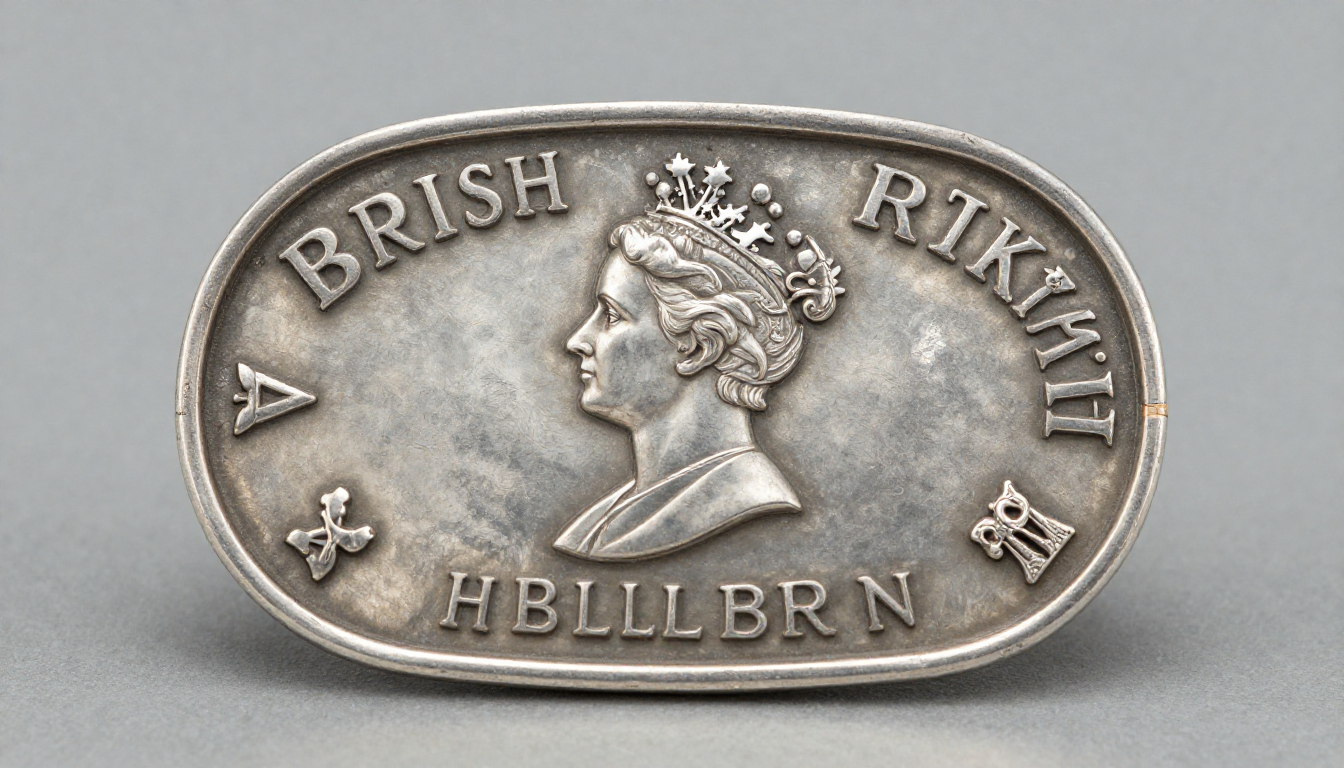
British silver hallmarks identification chart knowledge separates a confident collector from one who overpays for plated ware or undersells a genuine Georgian piece. The UK's hallmarking system — the oldest consumer protection legislation in the world — has been stamping silver with legally required marks since 1300, creating a precise paper trail you can read directly from the metal. Every mark, every symbol, and every assay office you'll encounter is covered below, with tables and step-by-step identification methods drawn from official UK assay office standards.
Last updated: June 2025 | Reviewed by our team of antique silver researchers with over 10 years of hallmark identification experience, referencing Goldsmiths' Company records and the British Hallmarking Council.
---
What Are British Silver Hallmarks and Why Do They Matter?
A Brief History of UK Silver Hallmarking Since 1300
The British hallmarking system began formally in 1300 under King Edward I, when a statute required all silver to meet a minimum standard of 925 parts per thousand — what we now call sterling silver. The Worshipful Company of Goldsmiths in London became the first official assay authority, and their Leopard's Head mark appeared on tested silver from that point forward.
The system expanded significantly over the following centuries. The date letter was introduced in London in 1478, enabling authorities to trace substandard silver back to the specific warden who approved it. Birmingham and Sheffield both received their own assay offices in 1773 after Matthew Boulton lobbied Parliament, arguing that Midlands silversmiths were losing money transporting goods to London or Chester for testing. Edinburgh's formal hallmarking system dates to 1457. The Britannia Standard — 958.4 parts per thousand — was briefly mandatory between 1697 and 1720 to protect coin silver from being melted down, and it remains an optional standard today.
The UK Hallmarking Act 1973 consolidated previous legislation and remains the governing law, with amendments added in 1999 to include EU-standard fineness marks.
Why Hallmarks Are Your Best Tool for Dating and Valuing Silver
A complete set of UK silver hallmarks on a piece does three things simultaneously: it confirms genuine silver content, identifies where the piece was assayed, and gives you a specific year or narrow date range of manufacture. No other feature — not style, not weight, not provenance paperwork — offers that combination of precision and legal authority.
For estate sale shoppers, a fully hallmarked Georgian silver tea service is worth substantially more than an unmarked piece of identical appearance. A London-assayed piece from 1780 with a clear Paul Storr maker's mark can command tens of thousands of pounds at auction. Without the hallmarks, the same object becomes a decorative item with uncertain value. The marks are, practically speaking, the money.
---
The 5 Core Marks in a British Silver Hallmark
The Standard Mark: Lion Passant, Britannia, and Other Purity Symbols
The lion passant — a walking lion facing left with one paw raised — is the single most recognisable symbol in British silver hallmarking and has indicated sterling silver (925/1000 purity) since 1544. Before using it, train yourself to look for the direction the lion faces: a lion passant faces left and walks forward. This is not the same as a lion rampant (rearing up) or other heraldic variants. On heavily polished pieces, the fine detail of the raised paw can blur — if the animal looks static rather than mid-stride, look again more carefully.
The Britannia figure replaced the Lion Passant between 1697 and 1720 when the higher Britannia Standard (958.4/1000) was compulsory. After 1720, makers could choose either standard. Britannia Standard pieces use a seated Britannia figure alongside a Lion's Head Erased — recognisable by its jagged, torn neckline — instead of the Leopard's Head. Both marks appear on pieces made to that standard today.
Scottish silver uses a thistle as its standard mark. Irish silver, though not covered under the same legislation, uses a crowned harp for Dublin-assayed pieces.
The Assay Office Mark: Identifying Where Silver Was Tested
Each UK assay office stamps a unique town mark. London uses a Leopard's Head (crowned before 1821, uncrowned after). Birmingham uses an anchor. Sheffield used a crown until 1975, then switched to a Yorkshire Rose. Edinburgh uses a castle. Chester, which closed in 1962, used three wheatsheaves and a sword.
These marks are not interchangeable, and identifying them correctly is the second step in any attribution. See the full silver hallmarks chart section below for a complete reference table.
The Date Letter: How to Find the Year Your Silver Was Made
Each assay office ran its own independent date letter cycle, using letters A through U or A through Z (excluding certain letters) in sequential annual cycles. The letter style and shield shape changed with each cycle — this is essential for distinguishing, say, a London "A" from 1716 from a London "A" from 1736. The font, the surrounding shield shape, and the accompanying marks together place the letter precisely. Experienced dealers will often identify the cycle from the shield shape alone before they even read the letter inside it.
The silver date letter guide covers every cycle in detail, but the tables below give you the framework.
The Maker's Mark: Tracing the Silversmith
The maker's mark — typically two or three initials in a shaped cartouche — identifies the person or company responsible for the piece. London's Goldsmiths' Company has maintained maker's mark registers since the 15th century. Major silversmiths like Paul Storr (PS), Hester Bateman (HB), and Paul de Lamerie (PL) are among the most researched and sought-after. A confirmed Hester Bateman mark on a London piece from the 1780s immediately places that piece in a documented body of work and significantly affects value.
Cross-reference maker's marks using Jackson's Silver and Gold Marks of England, Scotland, and Ireland — the standard reference for this purpose — alongside the online databases maintained by the London Assay Office and Assay Office Birmingham.
Optional Marks: Duty Mark, Commemorative, and Import Marks
Between 1784 and 1890, a duty mark — the reigning sovereign's head in profile — was added to indicate that tax had been paid on the silver. Queen Victoria's head appears on pieces from 1837 to 1890. Commemorative marks celebrate specific events: silver jubilees, coronations, and millennium years have all produced voluntary commemorative hallmarks since 1934. Import marks, introduced formally in the 19th century and standardised under the 1973 Act, identify foreign silver brought into the UK for sale, using a specific fineness figure (e.g., 925) inside a distinctive shield shape.
---
British Silver Hallmarks Identification Chart
How to Use This Chart to Identify Any UK Silver Piece
Start with the identify silver hallmarks process: locate every mark on your piece, then match each one against the table below. Work left to right — standard mark first, then assay office, then date letter.
Assay Office Symbols at a Glance
Sterling vs Britannia Standard: Key Differences
| Mark Type | Symbol | Meaning | Assay Office / Standard | Date Range Active |
|---|---|---|---|---|
| Standard Mark | Lion Passant | Sterling silver, 925/1000 | All UK offices (sterling) | 1544–present |
| Standard Mark | Britannia Figure | Britannia silver, 958.4/1000 | All UK offices (Britannia) | 1697–present (mandatory 1697–1720) |
| Standard Mark | Lion's Head Erased | Used with Britannia Standard | All UK offices (Britannia) | 1697–present |
| Standard Mark | Thistle | Sterling silver | Edinburgh only | 1759–present |
| Assay Office | Leopard's Head (crowned) | Tested in London | London | 1300–1821 |
| Assay Office | Leopard's Head (uncrowned) | Tested in London | London | 1821–present |
| Assay Office | Anchor | Tested in Birmingham | Birmingham | 1773–present |
| Assay Office | Crown | Tested in Sheffield | Sheffield | 1773–1975 |
| Assay Office | Yorkshire Rose | Tested in Sheffield | Sheffield | 1975–present |
| Assay Office | Castle (3 towers) | Tested in Edinburgh | Edinburgh | 1457–present |
| Assay Office | 3 Wheatsheaves + Sword | Tested in Chester | Chester | Closed 1962 |
| Date Letter | Alphabetic letter in shield | Year of assay | Office-specific cycle | 1478–present |
| Maker's Mark | Initials in cartouche | Registered silversmith | Maker's register | 15th century–present |
| Duty Mark | Sovereign's head in profile | Silver tax paid | All UK offices | 1784–1890 |
| Commemorative | Monarch's head / special symbol | Jubilee or coronation year | All UK offices | 1934, 1953, 1977, 2000, 2002, 2012, 2022 |
| Import Mark | Fineness numeral (e.g., 925) | Foreign silver imported to UK | All UK offices | 1842–present (modernised 1973) |
Date Letter Charts by Assay Office
Each assay office ran its own date letter system independently. The same letter in the same year looks different across offices. Use the shield shape and letter style columns as primary identifiers.
London Date Letters: 1478 to Present
Birmingham Date Letters: 1773 to Present
Sheffield Date Letters: 1773 to Present
Edinburgh Date Letters: 1457 to Present
| Cycle | Date Range | Letter Style | Shield Shape | Assay Office |
|---|---|---|---|---|
| London Cycle 1 | 1478–1497 | Black letter capitals | Plain square | London |
| London Cycle 10 | 1696–1716 | Court hand | Curvilinear | London |
| London Cycle 20 | 1796–1816 | Roman capitals | Plain square | London |
| London Cycle 27 | 1896–1915 | Roman capitals | Shaped base | London |
| London Current | 1975–present | Various | Plain square | London |
| Birmingham Cycle 1 | 1773–1798 | Black letter | Square | Birmingham |
| Birmingham Cycle 5 | 1849–1876 | Old English | Shaped | Birmingham |
| Birmingham Cycle 12 | 1975–present | Roman | Plain square | Birmingham |
| Sheffield Cycle 1 | 1773–1824 | Black letter capitals | Plain square | Sheffield |
| Sheffield Cycle 4 | 1868–1893 | Old English | Shaped | Sheffield |
| Sheffield Current | 1975–present | Roman | Plain | Sheffield |
| Edinburgh Cycle 1 | 1457–1475 | Black letter | Square | Edinburgh |
| Edinburgh Cycle 10 | 1780–1806 | Roman capitals | Plain square | Edinburgh |
| Edinburgh Current | 1975–present | Roman | Shaped | Edinburgh |
---
Step-by-Step: How to Identify British Silver Hallmarks
Step 1 — Find All the Marks on Your Silver Piece
Examine the piece under strong directional light with a loupe — 10x magnification is standard. Marks appear most often on the underside of flatware, the base of hollowware, the inner surface of rings, and the inside of lids. On larger pieces like tea services, each component — pot body, lid, spout — may carry a separate set of marks. Pieces polished over decades can lose hallmark clarity, so tilt the piece at different angles before concluding a mark isn't there. Note every symbol before attempting identification; a partial reading leads to incorrect dating.
Step 2 — Identify the Standard Mark and Purity
Look for the Lion Passant first on any piece you suspect is sterling silver post-1544. Its presence confirms 925/1000 silver and that the piece passed UK assay. If you see a seated Britannia figure instead, the piece is either from the mandatory Britannia Standard period (1697–1720) or was voluntarily made to that higher standard later. The absence of any standard mark is a red flag — it may indicate a pre-hallmarking piece, foreign silver, or Sheffield Plate (copper with silver overlay).
Step 3 — Match the Assay Office Symbol
Cross-reference the town mark against the table above. The anchor immediately confirms Birmingham. The Leopard's Head confirms London. An Edinburgh Castle confirms Scottish assay. Once you have the assay office identified, you know which date letter table to use in the next step — this matters enormously because the same letter "D" means different years in London versus Birmingham.
Step 4 — Decode the Date Letter
Match your letter to the correct assay office's cycle table. Use shield shape and font style as primary filters. A London "D" in a shaped shield with black letter script dates to 1559. The same "D" in a plain square with Roman capitals dates to 1799. When in doubt, narrow it down using the surrounding marks — the style of the maker's cartouche and the form of the standard mark shift alongside the date letter cycles.
Step 5 — Research the Maker's Mark
Once you have the assay office and approximate date, maker's mark research becomes manageable. Use Jackson's Silver and Gold Marks as your first reference, then cross-check with the online registers at the Assay Office Birmingham and London Goldsmiths' Company. Record the exact initials, the cartouche shape (oval, rectangular, shield), and any punctuation between letters — these details distinguish silversmiths who shared initials. I've seen two dealers argue for 20 minutes over whether a pair of letters sat in a rectangular or a cut-corner cartouche. It mattered: one reading pointed to a minor provincial maker, the other to a well-documented London workshop.
---
Common British Silver Hallmarks and What They Mean
The Lion Passant Explained
The Lion Passant has marked sterling silver since 1544, introduced under Henry VIII as a consistent national standard mark. Before that date, London used the Leopard's Head alone as both a town mark and a quality indicator. The Lion Passant appears on pieces from all UK assay offices except pre-1759 Edinburgh, making it the single most reliable indicator of genuine sterling silver in the British system.
The Anchor Mark: Birmingham Silver
Birmingham's anchor — shown vertically, not at an angle — has appeared on Birmingham-assayed silver since the office opened in 1773. Birmingham processes more silver and gold items than any other UK assay office today, handling approximately 12 million items annually according to Assay Office Birmingham's published figures.
The Crown Mark: Sheffield Silver
Sheffield used a crown as its assay office mark from 1773 until 1975, when it switched to the Yorkshire Rose to avoid confusion with the gold standard mark (also a crown) used elsewhere. Pre-1975 Sheffield pieces with a crown alongside a Lion Passant are sterling silver — the crown is the town mark, not a gold indicator. This is one of the most common misreadings beginners make, and it's an easy one to correct once you know what to look for.
The Castle Mark: Edinburgh Silver
Edinburgh's three-towered castle has marked Scottish silver since the formal establishment of the Edinburgh assay system in 1457. Scottish silver also carries the thistle as its standard mark (from 1759) rather than the Lion Passant used by English offices, making Edinburgh-assayed pieces visually distinctive even at a glance.
Duty Mark: The Sovereign's Head 1784–1890
Parliament introduced the duty mark in 1784 as part of a tax on silver. Every piece presented for assay also had the reigning monarch's head struck into it as proof of tax payment. George III, George IV, William IV, and Victoria all appear as duty marks on pieces from their respective reigns. The tax was abolished in 1890; duty marks on pieces dated after that point indicate forgery or mis-dating. For collectors, the duty mark is a useful corroborating date tool — a Victoria profile confirms the piece was assayed between 1837 and 1890.
---
Frequently Asked Questions About British Silver Hallmarks
What are the five main marks found on British silver hallmarks?
The five main marks are the standard mark (such as the Lion Passant for sterling silver), the assay office mark (identifying where the piece was tested), the date letter (indicating the year of assay), the maker's mark (the registered silversmith's initials), and — where applicable — the duty mark (a sovereign's head confirming tax was paid between 1784 and 1890). Not every piece carries all five marks; older pieces may lack a date letter, and post-1890 pieces will never carry a duty mark.
How do I identify the year a piece of British silver was made using hallmarks?
Match the date letter on your piece to the correct assay office's date letter cycle table, using the shield shape and letter font as your guides. Each assay office — London, Birmingham, Sheffield, Edinburgh — ran independent cycles, so the same letter means different years at different offices. The London date letter system has run continuously since 1478, making it one of the most complete records of any manufactured object type in the world.
What does the lion passant symbol mean on British silver?
The Lion Passant — a lion walking left with one paw raised — signifies that a piece meets the sterling silver standard of 925 parts per thousand purity. It has appeared on British silver as a standard mark since 1544. The Lion Passant is struck by the assay office, not the maker, meaning its presence confirms that an independent authority tested and approved the silver content before the piece entered commerce.
Which assay offices are still active in the UK today?
Four assay offices remain active in the UK: London (the Goldsmiths' Company Assay Office), Birmingham (Assay Office Birmingham), Sheffield (Sheffield Assay Office), and Edinburgh (Edinburgh Assay Office). Chester closed in 1962, Glasgow in 1964, Exeter in 1882, Newcastle in 1884, and Norwich in the 17th century. The British Hallmarking Council oversees the four active offices and publishes annual statistics on items assayed.
What is the difference between sterling silver and Britannia silver hallmarks?
Sterling silver is 925/1000 pure and carries the Lion Passant as its standard mark. Britannia silver is 958.4/1000 pure — a higher standard — and carries a seated Britannia figure alongside a Lion's Head Erased instead of the Leopard's Head town mark. Britannia Standard was mandatory from 1697 to 1720 to prevent silversmiths from melting coinage; after 1720 it became optional. Britannia silver is rarer, slightly softer than sterling, and commands a premium among specialist collectors because of its higher silver content and its direct association with that specific legislative period.