Last updated: June 2025 | Reviewed by the AntiqueSilverHallmarks.com editorial team, including researchers with over 10 years of specialist experience in UK hallmark systems and assay office history.
---
Learning to read British silver hallmarks is one of the most practical skills any collector, estate sale shopper, or antique dealer can develop. A genuine set of hallmarks tells you exactly what you are holding: who made it, where it was tested, what the silver purity is, and the precise year it received official approval. No other form of identification comes close to this level of documented certainty. Every mark, every symbol, every step of the process covered here draws on hands-on identification work across hundreds of Georgian, Victorian, and Edwardian pieces.
---
What Are British Silver Hallmarks and Why Do They Matter?
British silver hallmarks are a series of stamped symbols applied to silver objects after independent testing by an officially recognised assay office. They are not decorative. Each mark carries specific legal meaning, and under the UK Hallmarking Act 1973, selling an unhallmarked article as silver is a criminal offence. That legislative weight is what makes hallmarks the collector's most reliable tool.
A Brief History of UK Silver Hallmarking from 1300 to Today
The British hallmarking system is the oldest consumer protection legislation in the world still in active operation. It began in 1300 under Edward I, when a statute required that silver meet a set standard before sale. The Goldsmiths' Company in London became the first official assay authority, and the leopard's head mark — still used today — dates from this period.
The compulsory date letter system was introduced in London in 1478, giving collectors a way to pinpoint hallmarking year by year. By the 18th century, assay offices had opened in Birmingham (1773), Sheffield (1773), Edinburgh (1457, formally consolidated later), and several other cities including Chester, Exeter, Newcastle, and York. The Britannia Standard, requiring 95.8% purity, was made compulsory between 1697 and 1720 to protect coinage from being melted down, then made optional again — a fact that dates many early 18th-century pieces almost instantly.
The UK Hallmarking Act 1973 standardised the system across Great Britain and remains the governing legislation today, administered with oversight from the British Hallmarking Council.
Why Hallmarks Are the Most Reliable Way to Identify Silver
Acid testing and electronic testers give you a purity reading. Hallmarks give you a history. A genuine British hallmark set confirms legal testing by an independent body — not the maker's own claim. Unlike maker's signatures, paper labels, or stylistic attribution, hallmarks cannot be added retrospectively without detection. Faked hallmarks are a known issue, but spotting them is a skill this guide also addresses. For pieces moving through estate sales or auction, a complete hallmark set is the difference between confident bidding and guesswork. Refer to the UK silver hallmarks overview for a broader look at how the system compares internationally.
---
The Five Standard Marks on British Silver Explained
Most British silver pieces carry between three and five individual stamps, each carrying distinct information. Knowing what each mark does — and what it looks like physically — is the foundation of reading any piece correctly.
The Maker's Mark: Identifying the Silversmith
The maker's mark, also called the sponsor's mark, identifies the individual or company responsible for sending the piece to the assay office. Since 1739, British makers have been required to use initials rather than pictorial devices — typically two or three letters within a shaped cartouche. Earlier pieces, particularly those from the 17th century, sometimes show symbols or full pictorial marks. The shape of the cartouche matters: a rectangle, oval, or shaped outline can help narrow down the period and office. Cross-referencing initials against published databases like Jackson's Silver and Gold Marks or the online Goldsmiths' Company database is standard practice.
The Standard Mark: Proof of Silver Purity
The standard mark confirms the metal meets the legally required purity threshold. For sterling silver (92.5% pure), this is the Lion Passant — a lion walking left with its right forepaw raised. For Britannia silver (95.8% pure), the mark is a seated figure of Britannia. Each mark has specific design details that changed over centuries. The Lion Passant lost its tongue and had its tail repositioned in the 19th century — details that help authenticate pieces to a period once you know to look for them.
The Assay Office Mark: Where Was It Tested?
The assay office mark tells you which office tested and stamped the piece. London uses a leopard's head. Birmingham uses an anchor. Sheffield uses a rose (pre-1975) or a York rose. Edinburgh uses a castle. Each symbol has remained consistent enough for reliable identification, though subtle stylistic changes across centuries exist. A full breakdown appears in the assay office section below.
The Date Letter: Pinpointing the Year of Hallmarking
The date letter is a single letter of the alphabet stamped within a shield. Each assay office ran its own alphabetical cycle, resetting every 20 or 25 years with a change in font style and shield shape. The letter "B" can represent dozens of different years depending on which office and which cycle you are examining — context from the assay office mark is essential before consulting any date letter chart.
The Optional Marks: Sovereign Head, Jubilee, and Millennium Symbols
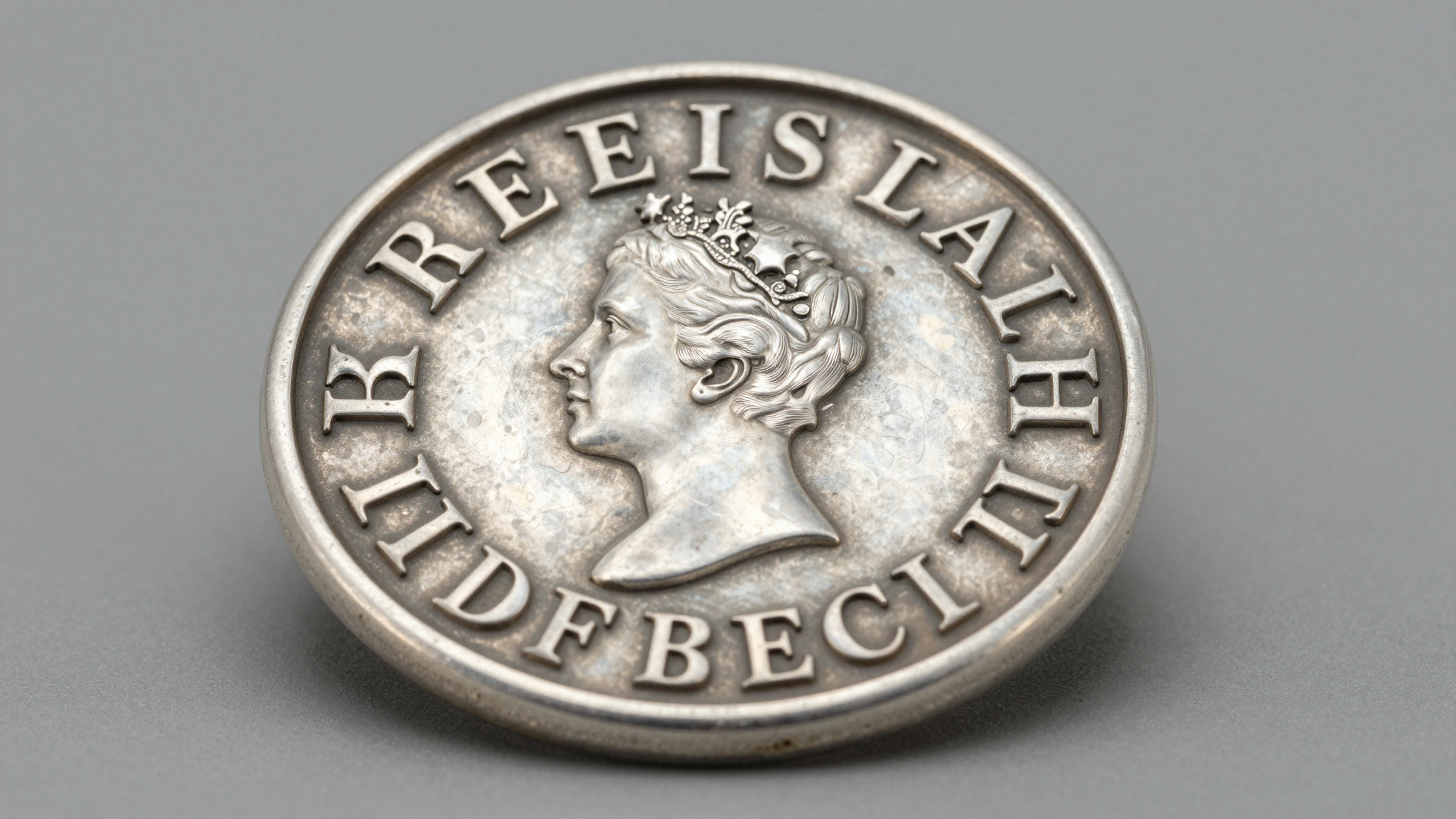
Several commemorative marks have appeared on British silver at specific historical moments. The sovereign head — a profile of the reigning monarch — was struck voluntarily between 1784 and 1890 to indicate duty payment. It reappeared as a purely commemorative mark for Silver Jubilee (1977), Golden Jubilee (2002), Diamond Jubilee (2012), and Platinum Jubilee (2022). The Millennium mark, an image of Britannia, was used in 1999 and 2000. These marks do not affect purity status but help confirm period and sometimes add collector value.
---
UK Assay Office Marks: London, Birmingham, Sheffield, Edinburgh, and Dublin
Four assay offices currently operate in the UK: London, Birmingham, Sheffield, and Edinburgh. Dublin operated under British hallmarking law until Irish independence and carries marks still encountered regularly in UK antique markets.
How to Distinguish the Four Active UK Assay Office Symbols
- London: Leopard's head (crowned until 1821, uncrowned from 1821 onward)
- Birmingham: Anchor (upright in most contexts, on its side on some small items)
- Sheffield: Tudor rose (historical); York rose post-1975
- Edinburgh: Three-towered castle
The anchor is by far the most commonly misidentified mark — new collectors sometimes mistake it for a nautical decoration rather than an assay mark. The identify silver hallmarks reference tool includes close-up photography of each symbol to aid comparison.
Closed Assay Offices and Their Marks: Chester, Newcastle, Exeter, and More
| Assay Office | City | Symbol | Active Period | Status |
|---|---|---|---|---|
| London | London | Leopard's head | 1300–present | Active |
| Birmingham | Birmingham | Anchor | 1773–present | Active |
| Sheffield | Sheffield | Rose / York Rose | 1773–present | Active |
| Edinburgh | Edinburgh | Castle | 1457–present | Active |
| Dublin | Dublin | Hibernia (seated figure) | 1637–1999 (Irish independence 1922) | Closed to UK |
| Chester | Chester | Three wheat sheaves & sword | 1686–1962 | Closed |
| Newcastle | Newcastle | Three castles | 1702–1884 | Closed |
| Exeter | Exeter | Three-towered castle (X shape) | 1701–1883 | Closed |
| Glasgow | Glasgow | Tree, bird, bell, fish, ring | 1819–1964 | Closed |
| York | York | Half leopard / half fleur-de-lis | 1559–1857 | Closed |
How to Read the Date Letter on British Silver
The date letter system is the part of British hallmarking that trips up most beginners, and honestly, the confusion is understandable — no single universal cycle ever existed across all offices simultaneously.
Understanding Alphabetical Date Letter Cycles by Assay Office
Each office managed its own independent cycle. London's first full documented cycle ran from 1478. Birmingham and Sheffield began their cycles in 1773 when those offices opened. Each cycle typically runs through 20 or 25 letters — sometimes omitting J, V, or other letters to avoid confusion — before resetting with a new font and shield shape.
How Font Style and Shield Shape Change the Letter's Meaning
The same letter "D" in a plain rectangle means something entirely different from a "D" in a shaped gothic shield. The combination of the letter, its typeface (Roman, italic, gothic, script), and the shield outline is what pinpoints the year. Changing any one element signals a new cycle — often a new decade. Old English or "black letter" fonts are common in 18th-century London cycles. Plain Roman capitals frequently appear in Birmingham cycles from the 1800s onward.
Using a Date Letter Chart to Find the Hallmarking Year
| Date Letter Cycle | Assay Office | Years Covered | Shield Shape | Font Style |
|---|---|---|---|---|
| A–U (20 letters) | London | 1716–1735 | Plain rectangle | Roman capitals |
| A–U (20 letters) | London | 1736–1755 | Ornate shaped | Old English lower case |
| A–Z (26 letters) | Birmingham | 1773–1798 | Plain square | Roman capitals |
| A–Z minus J | Sheffield | 1773–1797 | Plain oval | Roman capitals |
| A–Z minus J & V | Edinburgh | 1806–1832 | Shaped cartouche | Roman lower case |
| A–U (20 letters) | London | 1896–1915 | Plain rectangle | Italic capitals |
---
Silver Purity Standards and What Each Mark Means
Sterling Silver 925: The Lion Passant and Its Variations
The Lion Passant has marked sterling silver (925 parts per thousand) since 1544. It walks left with its head facing the viewer, right forepaw raised. Scottish pieces assayed in Edinburgh use a different standard mark — the lion rampant — which stands upright on its hind legs. This distinction catches people out more often than you'd expect. Additionally, since 1999, the numeric mark "925" became an accepted alternative to the Lion Passant for pieces entering international trade under the Convention on the Control and Marking of Articles of Precious Metals.
Britannia Silver 958: When Was It Compulsory?
Britannia Standard silver (95.8% pure) was compulsory for all English silver between 1697 and 1720, introduced specifically to prevent silversmiths from melting coinage. Its mark is a seated figure of Britannia facing left, shield in one hand, trident in the other. Makers working during this period also used a different form of the maker's mark: the first two letters of their surname rather than initials. After 1720, sterling became standard again, but Britannia remained an optional higher standard — pieces marked with it after 1720 are voluntary quality statements, not legal requirements.
Other Purity Standards: 800 and 999 Fine Silver Marks
British-assayed silver does not carry an 800 mark. That standard belongs to continental European silver, particularly German, Dutch, and Scandinavian pieces. Imported silver has carried its own specific UK import marks since 1842, including the letter "F" in an oval for foreign silver. Fine silver at 999 parts per thousand carries a "999" numeric mark, used primarily for investment-grade bars and some commemorative pieces. Seeing 800 on a piece that appears British is a strong indicator it originated outside the UK.
---
Step-by-Step: How to Read British Silver Hallmarks on Any Piece
Step 1 — Locate All the Marks Using a Loupe or Magnifier
Use a 10x loupe minimum. Marks on British silver appear in a row or cluster, typically on an inconspicuous surface: the base of a bowl, the inside of a lid, the back of a spoon handle, or the underside of a handle junction on jugs. On flatware, check the back of the stem near the bowl. Tilt the piece under a directional light source — a phone torch held at a low angle creates raking light that picks up even shallow strikes. Pieces polished over decades can lose hallmark clarity significantly, sometimes reducing crisp shield edges to little more than a faint impression. Never rub hallmarks with abrasive materials to clarify them; this destroys surface detail permanently.
Step 2 — Identify the Assay Office Symbol First
Before doing anything else, identify the assay office symbol. This single step controls which date letter chart you use and confirms the piece was tested in Britain. If you cannot identify the assay office mark, do not attempt to decode the date letter — you will get the wrong year. Photograph the marks at high magnification and compare against reference images from the assay office tables above.
Step 3 — Decode the Standard and Purity Mark
With the assay office confirmed, locate the purity mark. A Lion Passant means sterling. A seated Britannia means 958 Britannia Standard. A numeric mark such as "925" or "958" indicates a post-1999 piece or one assayed under international convention. If you see a mark that doesn't match any of these, the piece may be continental, imported, or silver-plated. Silver plate carries no British hallmarks, though it may carry EPNS (electroplated nickel silver) or similar trade marks.
Step 4 — Match the Date Letter to the Correct Cycle
Using the confirmed assay office, consult the appropriate date letter chart. Note the letter itself, the font style (Roman, italic, gothic, script), and the shield shape (square, rectangle, shaped, cusped). Cross-referencing all three narrows the year — often to within one year exactly. If two cycles share the same letter and font, the shield shape resolves the question. The full interactive charts on the silver hallmarks chart page sort cycles by office and decade.
Step 5 — Research the Maker's Mark in a Reference Database
Record the maker's mark initials and cartouche shape, then search against published references. Jackson's Silver and Gold Marks of England, Scotland & Ireland is the standard text. The Goldsmiths' Company Assay Office London maintains searchable online records for registered makers. For Birmingham makers, the Birmingham Assay Office archive covers registrations from 1773. Matching the maker to the date letter year confirms authenticity — if the maker was active in 1845 and the date letter says 1845, the piece is internally consistent. If the dates conflict, start asking questions.
---
Common Mistakes When Reading British Silver Hallmarks
Confusing Imported Silver Marks with British Hallmarks
Continental silver, particularly from Germany, France, and Scandinavia, was widely imported into Britain from the 18th century onward. From 1842, imported silver required its own UK assay marks, distinct from domestic hallmarks. Pre-1842 imports sometimes reached the market without any British marks at all. The 800 standard mark is the clearest signal: it does not exist in the British domestic hallmarking system. French guarantee marks, Dutch lion marks, and German Halbmond und Krone (crescent and crown) marks are all distinct once you know what to look for.
Misreading Worn or Rubbed Hallmarks on Antique Pieces
Heavily used pieces — particularly flatware, sauce ladles, and small boxes — can have hallmarks worn nearly flat after centuries of polishing. Misidentifying a worn Edinburgh castle as a London leopard's head is a real-world error with serious dating consequences. Always work from the clearest mark first. Raking light, a quality loupe, and patience resolve most worn marks without invasive methods. If a mark genuinely cannot be confirmed, a professional assay office can re-examine the piece and issue a new hallmark alongside the original.
Mixing Up Assay Office Symbols That Look Similar
The Chester mark — three wheat sheaves and a sword — has been mistaken for a decorative crest more times than any dealer would like to admit. The Glasgow marks (tree, bell, fish, and ring, derived from the city coat of arms) sometimes appear as individual marks and confuse collectors unfamiliar with the city's hallmarking tradition. The Newcastle three-castle mark closely resembles the Edinburgh castle to the untrained eye, though the number of towers differs. Build familiarity through comparison: side-by-side reference images from authenticated pieces train pattern recognition faster than text descriptions alone.
---
Frequently Asked Questions
What are the five standard marks found on British silver hallmarks?
British silver typically carries up to five marks: the maker's mark (silversmith's initials), the standard mark (Lion Passant for sterling or Britannia figure for 958 silver), the assay office mark (such as London's leopard's head or Birmingham's anchor), the date letter (a single letter indicating the hallmarking year), and an optional commemorative mark such as a sovereign head or jubilee symbol. The minimum legal requirement under the UK Hallmarking Act 1973 is three marks: maker, standard, and assay office.
How do I find the date a piece of British silver was made using hallmarks?
Identify the assay office mark first — this determines which date letter cycle to consult. Then note the date letter's shape, font style, and shield outline, and cross-reference these three elements against the correct office's chart. London has maintained continuous date letter records since 1478, making it possible to date London-assayed silver to a specific 12-month cycle going back over 500 years. The date letter marks when the piece was hallmarked, not necessarily when it was made, though the gap is rarely more than a few months.
What does the lion passant symbol mean on British silver?
The Lion Passant — a lion walking left with its right forepaw raised and head turned to face the viewer — certifies that the piece meets the sterling silver standard of 92.5% pure silver. It has been used as the English sterling mark since 1544 and remains in use today. Scottish silver assayed in Edinburgh carries a lion rampant (standing upright) instead. Since 1999, the numeric mark "925" may substitute for the Lion Passant on pieces traded internationally under the Common Control Marking convention.
Which assay offices are still active in the UK today?
Four assay offices currently operate in the United Kingdom: the Goldsmiths' Company Assay Office in London, the Birmingham Assay Office, Sheffield Assay Office, and the Edinburgh Assay Office. All four accept submissions from silversmiths and manufacturers, test metal purity, and apply hallmarks. The Dublin Assay Office continues to operate in the Republic of Ireland but functions independently from the UK system following Irish independence. Several historic offices — including Chester (closed 1962), Glasgow (closed 1964), and Newcastle (closed 1884) — have been closed for decades.
How can I tell if a piece of silver is genuine sterling using hallmarks?
Look for the Lion Passant (or "925" numeric mark on post-1999 pieces), confirmed alongside a recognised assay office mark and a date letter. All three marks together confirm the piece passed independent purity testing. A piece with only a Lion Passant and no assay office mark may be a later reproduction or an incorrectly struck piece — genuine British hallmarks always include the assay office symbol. If marks are present but appear unusually sharp on an old piece, or if the cartouche shapes don't match the period, seek expert review before purchasing.