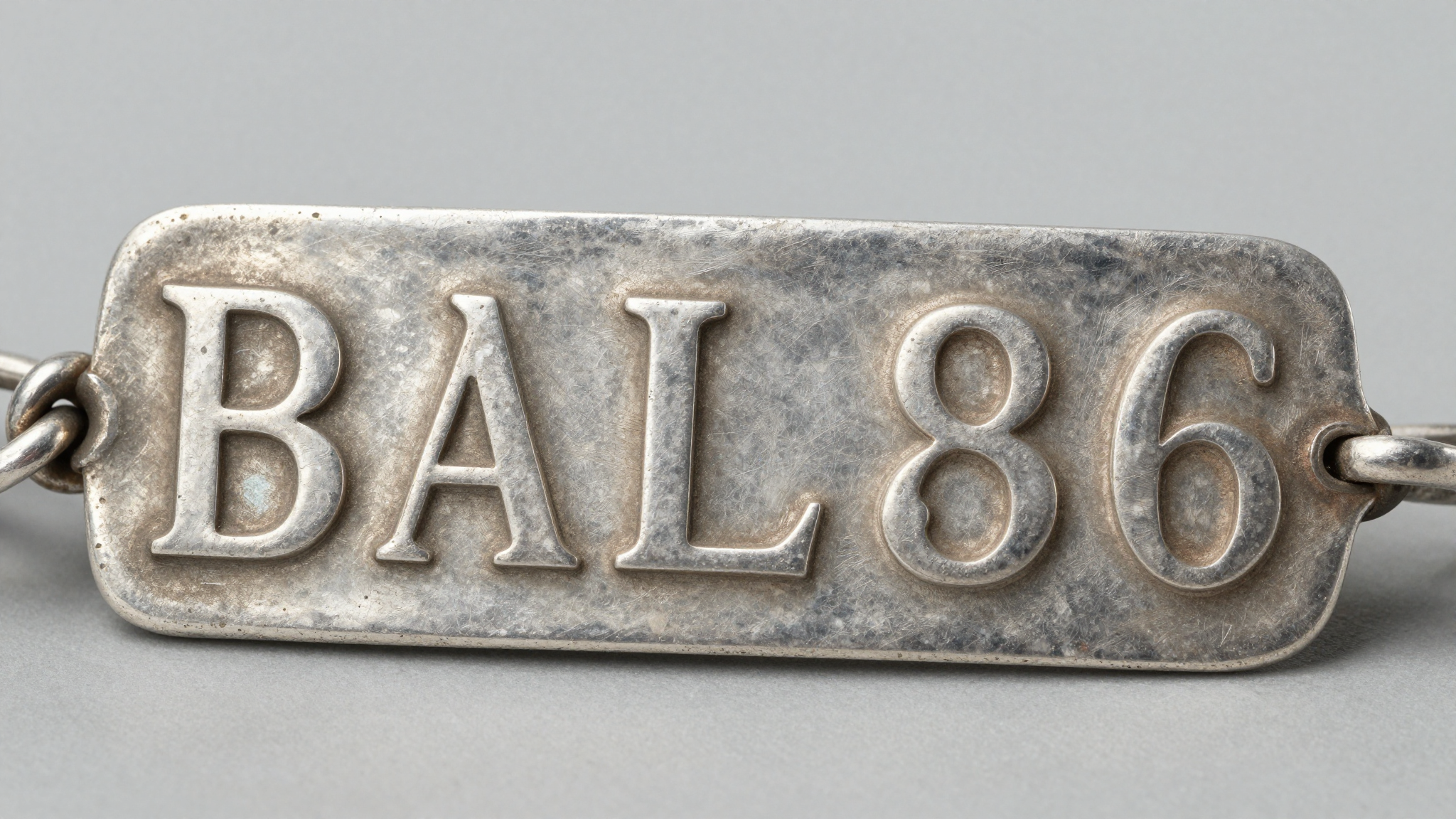
Silver chain hallmarks identification is the most reliable way to confirm what metal you actually own — and in the UK, the system is one of the most precise in the world. A set of small punched marks on a clasp or tag can tell you the metal's purity, who tested it, when it was made, and which silversmith submitted it for assay. Whether you're handling a Victorian belcher chain from an estate sale or a modern curb chain from a jeweller's window, reading those marks accurately protects your money and your collection.
---
Why Hallmarks on Silver Chains Matter
The Legal Requirement for Hallmarking in the UK
The UK silver hallmarks system is not voluntary. The Hallmarking Act 1973 makes it a criminal offence to describe an item as silver in the UK unless it carries an approved hallmark — or falls within a narrow set of weight exemptions. Chains weighing under 7.78 grams are currently exempt from compulsory hallmarking, which is why some lightweight trace or snake chains turn up without marks. Any UK chain sold as sterling silver above that threshold must carry an official hallmark from one of the four active UK Assay Offices: London, Birmingham, Sheffield, or Edinburgh.
This legal framework has existed in various forms since the Goldsmiths' Company began assaying silver in London in 1300. The current Act consolidated and modernised centuries of earlier statute, and Trading Standards officers enforce it today.
What Hallmarks Protect You as a Buyer
A hallmark is independent verification. The silversmith cannot apply it — only an Assay Office can, after testing the metal. That independence is the point. When you buy a hallmarked chain, you know the purity claim was tested by a third party with legal accountability. Without a hallmark, you are relying entirely on the seller's word. For estate sale shoppers and dealers buying at auction or from private collections, the hallmark is frequently the only objective evidence of a chain's true composition.
---
The 5 Standard UK Silver Hallmarks Explained
The Fineness (Purity) Mark — 925, 800, and 958
The fineness mark tells you the silver content by parts per thousand. UK Assay Offices currently recognise three approved silver standards:
- 925 — Sterling silver (92.5% pure silver). The most common standard on British chains from the mid-19th century onward.
- 958 — Britannia Standard silver (95.8% pure). Introduced in 1697, it was compulsory until 1720 and has remained an optional higher standard since. Rarer on chains, more common on flatware.
- 800 — A continental standard accepted in the UK under the International Hallmarking Convention. Common on imported chains, particularly from Germany, Italy, and Scandinavia.
Before 1975, the fineness mark on sterling silver was typically a Lion Passant rather than a numeric punch. After 1975, both the numeric 925 and the Lion Passant appear together on most UK-assayed sterling chains.
The Assay Office Mark — Lion, Anchor, Castle, and Rose
Each UK Assay Office uses its own symbol, stamped to show which office independently tested the metal. See the full table in the section below for specifics.
The Date Letter and What It Tells You
A date letter is a single alphabetical letter in a specific shield shape, changed annually on a fixed date — historically 29 May at London, though this varied by office. Each Assay Office ran its own independent cycle with its own typeface and shield outline, so the same letter in the same year looks different depending on where the chain was assayed. A full silver date letter guide cross-referencing all four offices is essential for precise dating.
The Maker's Mark and Sponsor's Mark
Before 1363, no maker's mark was required. Since then, a registered mark identifying the silversmith — or, after the Hallmarking Act 1973, the "sponsor" who submitted the piece for assay — has been compulsory. On chains, this mark is typically two or three initials punched into a shaped cartouche, often so small you need a loupe to read the letters cleanly. Identifying a maker's mark usually means cross-referencing published records such as Jackson's Silver & Gold Marks or the online databases maintained by the Assay Offices.
Optional Marks: Commemorative and Convention Marks
Certain periods saw voluntary or commemorative marks added to hallmarks. The Jubilee mark (Queen Victoria's head) appeared in 1935, the Coronation mark in 1953, and the Millennium mark in 1999–2000. These add historical context and can help authenticate chains to specific periods. The Convention mark — a set of scales — indicates a chain was tested under the Vienna Convention and is accepted across all participating countries.
---
UK Silver Hallmarks at a Glance
| Hallmark Type | Symbol or Number | What It Means | Where Found on Chain |
|---|---|---|---|
| Fineness mark | 925 / 800 / 958 | Silver purity per 1,000 parts | Clasp, tag, or link |
| Assay office mark | Lion / Anchor / Castle / Rose | Which office tested it | Alongside fineness mark |
| Date letter | Single letter in shield | Year of assay | Clasp or attached tag |
| Maker's / sponsor's mark | Initials in cartouche | Registered submitter | Clasp or tag |
| Convention mark | Scales symbol | International testing standard | Clasp, if imported or exported |
| Jubilee / commemorative mark | Portrait or numeral | Specific royal or national event | Clasp, rare on chains |
| Lion Passant | Walking lion facing left | Sterling silver (pre-1975 primary mark) | Clasp or hallmark panel |
How to Find Hallmarks on a Silver Chain
Best Tools to Use — Loupe, UV Light, and Magnifier Apps
A 10× loupe is the standard tool for hallmark identification, adequate for most well-struck marks on clasps. For finer detail on worn marks, a 30× jeweller's loupe or a digital microscope (widely available for under £30) will resolve marks that appear as indistinct bumps to the naked eye. Smartphone magnifier apps with LED lighting — particularly those that allow freeze-frame capture — work well in the field at estate sales and auctions. UV light is less relevant to hallmark reading directly, but it can reveal later repairs or solder work that may have obscured original marks.
Common Locations on Chains — Clasps, Tags, and Links
On a silver chain, hallmarks almost always appear on the clasp. Bolt ring clasps, lobster clasps, and barrel clasps all carry a small flat surface where assay punches fit cleanly. Longer chains — particularly Victorian guard chains and muff chains — sometimes have a separate hallmarked tag or barrel attached midway along. On very heavy or wide chains, such as broad curb or Albert chains, marks occasionally appear directly on individual links, though this is less common and harder to strike cleanly. If you find no marks on the clasp, check the safety catch, the swivel fitting on watch chain bars, and any detachable pendant fitments.
What to Do When the Hallmark Is Worn or Missing
Wear, polishing, and resizing all erode hallmarks over time. Pieces cleaned hard over decades can lose hallmark clarity entirely — a sharp Lion Passant becomes a vague rectangle, and a date letter disappears into the surrounding metal. If a mark is partially legible, refer to a silver hallmarks chart and work with what remains — even a partial date letter or assay office symbol significantly narrows your options. If no mark is visible, do not assume the chain is not silver: it may be exempt by weight, hallmarked in an obscured location, or have marks polished flat through decades of cleaning. A professional acid test or XRF (X-ray fluorescence) analysis from a qualified testing service will give a definitive answer without damaging the chain.
---
Reading UK Assay Office Marks on Silver Chains
London — The Leopard's Head
London's Goldsmiths' Hall has used a leopard's head (technically a lion's face viewed directly forward, not in profile) since around 1300, making it the oldest assay mark still in active use anywhere in the world. Before 1821, the leopard's head appeared with a crown; after 1821, the crown was dropped. On Victorian chains assayed in London, you will typically see an uncrowned leopard's head alongside the Lion Passant and a date letter.
Birmingham — The Anchor
Birmingham's Assay Office, established in 1773, uses an anchor as its town mark. The anchor appears upright on gold and on its side on some earlier pieces — a detail that catches new collectors out regularly. Birmingham became the dominant assay office for mass-produced jewellery chains through the 19th and early 20th centuries, so the anchor is by far the most common assay mark on Victorian and Edwardian silver chains found in UK estate sales today. If you're buying antique chains in any volume, you'll see it constantly.
Sheffield — The Rose (Post-1975)
Sheffield used a crown as its assay mark from its establishment in 1773 until 1975, when the crown was transferred to represent the 925 fineness standard under new UK regulations. Sheffield then adopted a Yorkshire rose to avoid confusion. If you find a crown mark on a pre-1975 chain, it indicates Sheffield assay — not a purity or commemorative mark. This trips up a surprising number of people at auction.
Edinburgh — The Castle
Edinburgh Assay Office, active since at least 1457, uses a three-towered castle. Scottish silver chains are less commonly found in English estate sales but are highly collectable. Edinburgh's date letter cycles run independently of London, and the office remains active today.
---
UK Assay Offices — Reference Table
| Assay Office | City | Symbol | Active Since |
|---|---|---|---|
| Goldsmiths' Hall | London | Leopard's head | c. 1300 |
| Birmingham Assay Office | Birmingham | Anchor | 1773 |
| Sheffield Assay Office | Sheffield | Crown (pre-1975); Yorkshire rose (post-1975) | 1773 |
| Edinburgh Assay Office | Edinburgh | Three-towered castle | c. 1457 |
---
Dating Your Silver Chain by the Date Letter
How the Alphabetical Date Letter Cycle Works
Each Assay Office assigned one letter of the alphabet per year, changing the letter on a set annual date. When the alphabet was exhausted — typically after 20–25 years, omitting certain letters — a new cycle began with a different typeface, shield shape, or both. This means a single letter, say a Gothic "E" in a plain shield, corresponds to a specific known year at a specific office, provided you can also identify the assay office mark. Get the office wrong and your dating will be out by decades.
Key Date Letter Cycles for Victorian and Edwardian Chains
The Birmingham Assay Office is the most relevant for Victorian chains. Its cycles through this period ran in sequences of approximately 25 letters, omitting J and V or similar. London's cycles changed shield shape with each new alphabet — square, oval, cusped — giving additional confirmation beyond the letter itself. An Edwardian chain (roughly 1901–1910) from London, for example, would show a date letter from the cycle that ran from 1896 to 1916, using a plain square shield.
Using Date Letters to Value Antique Silver Chains
Earlier date letters generally increase collectability and value, all else being equal. A chain dated to the 1840s carries more historical interest than an identical chain from the 1890s. Chains from specific periods — the Great Exhibition year of 1851, the Victorian Diamond Jubilee of 1897, or the Edwardian era more broadly — attract premium interest from period collectors. Identifying the precise year via date letter lets you research production context, maker histories, and comparable auction results with real confidence.
---
Date Letter Reference — Victorian and Edwardian Chains
| Era | Approximate Date Range | Letter Cycle Notes | Assay Office |
|---|---|---|---|
| Early Victorian | 1837–1860 | London: italic letters, varying shields | London / Birmingham |
| Mid-Victorian | 1860–1880 | Birmingham cycles omit J, V | Birmingham |
| Late Victorian | 1880–1901 | New cycle begins mid-period; check shield shape | London / Birmingham |
| Edwardian | 1901–1910 | London: plain square shield; Birmingham: block capitals | London / Birmingham / Sheffield |
Silver Chain Marks from Outside the UK
Import Hallmarks and the Convention Mark
Silver chains imported into the UK before being sold must either carry a UK assay hallmark (applied after import testing) or display the Convention mark — a set of scales — accepted under the 1972 Vienna Convention on the Control of Fineness and Hallmarking. The Convention mark includes a fineness figure and a national sponsor symbol. Chains sold in the UK with only a Convention mark were legally tested, but not by a UK Assay Office.
Common European Silver Marks — 925, 800, and 830
European chains frequently carry numeric fineness marks without the full suite of UK symbols. 800 silver is standard in Germany and parts of Scandinavia; 830 appears extensively on Norwegian and Swedish pieces from the late 19th and early 20th centuries. Italian chains from the 20th century often carry 925 or 800 alongside a maker's mark and a small national identifier — a star within a cartouche on modern Italian silver. French silver uses an owl mark for import verification and an older guarantee mark system.
How to Identify American and Non-Hallmarked Silver Chains
American silver is not subject to an independent assay system equivalent to the UK's. US makers typically stamp their own fineness claims — STERLING, 925, or COIN (90% silver, common pre-1900) — directly onto the chain without third-party verification. The word STERLING on an American chain is a manufacturer's self-declaration, not an independently tested mark. For verification, XRF testing is the most practical approach.
---
Silver-Plated vs Hallmarked Silver Chains
Marks That Indicate Silver Plate — EPNS, EP, and Sheffield Plate
Silver-plated chains carry specific marks that, once learned, are straightforward to distinguish from hallmarks. The most common are:
- EPNS — Electroplated Nickel Silver. The base metal is a copper-nickel alloy; the silver coating is electroplated, not solid.
- EP — Electroplate, without specifying the base metal.
- SHEFFIELD PLATE — A specific 18th and early 19th-century product of fused silver and copper, not a hallmark and not electroplate. Sheffield Plate predates electroplating and has its own collector market.
- A1 or A1 PLATE — A trade quality designation for electroplate, used from around the 1840s onward. It indicates nothing about silver purity.
None of these marks are hallmarks. A genuine sterling silver chain will never carry EPNS, EP, or A1 alongside its hallmarks.
Quick Tests If No Hallmark Is Visible
If you cannot locate a hallmark, several simple tests provide preliminary evidence — not proof. The magnet test is the most basic: silver is not magnetic, though neither are many base metals used in plating. The ice test exploits silver's exceptionally high thermal conductivity — place a genuine silver chain on an ice cube and it melts the surface visibly faster than most other metals. For definitive results, acid testing (using a silver test acid kit on a small, inconspicuous area) or professional XRF analysis remain the only reliable methods short of destructive assay.
---
Frequently Asked Questions
What hallmarks should a genuine silver chain have?
A genuine UK-assayed sterling silver chain should carry at minimum a fineness mark (925 or a Lion Passant), an assay office mark (leopard's head, anchor, castle, or rose), and a maker's or sponsor's mark. Chains assayed before 1975 will typically show a Lion Passant as the primary silver indicator rather than the numeric 925. Date letters are also standard but were omitted on some imported or Convention-marked chains. Chains under 7.78 grams are legally exempt from compulsory hallmarking in the UK.
Where do you find hallmarks on a silver chain?
Hallmarks on a silver chain appear most commonly on the clasp — bolt ring, lobster, or barrel clasps all have a small flat surface suited to assay punches. Longer Victorian guard chains and Albert watch chains sometimes carry hallmarks on a separate tag, swivel fitting, or barrel attached to the chain. On very heavy curb or link chains, marks occasionally appear on individual links. Always check the safety catch and any attached swivel bar or fitment before concluding a chain is unmarked.
What does the lion passant mean on a silver chain?
The Lion Passant hallmark meaning is specific: it certifies that the item is sterling silver, containing at least 92.5% pure silver (925 parts per thousand). The Lion Passant — a lion walking left with one foreleg raised — has been used on British sterling silver since 1544. It does not indicate the assay office or the year. Before 1975, the Lion Passant was the primary fineness mark on sterling; after 1975, the numeric 925 appears alongside it on most UK-assayed chains.
Can a silver chain be real silver without a hallmark?
Yes, legally and practically. UK law exempts chains weighing under 7.78 grams from compulsory hallmarking, so a lightweight sterling silver trace or snake chain may carry no mark at all. Chains made before compulsory hallmarking regulations applied to specific categories, or assayed under foreign systems not requiring a UK mark, may also be genuine silver without a UK hallmark. Chains imported for personal use and never sold commercially are another exception. When in doubt, XRF testing gives a definitive answer without any damage to the piece.
How do I tell the difference between a silver-plated and a hallmarked silver chain?
The clearest distinction is the marks themselves. A hallmarked chain carries an independently punched fineness mark (925 or Lion Passant), an assay office symbol, and a maker's mark — all applied by an external testing body. A plated chain carries manufacturer's stamps such as EPNS, EP, A1, or SHEFFIELD PLATE: self-applied trade descriptions, not independent certifications. If no marks are visible, use the identify silver hallmarks process first, then proceed to physical testing — acid testing or XRF analysis will distinguish solid silver from a plated base metal definitively.