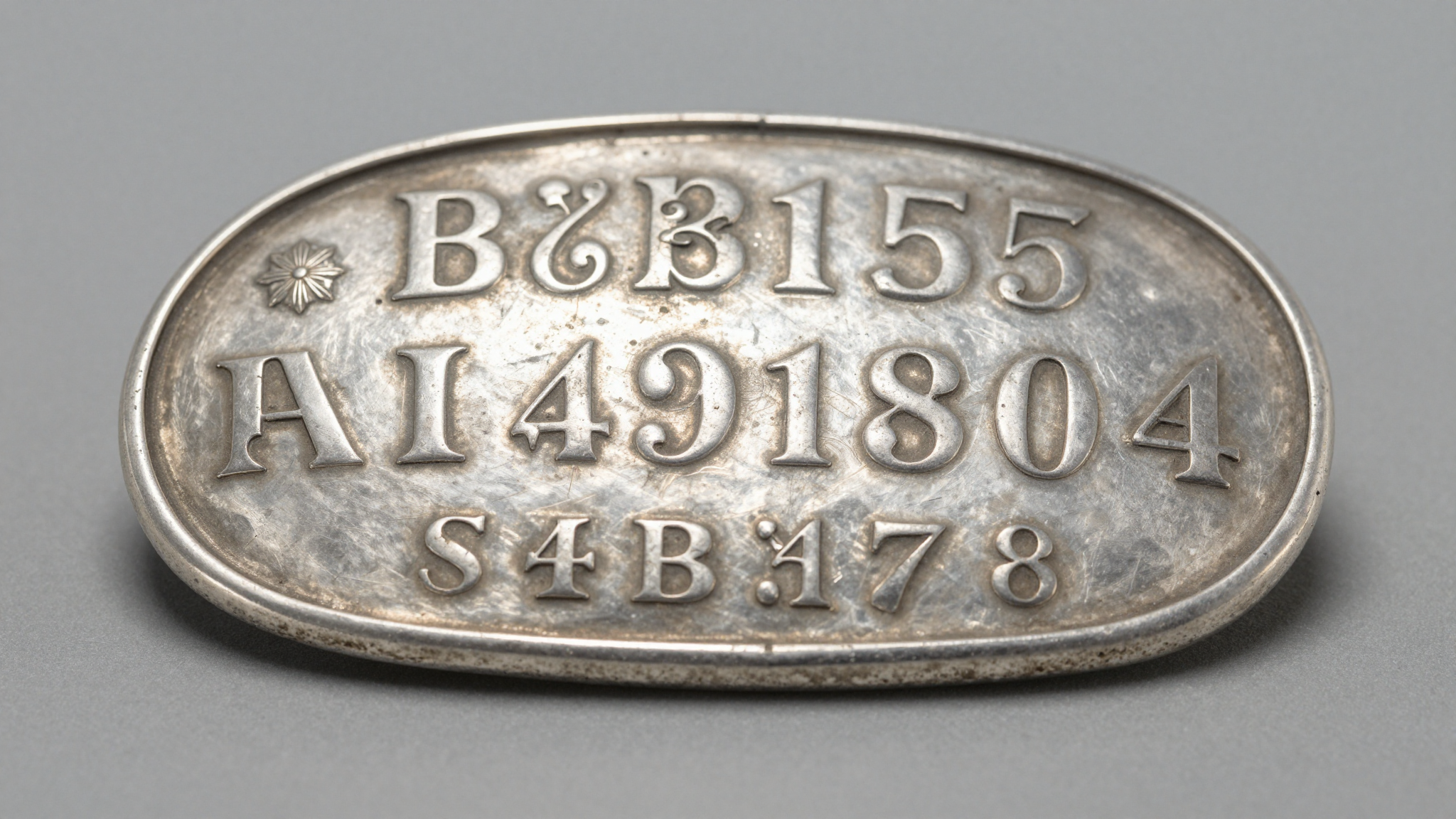
A silver date hallmarks chart is the single most useful tool any collector, estate sale buyer, or antique dealer can own — and this guide puts five centuries of UK date letter data in one place. Every British silver piece legally hallmarked since 1544 carries a date letter that tells you exactly when it passed through an assay office. Read that letter correctly, and you can date any piece to within a single year. Read it incorrectly, and you may misidentify a Victorian sugar bowl as an Edwardian cream jug, or confuse a Birmingham-made tea service with a London one. The difference matters — in provenance, in pricing, and in authenticity.
This article draws on primary sources including the Goldsmiths' Company records, the Birmingham Assay Office archives, Jackson's Silver and Gold Marks, and Bradbury's Book of Hallmarks. All cycle dates are fact-checked against multiple published hallmark references.
---
What Are Silver Date Hallmarks and Why Do They Matter?
Silver date hallmarks are alphabetical letters struck into silver alongside other quality and maker's marks, recording the year in which a piece was tested and certified at an assay office. For collectors, a date letter transforms an anonymous object into a documented artefact with a precise biography. For dealers, accurate dating supports insurance valuations, auction estimates, and provenance chains. For estate sale buyers, spotting a genuine Georgian date letter — rather than a later reproduction — can mean the difference between a £40 and a £4,000 purchase.
The Legal History of Date Letters in the UK
The English Parliament introduced the compulsory date letter system in 1544, requiring London goldsmiths to register a new alphabetical letter each year so the assay warden responsible for substandard work could be identified retrospectively. Scotland adopted formal date letters in Edinburgh from around 1681. When the Birmingham and Sheffield assay offices opened in 1773 — following a long campaign by Matthew Boulton and others — both adopted annual date letter systems immediately. Chester began its formal cycle in 1701, and Dublin's Goldsmiths' Company of Ireland operated date letters from at least 1638, though the earliest cycles are less completely documented.
The legal foundation matters: these marks were not decorative. They were accountability mechanisms. An assay office that struck a substandard piece could be traced through the date letter, and the responsible warden faced penalties. That legal compulsion explains why UK date letter records are so complete and why they remain the most reliable dating tool for British silver worldwide.
How Date Letters Differ from Other Hallmarks
A standard British silver hallmark grouping includes up to five marks: the maker's mark, the standard mark (such as the Lion Passant for sterling), the assay office mark, the date letter, and — on pieces made for special occasions or royal jubilees — an optional commemorative mark. The date letter is the only mark that changes annually. The Lion Passant, for example, has appeared on sterling silver since 1544 and tells you nothing about year of manufacture. The assay office mark (the anchor for Birmingham, the crown for Sheffield, the leopard's head for London) tells you where a piece was tested but not when. Only the date letter gives you the year.
For a broader overview of how all these marks work together, see our UK silver hallmarks guide.
---
How to Read a Silver Date Hallmark in 4 Simple Steps
Dating a piece accurately requires combining four pieces of information: the letter itself, the shield shape surrounding it, the font style used to cut the letter, and its position relative to other marks in the hallmark group.
Step 1 — Locate the Date Letter on the Piece
On most flatware, the hallmarks appear on the back of the shank. On hollow ware such as teapots and jugs, check the underside of the base and the inside of the lid. On tankards, the base and the interior of the handle are common locations. Some small items — vinaigrettes, snuff boxes — carry all marks in a line on the base. On cast pieces such as candlesticks, marks frequently appear on the underside of the foot. Always use a 10x loupe in good raking light. Pieces polished over decades can lose hallmark clarity entirely; on those, oblique lighting across the surface will often reveal letter outlines that direct light simply washes out.
Step 2 — Identify the Assay Office Shield Shape
Before you attempt to match a date letter, identify the assay office from the town mark, because each office used different letter cycles running on different timescales. London's date letter shield changed shape multiple times across its cycles — from plain rectangles in Tudor periods to ornate shaped cartouches in Victorian years. Birmingham used a plain square or rectangular shield for its date letters throughout most of its history. Sheffield frequently used a square with cut corners. Edinburgh's shields varied from escutcheons to ovals. Getting the office right first prevents a misidentification cascade.
Step 3 — Match the Letter Style and Font
Within any single assay office, each alphabet cycle used a distinct combination of letter case (upper or lower), font style (Roman, Gothic, Old English, italic, script), and shield shape. London's cycle beginning in 1736, for instance, used Roman capitals in a plain shield, while the cycle starting in 1776 shifted to lower-case letters in a shaped shield. These combinations are not interchangeable. A lower-case Roman "a" from London's 1736 cycle and an upper-case Roman "A" from the 1756 cycle look superficially similar but represent different decades entirely.
Step 4 — Cross-Reference with the Date Chart Below
Once you have the office, the letter, and the font style noted, cross-reference all three against the chart in the next section. If two possibilities remain — which happens with worn letters or partially obscured shields — check the maker's mark and the standard mark for supporting date evidence. Registered maker's marks can be traced through the Goldsmiths' Company records to confirm working dates. See our full silver hallmarks identification chart for a complete visual reference across all marks.
---
UK Silver Date Hallmarks Chart by Assay Office and Year
The table below summarises the major date letter cycles across all six UK assay offices. Individual cycles within each office used different fonts and shield shapes; this chart presents cycle-level data. For letter-by-letter visual charts, consult the office-specific sections linked from this page.
| Assay Office | Active Period | Cycle Example | Letters Used | Font Style | Shield Shape | Cycle Length |
|---|---|---|---|---|---|---|
| London | 1544–2026 | 1716–1735 | A–U (20 letters) | Roman capitals | Shaped cartouche | 20 years |
| London | 1544–2026 | 1736–1755 | a–u (20 letters) | Roman lower-case | Plain rectangle | 20 years |
| London | 1544–2026 | 1776–1795 | a–u (20 letters) | Roman lower-case | Shaped shield | 20 years |
| London | 1544–2026 | 1816–1835 | A–U (20 letters) | Roman capitals | Plain oblong | 20 years |
| Birmingham | 1773–2026 | 1773–1797 | A–Y (25 letters) | Roman capitals | Square | 25 years |
| Birmingham | 1773–2026 | 1798–1823 | a–z (26 letters) | Old English lower | Square | 26 years |
| Birmingham | 1773–2026 | 1824–1848 | A–Z (26 letters) | Old English caps | Square | 25 years |
| Sheffield | 1773–2026 | 1773–1798 | E–Z + A–D (26 letters) | Roman capitals | Square cut corners | 26 years |
| Sheffield | 1773–2026 | 1824–1843 | A–U (20 letters) | Roman lower-case | Square | 20 years |
| Edinburgh | 1681–2026 | 1681–1705 | A–U (21 letters) | Roman capitals | Plain shield | 21 years |
| Edinburgh | 1681–2026 | 1806–1831 | A–Z (26 letters) | Roman capitals | Oval | 26 years |
| Chester | 1701–1962 | 1701–1725 | A–V (22 letters) | Roman capitals | Plain shield | 22 years |
| Chester | 1701–1962 | 1884–1900 | A–Q (17 letters) | Old English | Shaped shield | 17 years |
| Dublin | 1638–present | 1638–1657 | A–T (20 letters) | Roman capitals | Plain rectangle | 20 years |
| Dublin | 1638–present | 1821–1846 | A–Z (26 letters) | Roman capitals | Plain rectangle | 26 years |
London (Goldsmiths' Company) Date Letter Cycles 1544–2026
London holds the longest continuous date letter record in the world. The Goldsmiths' Company at Goldsmiths' Hall in the City of London has struck date letters without interruption since 1544 — more than 480 years across roughly 25 separate alphabet cycles. Each cycle runs 20 to 25 letters; J, V, W, X, Y, and Z are typically omitted in older cycles to maintain consistent cycle lengths. The cycle beginning in 1896 used Old English black-letter capitals in a shaped shield; the following cycle from 1916 shifted to Roman capitals in a plain square shield. Knowing these combinations matters because London produced a higher volume of hallmarked silver than any other office, and the sheer quantity of London-marked pieces in circulation means misidentification rates are highest here. Read our London assay office hallmarks explained page for the complete cycle-by-cycle breakdown.
Birmingham Assay Office Date Letter Cycles 1773–2026
The Birmingham Assay Office — identifiable by the anchor town mark — opened on 31 August 1773 and began its date letter system immediately, starting with the letter "a" in the first cycle. Birmingham was the largest assay office by volume throughout the 19th century, handling the massive silver production of the Jewellery Quarter. Its date letter cycles typically ran 25 to 26 letters and used a consistent square or rectangular shield, which occasionally creates confusion with Sheffield marks. The key distinction: look for the anchor (Birmingham) versus the crown (Sheffield, pre-1975). See our Birmingham silver hallmarks guide for a full cycle listing with shield shape variations.
Sheffield Assay Office Date Letter Cycles 1773–2026
Sheffield opened simultaneously with Birmingham in 1773. Its first date letter cycle began unusually with the letter "E" rather than "A," because the opening ceremony occurred partway through the year and the committee chose a mid-alphabet starting point. Sheffield used the crown as its town mark from 1773 until 1975, when the town mark changed to a York Rose to avoid confusion with the standard mark used in some foreign markets. Sheffield's date letter cycles varied in length from 20 to 26 letters across different periods, and its shield shapes — often a square with cut corners — require careful distinction from Birmingham's plain square.
Edinburgh Assay Office Date Letter Cycles 1681–2026
Edinburgh's hallmarking authority, the Incorporation of Goldsmiths of Edinburgh, operated date letters from approximately 1681 in a systematic form, though earlier Edinburgh silver from the late 16th and early 17th centuries sometimes carried informal date references. The Edinburgh town mark is a three-towered castle. Scottish silver shows more regional variation than English silver because Edinburgh was the only Scottish assay office of significance; Glasgow operated briefly but its records are inconsistent. Edinburgh's cycles used shields ranging from plain escutcheons to ovals to shaped cartouches, making the shield shape a particularly important dating clue for Scottish silver.
Chester Assay Office Date Letter Cycles 1701–1962
Chester operated its assay office from 1701 until its closure in 1962, making it the most recently closed of the historic English provincial offices. Its town mark was three wheat sheaves and a sword — the arms of the city of Chester. Chester silver is strongly associated with northwest England and North Wales, and much of the flatware and small hollow ware produced in the region carries Chester marks from the Victorian and Edwardian periods. Cycle lengths at Chester were irregular compared with London or Birmingham — some ran only 17 years, others 25 — partly because the office handled lower volumes and adjusted its cycles accordingly.
Dublin (Goldsmiths' Company of Ireland) Date Letter Cycles
The Dublin assay office, operated by the Goldsmiths' Company of Ireland, used the harp crowned as its standard mark and Hibernia (a seated female figure) as its duty mark. Date letters in Dublin followed 20-to-26-letter cycles from the 17th century onward, though the very earliest cycles before 1700 present documentation challenges. Irish silver is a distinct collecting category, and Dublin date letters do not align with London or Birmingham cycles — a point that trips up many buyers who assume British and Irish date letters synchronise. They do not. Always treat Dublin-marked pieces as a separate system requiring a dedicated Irish silver reference.
---
Date Letter Alphabet Cycles Explained
Why Alphabets Reset and Skip Certain Letters
Each assay office managed its date letter cycle by selecting a subset of the alphabet, assigning one letter to each year of the cycle, then beginning a new cycle with a different font or case to distinguish it from the previous one. Letters commonly omitted include J (easily confused with I in worn marks), V (confused with U), W, X, Y, and Z — reducing 26-letter alphabets to 20 or 23 letters and keeping cycles at manageable lengths. When a cycle ended, the office introduced a new combination of letter case and font, effectively creating a new visual language for that period. This system allowed any trained eye to place a piece within a decade at a glance, even before reading the specific letter.
How Font and Case Changes Help You Pinpoint the Decade
Within a single assay office, the alternation of Roman capitals, Roman lower-case, Old English (Gothic) capitals, Old English lower-case, italic, and script styles creates a matrix of identification. A collector who recognises London's Old English capital "A" in a shaped shield knows immediately that the piece dates to the 1896–1915 cycle — no chart required. This pattern recognition develops with handling experience, but the chart above provides the shortcut. Font changes were deliberate policy decisions by each assay office, not aesthetic choices. They were designed to prevent forgers from reusing date letters from earlier cycles in later periods.
---
Common Identification Mistakes and How to Avoid Them
Confusing London and Birmingham Date Letters
The most frequent error among newer collectors is conflating London and Birmingham date letters because both offices used Roman capital cycles during overlapping periods. The fix is straightforward: always identify the town mark before attempting to read the date letter. The leopard's head (London) and the anchor (Birmingham) are visually distinct, but on worn pieces both can degrade into an indistinct blob. If the town mark is unclear, look at the maker's mark — Birmingham-registered makers appear in Birmingham Assay Office records; London-registered makers appear in Goldsmiths' Company records. Cross-referencing maker and date evidence resolves most ambiguous cases.
Misreading Worn or Struck Hallmarks
Heavy polishing is the enemy of hallmark legibility. It removes metal from the high points of a struck mark, erasing fine details of font style and shield shape. Never attempt a final identification from a polished surface without oblique lighting and a loupe of at least 10x magnification. Struck hallmarks have raised metal around the impression; raking light across the surface reveals the letter shape even when the mark appears worn flat under direct light. On flatware that has been repaired or strengthened, marks may have been partially filled with solder, which complicates reading further. I've seen beautifully preserved Georgian pieces where the date letter was essentially gone — not from age, but from a century of enthusiastic polishing.
When No Date Letter Is Present — What It Means
Not all silver carries a date letter, and the absence of one does not automatically indicate a fake or an unmarked reproduction. Foreign silver imported into the UK and hallmarked at a British assay office under the 1904 Import regulations received a date letter, but much pre-1904 imported silver carries only a sponsor's mark and the British standard mark added at import. Pieces made before 1544 carry no date letter because the system did not yet exist. Small items below the minimum weight threshold — some antique vinaigrettes and thimbles, for example — were legally exempt from the full hallmark suite. When no date letter appears, use maker's marks, style analysis, and metal testing to establish approximate dates. Our how to identify silver hallmarks guide covers unmarked and partially marked pieces in detail.
---
Era-by-Era Guide: Identifying Silver by Historical Period
Tudor and Stuart Silver (1544–1714)
Tudor and Stuart silver represents the rarest category in British collecting. London is virtually the only source of systematically date-lettered silver from this period, because the provincial assay offices had not yet established formal systems. Surviving pieces from before 1660 are almost exclusively ecclesiastical — communion cups, flagons, patens — because domestic silver was routinely melted down during the Civil War and Interregnum. When you encounter a pre-1700 date letter on a London piece, expect a Gothic or Roman capital in a plainly shaped shield and verify against the Goldsmiths' Company records, which survive from 1478 onward. The cycle running 1658–1677 used court hand (a form of cursive) letters, making it one of the most distinctive and misidentified cycles in the London sequence.
Georgian Silver Date Hallmarks (1714–1830)
Georgian silver is the largest category most collectors actively pursue. The period spans roughly nine London date letter cycles and covers the establishment of Birmingham and Sheffield in 1773. Georgian date letters show the clearest visual progression: early Georgian cycles used Roman capitals in shaped cartouches; mid-Georgian cycles shifted to lower-case Roman in plainer shields; late Georgian cycles returned to capitals with a cleaner, more regularised shield shape reflecting the neoclassical aesthetic of the period. The Duty Mark — the monarch's head, introduced in 1784 and removed in 1890 — provides a useful cross-reference: its presence confirms a date between 1784 and 1890, and its specific portrait style can narrow the range to a particular monarch's reign.
Victorian Silver Date Hallmarks (1837–1901)
Victorian silver is the most abundant category in today's market and the most commonly encountered at estate sales, auction houses, and antique fairs. The period covers three complete London cycles and proportional cycles at all active provincial offices. Birmingham and Sheffield produced enormous quantities of mid-Victorian electroplate alongside hallmarked solid silver — be alert to EPNS (electroplated nickel silver) and EP marks, which indicate plated rather than solid silver and carry no date letter. Genuine Victorian hallmarked silver frequently displays the Lion Passant, the date letter, the assay office mark, and the monarch's head all in a tight row; the combination is immediately recognisable once you know the visual pattern.
Edwardian and Early 20th Century Silver (1901–1949)
Edwardian silver — made between 1901 and approximately 1910 — is characterised by elegant, restrained neoclassical forms and frequently high-quality craftsmanship. The date letter cycles covering this period at London used Roman capitals in a plain square shield (1896–1915 cycle) and then a new cycle from 1916. The post-1890 removal of the Duty Mark means that late Victorian and Edwardian pieces must be dated entirely by the date letter cycle, which makes correct font identification more important than in any earlier period. The interwar years (1919–1939) produced a distinct body of Art Deco silver that now attracts premium prices, and accurate dating to this specific window significantly affects valuation.
Post-War and Modern Silver (1950–2026)
Post-war British silver from the 1950s through the 1970s was produced in smaller quantities than Victorian or Georgian silver, which paradoxically makes well-designed pieces from this period increasingly collectible. The 1999 Millennium mark and the 2002 Jubilee mark are optional commemorative additions to standard hallmarks during those years and help confirm dating for pieces carrying them. From 2000 onward, all four active UK assay offices — London, Birmingham, Sheffield, and Edinburgh — use a common date letter system running A through Z (with modifications), making post-2000 dating more straightforward than any earlier period.
---
Frequently Asked Questions About Silver Date Hallmarks
How do I identify the year a piece of silver was made using hallmarks?
Locate the date letter on the piece, identify which assay office struck it by the town mark, match the letter to the correct font and case style for that office, then cross-reference all three details against a silver date hallmarks chart. Each letter represents a single year within a specific cycle, so a correct match gives you a precise year. For example, London's lower-case Roman "k" in a shaped rectangular shield dates to 1745 — not to any other year in any other cycle.
What is a date letter in silver hallmarks and how does it work?
A date letter is a single alphabetical character struck into silver at an assay office, changing annually to record the year of assay. Each year the assay office advanced one letter through the alphabet; when the cycle was complete, it reset with a new font or letter case. The system began in London in 1544 and was adopted by other UK offices from 1638 (Dublin) and 1681 (Edinburgh) onward. One letter equals one year; the font, case, and shield shape identify which cycle — and therefore which decade — the letter belongs to.
Which UK assay offices used date letters on silver and when did they start?
Six UK assay offices used date letters: London from 1544, Dublin from approximately 1638, Edinburgh from 1681, Chester from 1701, Birmingham from 1773, and Sheffield from 1773. Chester closed in 1962, and its records cover 261 years of UK silver hallmarks date letters by year. The four remaining active offices — London, Birmingham, Sheffield, and Edinburgh — continue to strike date letters today, with post-2000 cycles following a harmonised format agreed across all offices.
How often did the date letter alphabet cycle reset on British silver?
Cycle lengths varied by office and period, typically running between 17 and 26 years. London's cycles historically covered 20 to 25 letters; Birmingham's ranged from 25 to 26. A new cycle began with a change of letter case, font style, or shield shape — or all three simultaneously — so the visual break between cycles is usually obvious to a trained eye. The reset was not a fixed interval; offices adjusted cycle length by choosing how many letters to include, skipping J, V, W, X, Y, or Z as needed.
Can I use a silver date hallmarks chart to identify pieces made before 1700?
Yes, with qualifications. London date letters are documented from 1544, and Edinburgh's systematic records begin around 1681, so an antique silver hallmark identification chart covers both offices for pre-1700 silver. Surviving pre-1700 pieces are rare, however. Marks are often worn or struck with less precision than in later periods, and some very early cycles have gaps in documentation. Dublin records from before 1700 present particular challenges. For pre-1700 pieces, use a chart as a starting point and verify against specialist references such as Jackson's Silver and Gold Marks, or consult a specialist in early British or Irish silver.