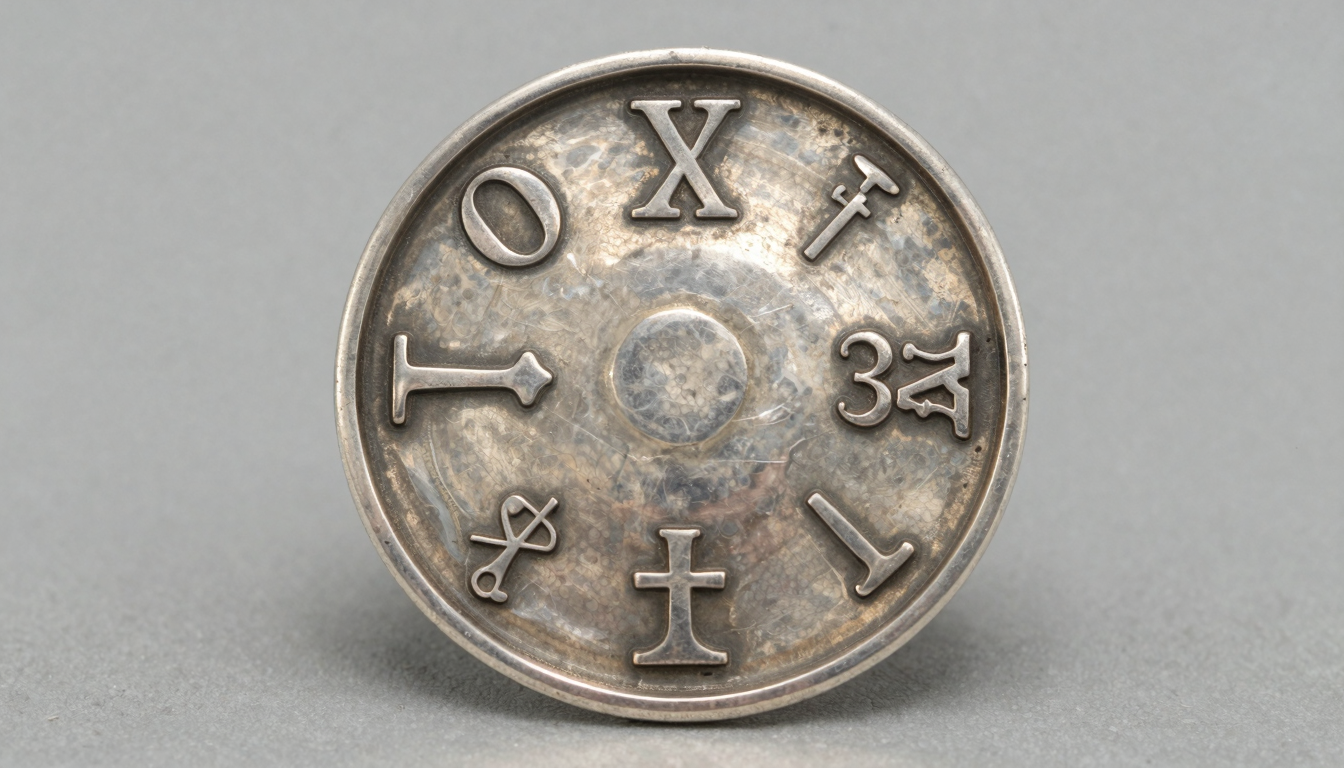
Reviewed by the AntiqueSilverHallmarks.com editorial team. Last updated: January 2026. This article is for educational purposes only and does not constitute professional appraisal advice.
---
Sterling silver symbols and markings are the single most reliable method collectors, estate sale shoppers, and dealers have for confirming what they actually hold in their hands. A tarnished sugar bowl at an estate sale might look identical whether it contains 92.5% pure silver or a thin silver wash over base metal — but the marks stamped into its surface tell the whole truth. Every major symbol you will encounter is covered here, from the medieval Lion Passant to modern 925 stamps, with specific dates, regional variations, and red flags that signal a fake.
---
What Are Sterling Silver Hallmarks and Why Do They Matter?
The History of Silver Hallmarking
Silver hallmarking is one of the oldest forms of consumer protection in Western history. The English system traces its origin to a 1300 statute under Edward I, which required silversmiths to bring their work to Goldsmiths' Hall in London before sale — giving the world the term "hallmark." That same system, refined and legislated through the British Hallmarking Act 1973, remains legally enforceable today on any silver article over 7.78 grams sold within the UK as sterling.
The earliest marks served a single purpose: confirming that silver met the required alloy standard. Over the following centuries, the system expanded to include town marks identifying where testing occurred, date letters recording the year of assay, and maker's marks tying each piece to the craftsperson responsible. By the 18th century, five separate marks appeared on fully hallmarked British silver, each carrying distinct legal weight.
France, Germany, the Netherlands, and most Scandinavian countries developed their own national systems, many running parallel to the British model but using entirely different symbols. Hallmarking is a legal, traceable infrastructure — not a decorative tradition. That distinction changes how collectors approach identification entirely.
Why Hallmarks Protect Buyers and Collectors
A hallmark functions as a chain of accountability. Reading UK silver hallmarks on a piece lets you trace responsibility back to a specific assay office, a specific maker, and in many cases a specific year. That chain of evidence matters enormously when you pay estate sale prices for what you believe is Georgian silver, only to discover later that the piece is an electroplated Victorian reproduction.
The UK Assay Office reports that counterfeit and misrepresented silver remains an ongoing problem in secondary markets. Hallmarks allow buyers to cross-reference marks against published records — Jackson's Silver and Gold Marks of England, Scotland and Ireland, now in its third edition, catalogs tens of thousands of maker's marks with provenance documentation. Without this system, buyers rely entirely on seller claims.
---
The 7 Core Sterling Silver Symbols You Need to Know
The Lion Passant: England's Purity Guarantee
The Lion Passant — a walking lion facing left, right foreleg raised — has marked English sterling silver continuously since 1544. It guarantees the alloy contains at least 92.5% pure silver, the legal threshold for the sterling standard. You will find it struck into virtually every piece of English silver made after that date, regardless of which assay office tested it. The mark itself is small, typically under 5mm on most flatware, and on heavily used pieces the fine detail of the lion's mane can wear almost flush with the surface.
Scotland uses a different purity mark — the thistle — so a Lion Passant specifically confirms English origin. If you find a piece with a Lion Passant alongside other clear British marks and cannot find a matching entry in Jackson's, that absence is itself a red flag worth investigating.
The 925 Stamp: Modern Sterling Standard
The number 925 stamped into silver indicates a fineness of 925 parts per thousand — exactly the same purity standard as sterling. This mark became the internationally preferred notation as global silver trade expanded in the late 20th century. Many contemporary British silversmiths now strike 925 alongside the traditional Lion Passant. On imported silver from countries including Italy, Thailand, and Mexico, 925 often appears alone, without any accompanying assay office or date letter marks. The presence of 925 confirms alloy content. It tells you nothing about age, origin, or maker.
Maker's Marks: Who Made Your Silver?
Every registered silversmith in the UK must strike a unique maker's mark — typically two or three initials within a shaped cartouche — into each piece before submitting it for assay. The Birmingham Assay Office maintains maker's mark registers dating to its founding in 1773. Paul Storr, one of the most celebrated English silversmiths, registered multiple marks during his career; his pieces now command significant premiums at auction. Identifying maker's marks requires cross-referencing against published registers, because the same initials in different cartouche shapes can indicate entirely different craftspeople from different periods.
Assay Office Marks: Where Was It Tested?
Britain has four active assay offices today: London (a leopard's head), Birmingham (an anchor), Sheffield (a rose), and Edinburgh (a castle). Each strikes its distinctive town mark onto silver it tests and approves. Historically, offices in Chester, Exeter, Newcastle, Norwich, and York also operated, each with their own symbols, before closing between the 18th and 20th centuries. Chester's sword and three wheatsheaves mark appeared on silver tested there until 1962. Knowing which office used which symbol helps narrow a piece's geographic origin and manufacture date significantly.
Date Letters: Pinpointing the Year of Manufacture
Each assay office ran its own independent date letter cycle, moving through alphabetical sequences in different shield shapes and typefaces to distinguish one cycle from another. London's cycle ran from A to U (excluding J), changing each May. A capital Roman "G" in a plain shield might indicate one year; the same letter in an ornamental shield within a different cycle indicates another decade entirely. The silver hallmarks chart provides cycle-by-cycle reference for all four active offices. This is why sterling silver is among the most precisely datable of all antiques categories — more so than most furniture, ceramics, or glass.
The Duty Mark: A Rare Historical Symbol
Between 1784 and 1890, British silver carried an additional mark: the reigning monarch's profile in a small oval cartouche. This duty mark confirmed that the maker had paid the government tax on silver. George III's profile appears on silver made through 1820; subsequent monarchs followed in succession. Finding a duty mark instantly anchors a piece's manufacture to that 106-year window. Its absence on pre-1784 or post-1890 silver is entirely normal, but a duty mark on a piece someone claims predates 1784 is a serious inconsistency requiring explanation.
Britannia Mark: Higher Purity Silver Explained
Between 1697 and 1720, the British government required silversmiths to work at a higher standard: 95.84% pure silver, known as the Britannia Standard. The marks changed accordingly — a seated Britannia figure replaced the Lion Passant, and a lion's head erased replaced the leopard's head. After 1720, sterling (92.5%) became legal again, though makers retained the option to work at Britannia Standard. Pieces bearing the Britannia mark from that 1697–1720 window are genuinely rare and command collector premiums. Some 20th-century silversmiths voluntarily struck Britannia-standard marks on high-purity commissions, so the mark alone does not confirm the early date.
---
Sterling Silver Hallmark Reference Table
How to Use This Quick-Reference Chart
This table covers the marks most frequently encountered on British and international silver. For complete cycle-by-cycle date letter references, see the identify silver hallmarks tool, which cross-references shape, letter, and office against published records.
Regional Variations in UK Assay Office Symbols
| Symbol / Mark | What It Looks Like | Meaning | Country / Region | Period in Use |
|---|---|---|---|---|
| Lion Passant | Walking lion, left-facing, right foreleg raised | 92.5% silver purity (sterling standard) | England | 1544–present |
| 925 | Numerals struck in rectangle or oval | 925 parts per thousand silver (sterling) | International | Late 20th century–present |
| Leopard's Head | Crowned leopard's head (crown removed after 1821) | London Assay Office town mark | London, England | 1300–present |
| Anchor | Plain upright anchor | Birmingham Assay Office town mark | Birmingham, England | 1773–present |
| Rose | Tudor rose | Sheffield Assay Office town mark | Sheffield, England | 1773–present |
| Castle | Three-towered castle | Edinburgh Assay Office town mark | Scotland | 1485–present |
| Thistle | Stylized Scottish thistle | Scottish sterling purity mark | Scotland | 1759–present |
| Britannia | Seated female figure holding shield and spear | 95.84% silver purity (Britannia Standard) | England | 1697–1720 (optional thereafter) |
| Lion's Head Erased | Lion's head with jagged neck cut | Britannia Standard companion purity mark | England | 1697–1720 (optional thereafter) |
| Sovereign's Head | Profile of reigning monarch in oval | Duty paid to Crown | Britain | 1784–1890 |
| Sword and Wheatsheaves | Sword between three sheaves of wheat | Chester Assay Office town mark | Chester, England | c.1686–1962 |
| Three Castle Towers | Three separate towers | Newcastle Assay Office town mark | Newcastle, England | c.1423–1884 |
| Date Letter | Single letter in shaped shield | Year of assay (cycle and shield shape vary by office) | Britain | 1478–present |
| Maker's Mark | Two or three initials in cartouche | Registered silversmith or company identity | Britain | 1363–present |
| 800 | Numerals struck in rectangle | 80% silver purity (below sterling) | Germany, continental Europe | 19th century–present |
American Sterling Silver Marks vs British Hallmarks
Why the US Has No Mandatory Hallmarking System
The United States never established a federal hallmarking law comparable to Britain's system. American silversmiths operated under voluntary trade standards, and no government assay office ever held mandatory testing authority over domestic silver production. The closest parallel — the National Stamping Act of 1906 — prohibited misuse of the word "sterling" on substandard metal, but it did not require manufacturers to submit pieces for independent verification.
This absence of oversight means American silver marks vary significantly by manufacturer, period, and region. Collectors must rely on maker-specific reference materials, such as Dorothy Rainwater's Encyclopedia of American Silver Manufacturers, rather than a unified national system.
Common American Sterling Stamps: STERLING, 925, and More
American makers typically struck the word STERLING in plain capital letters to indicate the 92.5% standard, having no official purity symbol equivalent to the Lion Passant. Tiffany & Co. struck TIFFANY & CO. STERLING alongside pattern names. Gorham used GORHAM and a lion, anchor, and "G" in a distinctive combination that experienced collectors recognize on sight. Kirk Stieff used STERLING accompanied by a three-digit pattern number. Some 20th-century American pieces also carry 925 stamps, particularly those made for export. The absence of a date letter or assay office mark on American silver is entirely normal and does not signal a problem.
---
How to Read Sterling Silver Markings Step by Step
Tools You Need to Identify Hallmarks at Home
Clear identification of sterling silver symbols and markings requires a few basic tools. A 10x loupe is the single most important item — marks struck into small spoons or thimbles are often under 3mm across, and the naked eye misses critical details in shield shape and letter form. Good raking light — a desk lamp positioned at a low angle to the silver surface — makes stamped marks pop against the metal in a way that overhead lighting completely flattens. A soft polishing cloth removes surface tarnish that obscures marks without scratching the metal. A hallmark reference app, such as the UK Assay Office's own mobile tool, lets you cross-reference marks on-site at estate sales.
One practical note: pieces polished heavily over decades can lose hallmark clarity, with fine details worn nearly smooth. If marks look shallow or partially illegible, that is not automatically suspicious — it is simply age. Photograph what you have and work with what remains visible.
Step-by-Step Process for Identifying Unknown Marks
Start by locating all marks present on the piece. Common locations include the back of flatware handles, the underside of hollowware bases, the inside of ring shanks, and the interior of lids. Photograph each mark in raking light before attempting identification. Then work through the marks systematically: identify the purity mark first (Lion Passant, 925, Britannia, or numeral fineness), then the assay office mark, then the date letter. The maker's mark typically comes last, because it requires cross-referencing a specific register. Record the shield shape around the date letter — this detail alone narrows the possible cycles dramatically.
When to Consult a Professional Appraiser
Pieces with obscured, worn, or unusual marks warrant professional review before any significant purchase. Members of the American Society of Appraisers (ASA) and the UK's National Association of Jewellers carry specialist qualifications in silver identification. If you believe a piece may carry forged or transposed marks — a known practice where genuine marks are removed from damaged pieces and soldered onto later replacements — only an appraiser with physical access to the piece can confirm or dismiss that concern.
---
Common Fakes and What Marks to Watch Out For
Silver-Plated vs Sterling: How the Markings Differ
Silver-plated pieces carry their own distinct stamps that inexperienced buyers sometimes misread as sterling marks. EPNS stands for electroplated nickel silver — no sterling content whatsoever. EPBM indicates electroplated Britannia metal, again a base-metal substrate with a thin silver coating. Sheffield Plate, produced between roughly 1742 and 1840, uses fused silver over copper and carries its own marks that can superficially resemble hallmarks. A piece stamped with an anchor that lacks a Lion Passant, date letter, and maker's mark is almost certainly not sterling silver. The anchor alone means nothing without the full complement of hallmarks.
Red Flags That Suggest a Forgery or Misrepresentation
Transposed marks — genuine hallmarks cut from a damaged piece and set into a later, unmarked piece — represent one of the most serious problems in the antique silver trade. Look for a small rectangular or irregular patch around the marks that sits slightly differently from the surrounding surface; this patch is called a "let-in" mark, and its presence on a piece should stop any purchase immediately. Run your fingernail across the mark area. On genuine struck marks you feel the impression going into the metal; on a let-in, you sometimes feel the faint edge of the inserted panel. Inconsistent patina around the mark area also warrants scrutiny. Marks that appear too sharp and deep on a piece that otherwise shows significant age wear suggest the marks may have been re-struck or deepened. The Antique Silver Dealers Association advises buyers to request provenance documentation on any piece where marks seem inconsistent with the overall condition.
---
Frequently Asked Questions
What does the lion passant symbol mean on sterling silver?
The Lion Passant guarantees that a piece of English silver contains at least 92.5% pure silver — the legal definition of sterling. The mark depicts a walking lion facing left with its right foreleg raised, and it has appeared continuously on English silver since 1544. It does not appear on Scottish silver, which uses a thistle as its purity mark, so the Lion Passant specifically confirms English assay.
How can I tell if silver is genuine sterling by its markings?
Genuine sterling silver carries a recognized purity mark — either a Lion Passant (England), a thistle (Scotland), the number 925, or the word STERLING on American pieces. British sterling also requires an assay office mark, a maker's mark, and usually a date letter. The presence of EPNS, EPBM, or "silver plate" anywhere on a piece confirms it is not sterling. A 10x loupe and a reliable hallmark reference will confirm or rule out sterling status in most cases.
What does '925' stamped on silver mean?
The stamp 925 indicates the piece contains 925 parts per thousand of pure silver — exactly 92.5% — which is the sterling standard. This numeric notation became common as international silver trade grew in the latter 20th century. It appears on silver from Britain, Italy, Mexico, Thailand, and many other producing countries. The number confirms purity but provides no information about the maker, date of manufacture, or country of origin.
What are the five standard hallmarks found on British sterling silver?
Fully marked British sterling silver carries: a maker's mark (initials in a cartouche), a purity mark (Lion Passant for England, thistle for Scotland), an assay office mark (such as the London leopard's head or Birmingham anchor), a date letter (indicating the year of assay), and historically a duty mark (the sovereign's head, used 1784–1890). The British Hallmarking Act 1973 currently requires maker's mark, purity mark, and assay office mark as the legally mandatory three; date letters remain standard practice.
Is there a difference between sterling silver symbols in the US and the UK?
Yes, significantly. British sterling silver operates under a mandatory government-supervised hallmarking system dating to 1300, requiring independent assay office testing and standardized symbols. American silver operates under no equivalent federal requirement; makers stamp their own marks voluntarily. US sterling typically shows the word STERLING or the number 925, with no independent assay office confirmation. British pieces show a full suite of marks traceable through official records, while American marks require manufacturer-specific reference materials to decode accurately.