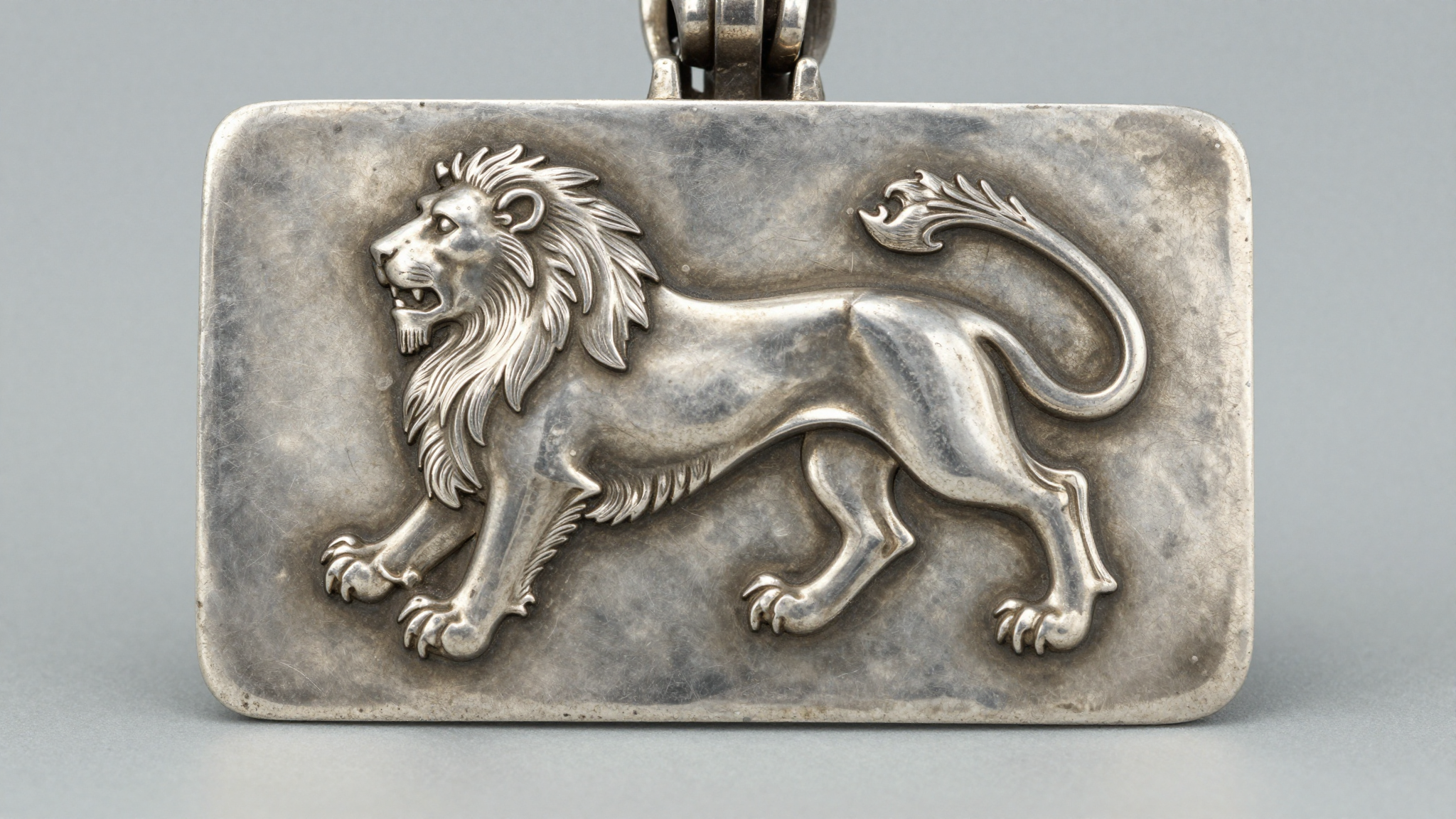
Last reviewed: June 2025 | Written by the editorial team at AntiqueSilverHallmarks.com — specialists in British silver hallmarking history and identification
---
The lion hallmark on silver is the single most important guarantee a British silver piece can carry — it confirms the metal meets the sterling standard of 92.5% pure silver. Collectors encounter it constantly, yet many don't fully understand what it promises, which variation they're looking at, or how to read it alongside the other stamps that complete a full British hallmark. This guide covers all of it.
---
The Short Answer: What the Lion Hallmark Tells You
The lion hallmark on silver is a government-backed purity guarantee stamped into every qualifying piece of British sterling silver before it can legally be sold. It is not decorative, and it is not the maker's choice — it is a legal requirement applied by an independent assay office after testing the metal's composition.
Sterling Silver Guaranteed: 92.5% Purity Explained
Sterling silver is an alloy containing a minimum of 92.5% pure silver, with the remaining 7.5% typically copper. The copper adds durability that pure silver — too soft for practical use — cannot provide on its own. The lion hallmark exists specifically to certify that a piece meets this 925 millesimal fineness threshold.
When an assay office strikes the lion onto a silver piece, it does so only after physically testing the metal. The traditional method — fire assay, or cupellation — involves removing a small sample and burning away base metals to measure the residual silver content. Modern assay offices also use X-ray fluorescence (XRF) analysis, a non-destructive technique that delivers the same accuracy far more quickly.
No maker can apply the lion mark themselves. The piece travels to a licensed assay office, which applies the mark independently. That separation between maker and certifier is the foundation of the entire British hallmarking system — and the reason the lion hallmark carries genuine weight for collectors.
Why a Lion Was Chosen as the Symbol
The lion was the heraldic symbol of the English crown, drawn directly from the royal coat of arms. Choosing it was a deliberate act of authority — the mark communicated that the English state, not individual guilds or merchants, was standing behind the purity standard. Tudor England had a persistent problem with silversmiths debasing their alloys, and attaching the most recognizable symbol of royal power to a purity mark was a pointed message to the trade.
---
A Brief History of the Lion Hallmark on British Silver
Introduced in 1544 Under Henry VIII
The lion hallmark entered English silver law in 1544 under a statute passed during the reign of Henry VIII. Before that date, the London Goldsmiths' Company used a leopard's head as its primary mark of quality — a symbol dating back to an ordinance of 1300 under Edward I. The Lion Passant was introduced as an additional layer of assurance specifically tied to sterling standard, working alongside rather than replacing the existing leopard's head.
That 1544 introduction means British silver carrying the Lion Passant represents an unbroken chain of certified quality stretching nearly 500 years. No other national silver standard can match that continuity.
How the Mark Evolved Over 500 Years
The earliest Lion Passant stamps show the animal with its head turned to face the viewer — the "guardant" position — rather than walking straight ahead. By around 1822, the mark standardized into the form collectors see most often today: the lion walking left with its head in profile. Regional assay offices sometimes applied their own subtle variations in punch design, but the fundamental image held.
Look at enough Georgian pieces under a loupe and you start to notice things: punch shapes that grew squatter toward the end of a cycle, lion proportions that vary almost comically between offices, shield outlines worn to near-illegibility on heavily polished flatware. Specialist references such as Pickford's Silver Flatware and Jackson's Silver and Gold Marks catalogue these decade-by-decade shifts in detail. The crown appearing above some lion marks in early periods reflected specific office conventions rather than a separate quality standard.
The Hallmarking Act 1973 and Modern Standards
The Hallmarking Act 1973 consolidated centuries of piecemeal legislation into a single statutory framework still in force today. It confirmed that the Lion Passant remained the compulsory mark for sterling silver sold in the UK, standardized the obligations of the four UK assay offices — London, Birmingham, Sheffield, and Edinburgh — and set out criminal penalties for selling unhallmarked silver above a minimum weight threshold. The Act also introduced the millesimal fineness mark (925) as an alternative way of expressing the sterling standard, though the Lion Passant continued alongside it. You can explore the full landscape of UK silver hallmarks to see how all these elements fit together.
---
Types of Lion Hallmarks and What Each One Means
Not every lion stamp on silver means the same thing. The position of the body, the direction of the head, and the region of origin all produce different marks with different meanings.
Lion Passant: The Most Common Lion Stamp
The Lion Passant — walking left, head in profile, right forepaw raised — is the standard sterling silver mark applied by the London, Birmingham, and Sheffield assay offices from the early 19th century onward. If you own a piece of British silver made after approximately 1822, this is almost certainly the lion you're looking at.
Lion Passant Guardant: An Earlier Variation
Before 1822, the London assay office stamped the lion passant guardant — the same walking posture, but with the head turned to face directly outward. This earlier form appears on Georgian silver and is a useful dating indicator. A piece carrying it was hallmarked before the standardization that took place in the early Victorian era.
Lion Rampant: Scottish Silver and Edinburgh Assay
The Edinburgh Assay Office uses the lion rampant — a lion standing upright on its hind legs — as its assay office mark rather than as a purity mark. This is a common point of confusion. The lion rampant on Scottish silver identifies Edinburgh as the testing office; the sterling standard itself is confirmed by the 925 millesimal mark or, on older pieces, by additional marks specific to Scottish practice.
Lion's Head Erased: Rare and Historical Uses
The lion's head erased — shown as if torn from the body, with jagged neck lines — appeared in British hallmarking primarily as the mark associated with Britannia Standard silver (958 millesimal fineness), introduced in 1697 alongside the Britannia figure mark. It is not a sterling mark. Pieces carrying the lion's head erased alongside a Britannia figure are rarer and generally earlier — they date from the period 1697 to 1720 when Britannia Standard was compulsory, and sporadically afterward when makers chose the higher standard voluntarily.
| Lion Hallmark Type | Description | What It Means | Period Used | Region / Assay Office |
|---|---|---|---|---|
| Lion Passant | Walking lion, head in profile, right forepaw raised | Sterling silver (92.5% purity) | 1822–present | London, Birmingham, Sheffield |
| Lion Passant Guardant | Walking lion, head facing outward | Sterling silver (92.5% purity) | 1544–c.1822 | London (primarily) |
| Lion Rampant | Lion standing upright on hind legs | Edinburgh assay office mark (not a purity mark) | 1759–present | Edinburgh |
| Lion's Head Erased | Severed lion's head, jagged neck | Britannia Standard silver (95.8% purity) | 1697–1720 (compulsory); occasional later use | London and others |
How to Find and Read the Lion Hallmark on Your Silver Piece
Where to Look: Common Locations on Silverware
Hallmarks appear in predictable locations determined by the object's form. On flatware — spoons, forks, serving pieces — look on the back of the stem near the bowl or tine end. On hollow ware such as teapots, coffee pots, and jugs, check the underside of the base or inside the lid. On candlesticks, examine the underside of the base. Bowls and salvers typically carry marks on the underside near the rim. Smaller items like vinaigrettes or card cases often have marks inside the lid.
Using a Loupe or Magnifier to Identify the Mark
A 10x loupe is the standard tool for reading silver hallmarks. Hold the piece in stable, bright natural light — or use a daylight-balanced LED lamp — and bring the loupe to within an inch of the surface. Marks struck into a well-used spoon can be partly obscured by a century of polishing; the lion's raised forepaw is often the first detail to go. A soft brass brush (never steel) can gently clear oxidation from a mark without damaging the surrounding silver. Photograph the marks before cleaning anything, and compare your photographs against a silver hallmarks chart to cross-reference the full sequence.
Reading the Full Hallmark Sequence Alongside the Lion
The Lion Passant never appears alone on a properly hallmarked piece. A complete British hallmark typically includes four or five individual punch marks struck in a row or cluster. Read them left to right where possible, though the grouping rather than the sequence is what matters for identification. Each mark confirms a different piece of information — maker, location of testing, date, and standard.
---
What Other Marks Appear With the Lion Hallmark?
The Maker's Mark: Who Made Your Silver
The maker's mark — typically two or three initials in a shaped cartouche — identifies the silversmith or manufacturing firm that submitted the piece for assay. Before the modern era, a device such as a tool, animal, or symbol sometimes substituted for initials. The Goldsmiths' Company in London maintains records of registered maker's marks dating back to the 17th century, making it possible to attribute pieces to named workshops with reasonable certainty.
The Assay Office Mark: Where It Was Tested
Each UK assay office uses a distinct town mark. London's is a leopard's head (crowned on older pieces, uncrowned after 1821). Birmingham uses an anchor. Sheffield uses a rose. Edinburgh uses a castle. This mark tells you which office certified the piece — not necessarily where the maker was located, since silversmiths sometimes sent work to a preferred office regardless of geography.
The Date Letter: When It Was Hallmarked
The date letter is an alphabetical letter in a shaped shield that changes each year on a fixed cycle. Each assay office ran its own independent sequence with its own typeface and shield shape — the same letter in a different font can indicate a completely different year depending on the office. This trips up beginners almost every time. Matching a date letter to a year requires knowing both the assay office and the cycle; the resources at identify silver hallmarks walk through this process step by step.
The Sovereign's Head and Commemorative Marks
A profile portrait of the reigning monarch — the sovereign's head duty mark — appeared on British silver between 1784 and 1890 to confirm that excise duty had been paid. Its presence immediately narrows a piece's date range to that 106-year window. Separate commemorative marks have been issued voluntarily for royal events, including the Silver Jubilees of 1935 and 1977, the coronation of 1953, and the millennium in 1999.
| Hallmark Type | Symbol Example | What It Confirms | Required by Law? |
|---|---|---|---|
| Standard Mark (Lion Passant) | Walking lion | 92.5% silver purity (sterling standard) | Yes |
| Maker's Mark | Initials in cartouche (e.g., "EP&Co") | Identity of the silversmith or manufacturer | Yes |
| Assay Office Mark | Anchor (Birmingham), Castle (Edinburgh) | Which assay office tested and certified the piece | Yes |
| Date Letter | Letter in shaped shield (e.g., "G" in Roman font) | Year of hallmarking | Yes (until cycle changes) |
| Duty Mark | Sovereign's head in profile | Excise duty paid to the Crown | Historical (1784–1890 only) |
| Commemorative Mark | Monarch's head (jubilee issues) | Voluntary mark for royal events | No |
Does a Lion Hallmark Mean Your Silver Is Valuable?
Sterling Silver vs Silver Plate: Key Differences
The lion hallmark guarantees the piece is solid sterling silver throughout — not silver plate, which is a base metal (usually copper or nickel) coated with a thin layer of silver by electrodeposition or rolling. Silver-plated pieces carry no Lion Passant. They may carry marks such as "EPNS" (electroplated nickel silver), "A1," or Sheffield plate markings, none of which constitute hallmarks in the legal sense. A Lion Passant means you have the real material. It says nothing yet about financial value.
How Age, Maker, and Condition Affect Value
A piece of sterling silver hallmarked in the 18th century by a documented London maker such as Paul de Lamerie or Hester Bateman commands exponentially more at auction than a mass-produced Victorian mustard pot by an unknown provincial firm, even though both carry an identical Lion Passant. Date, maker attribution, original function, decorative quality, silver weight, and condition all feed into market value. Condition is particularly significant — repairs, later engraving, removed crests, and buffed-out hallmarks all reduce collector appeal and realizable price. A mark polished down to a ghost of itself raises questions a buyer shouldn't have to answer.
Getting a Professional Valuation
For any piece you believe may be significant, consult a specialist silver valuer rather than a general antiques dealer. The British Antique Dealers' Association (BADA) and the Silver Society both maintain directories of qualified specialists. Auction houses including Christie's, Sotheby's, and Bonhams offer free initial valuations for single-owner collections and can place pieces accurately within the market based on comparable recent sales data.
---
Common Questions About the Lion Hallmark on Silver
The same uncertainties surface repeatedly among collectors at every level of experience — from someone who's just inherited a canteen of cutlery to a dealer who's been handling silver for years but never needed to look closely at Scottish marks.
One repeated misconception is that any silver-looking metal with a stamped lion is guaranteed sterling. This is only true when the Lion Passant appears as part of a full British hallmark sequence applied by a recognized UK assay office. Imported pieces, costume jewelry, and decorative items sometimes carry lion-like stamps that are not official hallmarks. Learning to read the complete mark sequence matters — particularly when real money is on the table.
---
Frequently Asked Questions
What does a lion hallmark on silver mean?
The lion hallmark on silver means the piece is sterling silver, containing a minimum of 92.5% pure silver by mass. The mark is applied by an independent UK assay office after testing — it cannot be self-applied by the maker. First introduced in 1544, the Lion Passant remains the primary purity guarantee on British sterling silver today, recognized under the Hallmarking Act 1973 and accepted as a standard internationally.
What is a lion passant on silver?
A Lion Passant is the specific heraldic term for a lion shown walking to the left with its right forepaw raised and its head in profile. On British silver, the Lion Passant is the standard mark for sterling silver (92.5% purity) applied by the London, Birmingham, and Sheffield assay offices. It replaced the earlier lion passant guardant — which showed the head turned outward — around 1822, and has appeared in essentially the same form ever since.
Does a lion hallmark mean the silver is solid or sterling?
A lion hallmark confirms the piece is sterling silver — solid throughout at 92.5% silver purity — not silver plate. Silver-plated items carry no Lion Passant. The distinction matters enormously for value: sterling silver has intrinsic metal value, while silver plate's value is primarily decorative. If a piece has a Lion Passant as part of a full British hallmark, you can be confident it is solid sterling, not a base-metal coating.
When was the lion hallmark first used on British silver?
The lion hallmark was first used on British silver in 1544, introduced by statute during the reign of Henry VIII. Before this date, the London Goldsmiths' Company used the leopard's head as its quality mark, a tradition dating to 1300. The Lion Passant was added specifically to certify the sterling standard of 92.5% silver, creating the dual-mark system that evolved into the full British hallmarking sequence familiar to collectors today.
Is a lion hallmark the same on all UK silver pieces?
No. The Lion Passant is consistent across London, Birmingham, and Sheffield for sterling silver, but Edinburgh uses the lion rampant as its assay office mark rather than as a purity indicator. Early pieces (pre-1822) carry the lion passant guardant rather than the modern Lion Passant. Pieces assayed to the higher Britannia Standard carry a lion's head erased instead. Regional variations in punch style and shield shape also exist across different periods and offices, which is why consulting a full hallmarks reference is always advisable.