Last updated: January 2026 | Reviewed by the AntiqueSilverHallmarks.com Editorial Team
---
The 925 silver mark meaning is straightforward: any item stamped with this number contains 92.5% pure silver by weight, with the remaining 7.5% made up of alloying metals, almost always copper. That single three-digit stamp is the internationally recognised standard for sterling silver, and understanding it correctly separates a confident collector from one who overpays for silver plate or passes on a genuine find.
This article draws on reader-submitted pieces from our hallmark identification service, including a Georg Jensen bracelet from Copenhagen, a Tiffany & Co. sugar bowl from New York, and an unmarked Continental spoon that turned out to be 800-grade, to show you exactly what genuine 925 marks look like, where to find them, and how to verify their authenticity.
---
What Does the 925 Mark Mean?
The 925 Purity Standard Explained
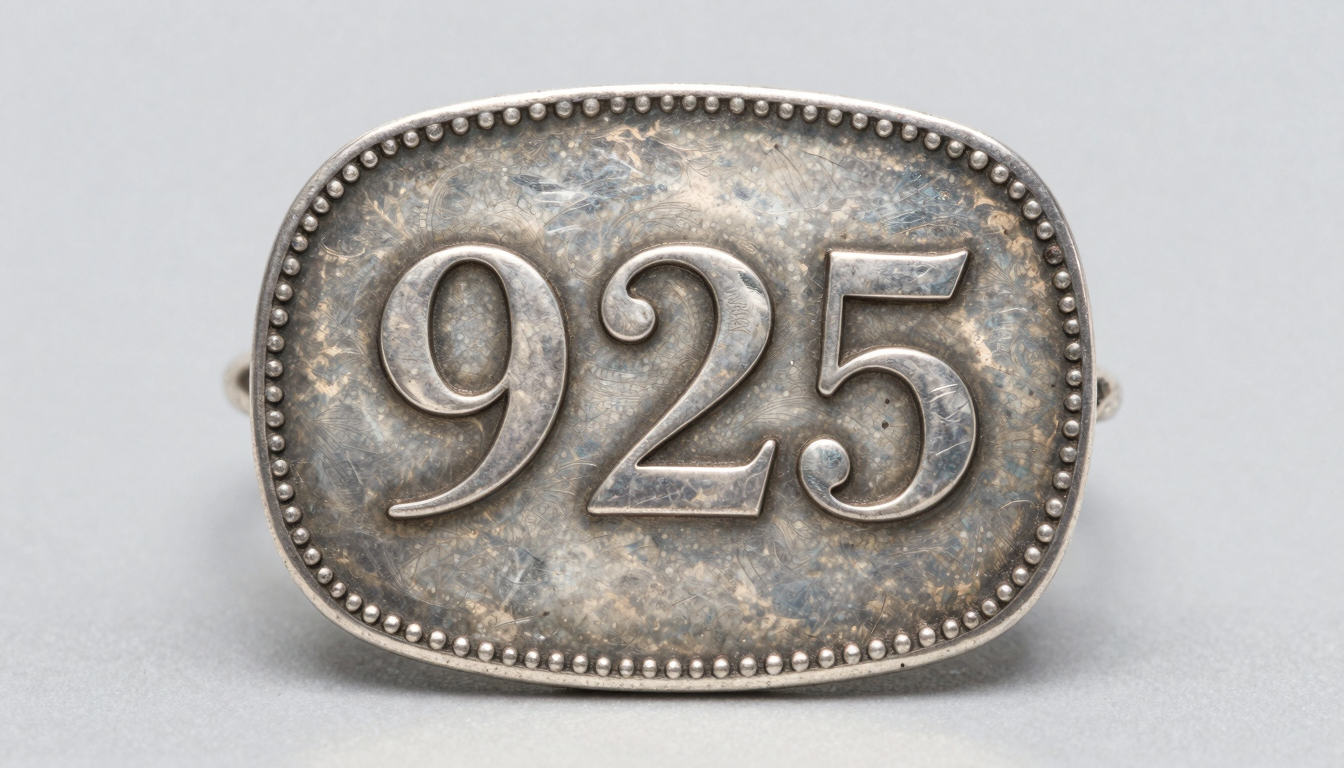
The 925 silver mark appears as a three-digit numeral, stamped, engraved, or laser-etched into the metal, and it tells you the precise silver content of the piece as measured in parts per thousand. An item marked 925 contains 925 parts of silver per 1, 000 parts of total alloy. In percentage terms, that is 92.5% pure silver. The number does not refer to a brand, a manufacturer, or a regional style. It refers exclusively to a measurable metallurgical standard that assay offices around the world have enforced since at least the 19th century.
Under ISO 9202, which governs the fineness of precious metals, 925 is one of four recognised silver finenesses alongside 999, 958, and 800. The mark must appear as a numeral, not as a word or abbreviation, under most national hallmarking laws. When you see 925 stamped on a piece, you should also expect to find accompanying marks, a maker's mark, an assay office symbol, or a date letter, though American silver is a notable exception to this rule.
Why 92.5% Silver Became the Sterling Standard
Pure silver at 999 fineness is too soft for everyday objects. A tablespoon made from fine silver bends under normal use; a ring loses its shape within weeks. Silversmiths discovered centuries ago that adding a small percentage of copper dramatically increases hardness and durability without meaningfully reducing the visual or economic value of the metal. After considerable trial and error, 92.5% proved the optimal balance: hard enough to hold fine engraving and withstand daily use, pure enough to resist tarnishing at the rate of lower-grade alloys.
The 925 standard was formally codified in Britain through the Coinage Act of 1238, which set the silver standard for British coins, and by extension, for silver plate, at what we now call sterling fineness. This same standard was later adopted by the Vienna Convention on the Control of Articles of Precious Metals, which by 2026 has been ratified by 22 member states, all of whom recognise 925 as the minimum threshold for an item to carry the sterling designation.
Where the Term 'Sterling' Comes From
The word "sterling" has two credible etymological origins. The first traces it to the Easterling merchants of the Hanseatic League, traders from northern Germany who supplied England with reliably pure silver coins during the 12th century, coins the English nicknamed "Easterlings, " later shortened to "sterling." The second theory links the word to the Old Norman esterlin, meaning a small coin. The Goldsmiths' Company of London, which has regulated British silver standards since its royal charter in 1327, acknowledges both theories without definitively endorsing either.
What matters for collectors is that "sterling" and "925" are interchangeable in terms of silver content. A piece stamped STERLING and a piece stamped 925 both contain 92.5% silver. The difference lies in national convention, not in purity.
---
How to Find the 925 Mark on Your Silver Item
Common Locations for the 925 Stamp on Jewelry
On rings, look inside the shank, the band itself, rather than near the setting. The stamp is almost always on the inner surface, positioned so it sits against the finger during wear. On bracelets and bangles, check the inside surface along the centre of the band. On necklaces and chains, examine the clasp or the jump ring closest to the clasp; manufacturers stamp the mark here because it is a flat, stable surface that holds a clean impression. On pendants, look at the back of the piece near the bail.
Earrings present the biggest challenge. Stud earrings often carry the 925 mark on the post itself, you'll need a loupe, and sometimes decent light and patience. Drop earrings typically have the mark on the connecting jump ring or the earring back. Earring marks are the most commonly overlooked, and the most frequently omitted on lower-quality imports.
Pieces polished over decades can lose hallmark clarity entirely. If a mark reads as a faint ghost of three digits, treat that as a real limitation before drawing conclusions about authenticity.
Where to Look on Flatware, Hollowware, and Antiques
On flatware, spoons, forks, knives, the 925 mark typically appears on the back of the handle, near the top or bottom third. British hallmarked flatware from before 1900 often carries a full suite of marks along the back of the handle in a row: maker's mark, Lion Passant, date letter, and assay office mark, each in its own punched cartouche. American flatware made after 1868 more commonly carries just the word STERLING or the numeral 925, with no further marking required by law.
On hollowware, teapots, jugs, bowls, candlesticks, check the base first. Turn the piece upside down and examine the foot rim or the flat base with a loupe. On lidded pieces, both the body and the lid should carry matching hallmarks. Mismatched marks on a lid are a strong indicator of a marriage piece assembled from two different originals, and that matters considerably at resale. Our silver hallmarks chart shows photographic examples of hallmark placement on over 40 common silver forms.
Tools That Help You Read Faint or Worn Marks
A 10x jeweller's loupe is the single most important tool for hallmark identification. Many 925 marks on antique pieces are worn, partially struck, or deliberately struck lightly to avoid distorting the surface of delicate work. Oblique lighting, holding a small torch at a shallow angle to the surface, throws worn stamps into sharp relief by creating shadow in the recessed areas. A smartphone with a macro lens attachment can capture and digitally enlarge a mark that is impossible to read with the naked eye.
For deeply worn marks, a small amount of jeweller's rouge applied to the stamped area and then wiped clean can leave pigment in the recesses, making the impression readable. Silver-testing solution, available from most jewellery suppliers for under £10, will confirm the metal is silver even when the stamp is entirely illegible.
---
925 Silver Purity Compared to Other Silver Marks
Understanding where 925 sits in the broader landscape of silver purity marks prevents the most common, and most expensive, collector mistakes. The table below presents the marks you will encounter most frequently, drawn from our silver purity marks guide.
| Mark | Purity (%) | Common Name | Typical Origin | Antique Value Implication |
|---|---|---|---|---|
| 999 | 99.9% | Fine Silver | International (bullion) | Bullion value only; rarely antique |
| 958 | 95.8% | Britannia Silver | UK (1697, 1720, revived) | Premium; scarcer than sterling |
| 925 | 92.5% | Sterling Silver | International | Standard collector benchmark |
| 830 | 83.0% | Scandinavian Silver | Norway, Sweden, Denmark | Collectible; lower silver content |
| 800 | 80.0% | Continental Silver | Germany, Italy, France | Lower silver; often fine craftsmanship |
| EP / EPNS | 0% silver base | Electroplate / Electro-Plated Nickel Silver | UK, USA, Europe | Decorative value only |
| SILVER FILLED | ~5, 10% silver layer | Silver-Filled | USA (20th century) | Minimal precious metal value |
925 vs 999 Fine Silver
Fine silver at 999 purity is the standard for investment bullion, coins, bars, and rounds produced by government mints including the Royal Mint and the US Mint. It is rarely used for antique decorative silver because of its softness. When you encounter a piece marked 999, treat it as bullion rather than an antique until you can verify otherwise. The spot price of silver applies directly; no maker's premium is typical unless the piece is by a notable contemporary silversmith.
925 vs 800 Continental Silver
Continental European silver, particularly from Germany, France, Italy, and the Austro-Hungarian Empire, often carries an 800 mark rather than 925. That means 80% silver content, a meaningful difference. An 800-grade piece contains roughly 12% less silver by weight than a comparable 925 piece of the same mass, which affects both intrinsic metal value and, for some buyers, desirability. That said, 800 Continental silver frequently displays exceptional craftsmanship, particularly German and Austro-Hungarian work from the 1870, 1914 period, and strong maker's marks can far outweigh the silver-content differential at auction. Use our identify silver hallmarks tool to distinguish 800-mark regional variants.
925 vs EP, EPNS, and Silver-Plate Stamps
Electroplated silver carries no precious metal value beyond its thin surface coating. Marks to watch for include EP (electroplate), EPNS (electro-plated nickel silver), A1 (a quality grade used by British platers), and SHEFFIELD PLATE, though genuine Old Sheffield Plate, made by fusing silver to copper before 1840, carries modest collector value of its own. No item marked with these abbreviations contains 92.5% silver. A piece can carry both a maker's mark and an EP stamp, which catches newer collectors off guard; always read all marks before drawing conclusions.
---
Is Your 925 Mark Genuine? Spotting Fakes
Visual Signs of a Counterfeit 925 Stamp
Counterfeit 925 marks share several consistent visual characteristics that experienced dealers recognise immediately. The numerals on genuine marks are crisp, evenly struck, and consistent in depth across all three digits. On fake stamps, most commonly found on imported base-metal jewellery from markets with weak hallmarking enforcement, the numerals are often uneven in depth, slightly blurred at the edges, or show inconsistent spacing. The stamp may also sit proud of the surface rather than recessed into it, suggesting it was applied after manufacture rather than struck during production.
A common deception involves stamping 925 onto silver-filled or silver-plated items. The mark is technically present; the metal content is not. In one reader-submitted case from our 2024 identification service, a bracelet marked clearly "925" on the clasp tested at approximately 40% silver on acid test, consistent with a heavy silver-plate over a brass base, not sterling.
Simple At-Home Tests for Silver Purity
Three at-home tests provide useful preliminary evidence, though none replaces professional assay.
The acid test uses nitric acid solution (available as a commercial silver-testing kit). Apply a small drop to an inconspicuous area: genuine 925 sterling produces a cream or grey reaction; base metals produce green or blue-green. This test reliably distinguishes silver from base metal but cannot precisely distinguish 925 from 800.
The magnet test is a quick eliminator: silver is not magnetic. Hold a strong neodymium magnet close to the piece. Any attraction indicates iron or steel content, which rules out genuine silver. A non-magnetic result does not confirm silver, though, many base metals share that property.
The ice test exploits silver's exceptionally high thermal conductivity. Place a piece of ice on the item at room temperature; genuine silver causes the ice to melt noticeably faster than it would on glass or base metal. Treat this one as a curiosity rather than a definitive identifier.
These same tests apply equally when evaluating silver coins, where plated fakes are especially common. The practical guide on distinguishing solid silver coins from silver-plated imitations covers the ping, magnet, and acid methods in detail, with coin-specific tips worth reading alongside the general advice above.
When to Use a Professional Assay Service
Submit a piece to a professional assay service when the monetary value justifies the cost, when you plan to resell and need documentation, or when at-home tests produce contradictory results. In the UK, all four Assay Offices, London, Birmingham, Sheffield, and Edinburgh, offer assay and hallmarking services to the public. The London Assay Office charges from approximately £25 per item for standard testing. The US does not operate a government assay service for antiques, but the American Society of Jewelry Appraisers maintains a directory of certified appraisers who provide XRF (X-ray fluorescence) testing, non-destructive and highly accurate.
---
Dating and Identifying the Origin of a 925 Mark
How Country of Origin Affects the 925 Stamp Style
The same number, 925, appears in dramatically different formats depending on where and when an item was made. British hallmarked silver carries 925 inside a specific cartouche shape (an oval since 1999) alongside the Lion Passant, assay office mark, and optional date letter. American silver carries 925 or STERLING with no required additional marks under US Federal Trade Commission guidelines, which set the minimum standard at 92.5% but do not mandate a full hallmarking suite. Scandinavian silver often presents 925 alongside a national control mark and a maker's punch. Our full guide to UK silver hallmarks covers detailed cartouche identification.
Using Maker's Marks and Date Letters Alongside 925
A 925 mark alone tells you the silver content. A maker's mark tells you who made the piece, and that information can transform a modest find into a significant one. The maker's mark on British silver registered with the Assay Office is a legally required two- to four-letter punch, often in a distinctive cartouche shape unique to each silversmith. Date letters, alphabetical cycles that allow year-precise dating, were used consistently by British assay offices from 1478 until 1999, when they became optional. Cross-referencing the maker's mark with records held by the Goldsmiths' Company can date a piece to within a single calendar year. See our guide to maker's marks on silver for a searchable database.
925 Marks on American vs British vs European Silver
| Country | Typical 925 Mark Style | Additional Hallmarks Required | Assay Authority | Date Range |
|---|---|---|---|---|
| United Kingdom | 925 in oval cartouche + Lion Passant + assay office mark | Lion Passant, assay office mark; date letter optional post-1999 | London, Birmingham, Sheffield, Edinburgh Assay Offices | 1999, present (numeral); STERLING used pre-1999 |
| United States | 925 or STERLING in plain text | None legally required | No federal assay office; FTC oversight | c.1868, present |
| Germany | 925 in rectangular cartouche | Crescent moon + crown control mark (pre-1888 and modern) | Berliner Bewertungs und Kontrollstelle | c.1884, present |
| France | 925 + maker's poinçon | Guarantee mark (owl head for imports) | Bureau de Garantie | c.1838, present |
| Italy | 925 + province code | Star mark + province number | Ufficio Metrico | c.1934, present |
| Scandinavian countries | 925 + maker's mark | National control mark varies by country | Varies (e.g., Justervesenet in Norway) | c.1880, present |
Frequently Asked Questions About the 925 Silver Mark
What does the 925 mark mean on silver?
The 925 mark means an item contains 92.5% pure silver by weight, with the remaining 7.5% typically made up of copper. This is the internationally recognised standard for sterling silver, codified under ISO 9202 and enforced by assay offices across 22 countries that have ratified the Vienna Convention. The mark may appear as the numeral 925, as the word STERLING, or as both, depending on the country of manufacture and the period of production.
Is silver marked 925 real or fake silver?
A genuine 925 mark on a properly hallmarked piece confirms real sterling silver. The risk lies in counterfeit stamps: some base-metal or silver-plated items carry an illegitimate 925 impression. Verify authenticity by checking for accompanying hallmarks (assay office mark, maker's mark), performing an acid test, or submitting the piece to a professional assay office. Items with a crisp, evenly struck 925 mark alongside a recognised maker's punch are almost always genuine.
What is the difference between a 925 mark and a sterling mark?
There is no difference in silver content between a 925 mark and a STERLING mark, both indicate 92.5% silver. The difference is national convention. American manufacturers have used the word STERLING since approximately 1868, while British assay offices began routinely striking the numeral 925 alongside the traditional Lion Passant after the UK joined the Vienna Convention hallmarking system in 1999. Both marks are legally equivalent under most international trade standards.
Can a piece marked 925 still be silver-plated?
Yes, a fraudulent 925 stamp can appear on silver-plated items, though this is illegal in countries with formal hallmarking oversight. It occurs most frequently on imported jewellery from markets with limited regulatory enforcement. The safest checks are an acid test on an inconspicuous area and verification that the stamp appears in a professionally struck cartouche rather than as a surface impression. On genuine 925 pieces, the stamp sits cleanly recessed into the metal, that physical quality is harder to fake than the number itself.
How do I find and read the 925 mark on my silver item?
Start with a 10x loupe and oblique lighting. On jewellery, check inside the ring shank, inside the bracelet band, on the clasp of a necklace, and on earring posts or backs. On flatware, examine the back of the handle. On hollowware, check the base and foot rim. On lidded pieces, check both the body and the lid independently. If the mark is worn, angle a small torch at 10, 15 degrees to the surface to create shadow contrast in the stamped recess. Our identify silver hallmarks guide includes photographic examples of mark placement across 40+ silver forms.