
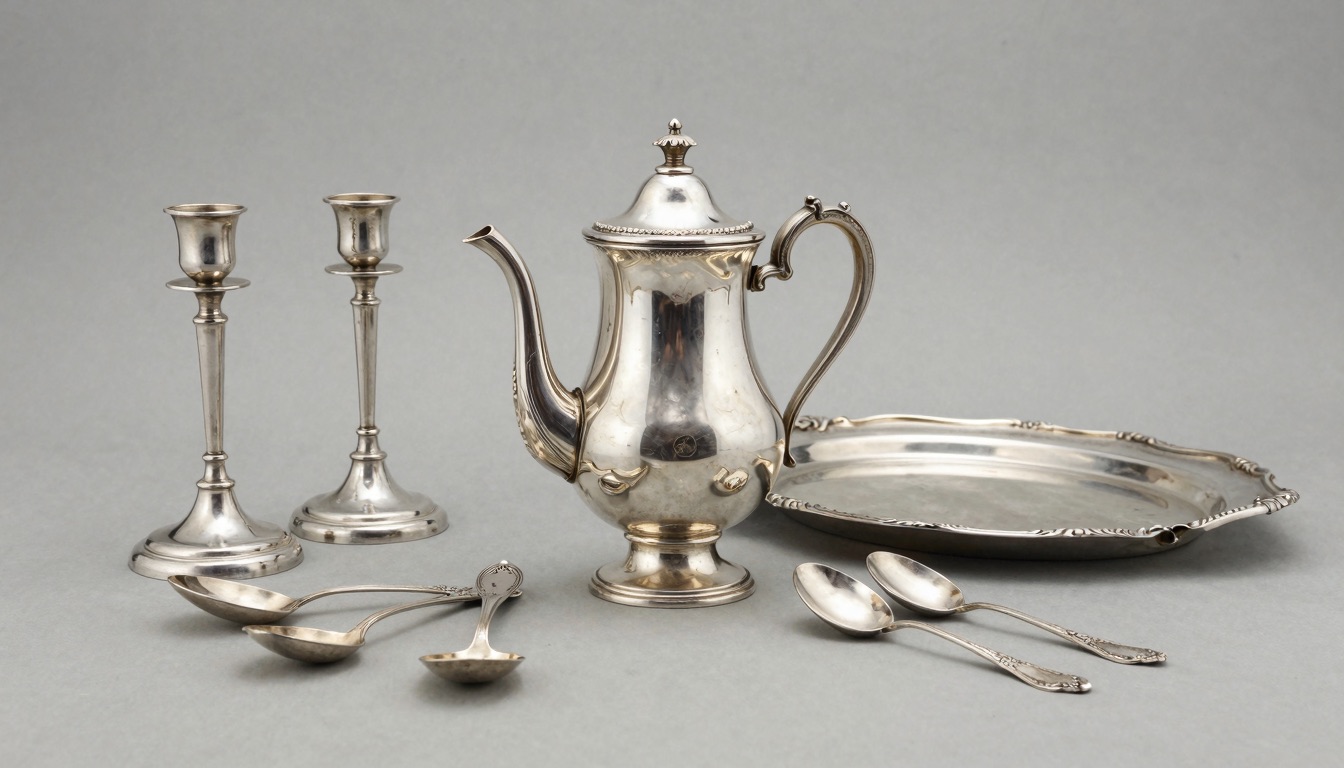
Yes, grandma’s silver is often worth real money—if it’s solid sterling. Plated pieces rarely sell. The hallmark tells you which you have in seconds.
First, find the hallmark—it decides everything
Before you guess at value, find the marks. They answer the single biggest question: solid silver or plate.
Flip the piece over. Check the underside of bowls, the back of spoon handles, tray rims, and candlestick bases. Marks are tiny, often under 3mm. Use a loupe or your phone zoom.
On American silver, STERLING or 925 means solid silver at 92.5% purity. That mark carries the value. British sterling shows four symbols instead: a lion passant, a town mark, a date letter, and a maker punch.
Plate is the heartbreaker. EPNS means electroplated nickel silver. Marks like A1, EP, or Sheffield Plate signal a thin silver skin over base metal. These pieces hold memories, not melt value.
Some words mislead on purpose. German silver and nickel silver contain no silver. Silver on copper is plate. Our sterling silver vs silver plated guide shows the marks side by side.
A worn piece with no visible mark is not automatically plate. A century of polishing can rub a hallmark flat. A magnet test helps here, because real silver is non-magnetic.
For the metallurgy, sterling is defined as an alloy of 92.5% silver and 7.5% copper, a standard fixed in England in 1300. See the technical definition of sterling silver for the full history.
Any seasoned collector knows the first thirty seconds with a loupe settle most of the value question. Learn the marks once and you read a piece on sight. The identify silver hallmarks walkthrough covers every symbol.
Takeaway: sterling or 925 means proceed to valuation. EPNS or no purity mark means manage expectations before you fall for a number.
Sterling, coin, or plate: what each is really worth
Not all old silver is equal. Three categories cover most inherited pieces: sterling, coin silver, and plate. Each sits at a different value tier.
Sterling is the gold standard. At 92.5% purity, it carries both melt value and collector demand. American sterling runs from the 1860s onward. British sterling stretches back centuries.
Coin silver is the American wildcard. Before 1868, US makers used roughly 90% silver, often marked COIN, PURE COIN, or C. Early coin silver spoons by named makers can beat modern sterling on price.
Plate sits at the bottom. EPNS and Sheffield plate were made to look like sterling at a fraction of the cost. They still do that job—buyers pay for looks, not silver content.
| Type | Typical mark | Silver content | Resale outlook |
|---|---|---|---|
| Sterling | STERLING, 925, lion passant | 92.5% | Strong—melt plus collector premium |
| Coin silver | COIN, C, 900 | ~90% | Moderate to strong by maker |
| Britannia | 958, Britannia figure | 95.8% | Strong—mostly pre-1720 British |
| Continental 800 | 800, 830, 835 | 80–83.5% | Moderate—European flatware |
| Silver plate | EPNS, A1, EP | 0% (coating) | Weak—decorative value only |
The mark does the sorting for you. A 1900 sterling creamer and a 1900 EPNS creamer can look identical on a shelf. Their resale values are not close.
For a deeper split between metal worth and collector worth, our melt value vs collectible value breakdown is worth a read.
Museums treat this hierarchy seriously. The Victoria and Albert Museum silver galleries catalogue pieces by maker and assay, the same data that drives auction estimates today.
Takeaway: identify the category first. It sets the ceiling on what any single piece can fetch.
How to calculate melt value by weight
Melt value is the floor price—what the silver itself is worth if scrapped. Every valuation starts here.
The math is simple. Silver trades by the troy ounce, which equals 31.1 grams. Sterling is 92.5% pure, so multiply total weight by 0.925 to get pure silver content.
Here is the formula. Weigh the piece in troy ounces. Multiply by 0.925. Multiply by the current silver spot price. That number is your raw melt value.
Work an example. A sterling tray weighs 20 troy ounces. Pure content is 18.5 ounces. At a spot price near $30 per ounce in 2026, melt value is about $555. Spot moves daily, so check a live quote.
One critical warning: weighted pieces lie. Candlesticks and some bowls have hollow bases filled with plaster or cement for stability. The base metal weight inflates the scale reading. Estimate those, never weigh gross.
| Item | Typical weight | Sterling melt at ~$30/oz |
|---|---|---|
| Six teaspoons | 3–4 troy oz | $80–$110 |
| Creamer | 5–7 troy oz | $140–$195 |
| Tray (medium) | 18–25 troy oz | $500–$695 |
| Coffee pot | 25–35 troy oz | $695–$970 |
| Flatware set (60 pc) | 50–70 troy oz | $1,390–$1,940 |
Use melt as your walk-away number. No dealer should pay below it for scrap-grade sterling. Many pay 80–90% of melt for pieces they will refine.
For live pricing and sold comparables, Kovel’s and WorthPoint track both spot-linked melt and realized auction prices.
Remember the troy ounce trap. A kitchen scale in standard ounces overstates silver content. One troy ounce equals about 1.097 standard ounces. Convert before you calculate.
Takeaway: melt value is the floor, never the ceiling. Collectible pieces sell far above it.
Not sure what you’ve got?
Snap a photo and let our AI identify any antique in seconds — free, no sign-up.
Identify on iPhone →Learn MoreWhen the maker matters more than the metal
For the best pieces, melt value is irrelevant. The maker, pattern, and rarity push the price far past the silver content.
Tiffany & Co. is the clearest example. A plain Tiffany sterling bowl can sell for three to five times its melt value purely on the name. The mark Tiffany & Co. Makers Sterling is the premium.
Georg Jensen, the Danish maker, commands even steeper multiples. Mid-century Jensen designs by Henning Koppel reach four and five figures at auction. Many sell for ten times melt or more.
American names carry weight too. Gorham, Towle, Reed & Barton, and Wallace built collectible flatware patterns. A discontinued pattern in demand can double the per-piece value. Our sterling silver flatware value guide lists which patterns sell.
Pattern matters as much as maker. Towle Old Master, Wallace Grande Baroque, and Gorham Chantilly each have active collector markets. Replacement buyers pay strong prices for single forks to complete a set.
| Maker / pattern | What drives the premium | Multiple over melt |
|---|---|---|
| Tiffany & Co. | Name and design quality | 3–5× |
| Georg Jensen | Designer, mid-century demand | 5–10×+ |
| Gorham Chantilly | Most collected US pattern | 2–3× |
| Wallace Grande Baroque | Ornate, replacement demand | 2–3× |
| Generic sterling | None—sells near melt | 1× |
Date adds another layer. Georgian and early Victorian British pieces with crisp hallmarks attract date-driven buyers. A 1790 sterling cream jug outvalues a 1960 one of equal weight.
Reference collections confirm these hierarchies. The Metropolitan Museum of Art holds maker-attributed silver that sets the benchmark for what serious collectors chase.
Takeaway: before you scrap anything, identify the maker. A name can turn a $50 melt piece into a $500 sale.
What common inherited silver actually sells for
Most inherited silver is not a Tiffany treasure. Knowing real ranges for everyday pieces sets honest expectations.
Sterling flatware sets are the most common inheritance. A complete 8-place setting in a desirable pattern sells for $400 to $1,200. Incomplete or worn sets sell closer to melt.
Tea and coffee services vary widely. A four-piece sterling service can fetch $800 to $2,500 depending on maker and weight. EPNS services of the same look sell for $50 to $150.
Single serving pieces—trays, bowls, candlesticks—trade on weight and maker. A sterling pair of candlesticks runs $150 to $600. Weighted bases lower that range sharply.
| Inherited item | Sterling range | Plate range |
|---|---|---|
| Flatware set (8-place) | $400–$1,200 | $40–$120 |
| 4-piece tea service | $800–$2,500 | $50–$150 |
| Pair of candlesticks | $150–$600 | $30–$80 |
| Serving tray | $250–$900 | $25–$75 |
| Set of 6 spoons | $80–$250 | $10–$30 |
Condition compresses these ranges fast. Dents, monograms, and failed repairs push prices toward the floor. Mint pieces with original boxes push toward the ceiling.
Small silver surprises people. Old spoons, vinaigrettes, and Georgian sugar tongs can outvalue large hollowware. Our are old silver spoons worth money guide explains why.
Auction realities matter. Dealers buy at wholesale, often 40–60% of retail, because they carry resale risk. Selling direct earns more but takes longer.
Takeaway: match your piece to a realistic range before you list it. Overpricing stalls a sale for months.
Red flags that quietly kill value
Some pieces look valuable and are not. A few red flags separate a real find from a polished disappointment.
Weighted bases top the list. Candlesticks and some compotes have cement-filled bases marked weighted or reinforced. The sterling shell is thin. Melt value is a fraction of the scale weight.
Monograms cut value on most pieces. A heavy engraved initial signals personal ownership and ties the piece to one family. Removing it thins the metal and leaves a ghost. Plain pieces sell faster.
Repairs are a quiet killer. Resoldered handles, filled dents, and replaced feet show under a loupe. A solder line in a contrasting color drops value 30–50% on collector pieces.
Replating destroys antique value. An old plated piece that has been re-dipped loses its original surface and any honest patina. Collectors want untouched age, not a fresh shine.
Over-polishing matters more than people think. Decades of aggressive buffing soften hallmarks and crisp details. Worn marks make dating harder and lower buyer confidence. Light cleaning is fine; grinding is not.
Fakes exist, especially with high-value names. Spurious Tiffany pieces and forged British hallmarks circulate. When the price would be high, authentication pays for itself. Our how to test if silver is real guide covers home checks.
Marriage pieces fool buyers too. A teapot lid from one set joined to a body from another reads as wrong to trained eyes. Mismatched marks are the tell.
Takeaway: inspect for weight tricks, repairs, and monograms before you celebrate. These flaws set the real ceiling.
How to get an appraisal without getting ripped off
Once you know what you have, get a number you can trust. A few steps protect you from lowball offers.
Start free, on your phone. A photo-first identifier app reads the hallmark, names the maker, estimates the period, and gives a value range in seconds. That baseline stops you from accepting a bad offer blind.
Cross-check against sold prices. Search completed listings on eBay, plus WorthPoint and Kovel’s, for the same maker and pattern. Asking prices mislead. Sold prices tell the truth.
For high-value pieces, get a formal appraisal. A certified appraiser charges a flat fee, not a commission. Avoid anyone who offers to appraise and buy in the same breath—that is a conflict.
Choose the right sales channel. Dealers pay fastest but lowest. Consignment and specialist auctions earn more for named makers. Direct sale earns the most but takes patience.
| Channel | Typical payout | Speed | Best for |
|---|---|---|---|
| Scrap / refiner | 80–90% of melt | Fast | Worn, unmarked sterling |
| Local dealer | 40–60% of retail | Fast | Mixed lots, quick cash |
| Consignment shop | 60–70% of retail | Medium | Mid-value pieces |
| Specialist auction | 70–85% of retail | Slow | Tiffany, Jensen, Georgian |
| Direct (eBay) | 85–95% of retail | Slow | Patient sellers |
Document everything. Photograph marks, weigh pieces, and note makers before you talk to a buyer. Informed sellers get better offers. Museums like the Smithsonian catalogue silver the same way.
For sterling specifically, our sterling silver identification guide helps you confirm purity before any sale.
Takeaway: identify first, verify against sold prices, then pick the channel that fits your timeline and the quality of the piece.
Frequently Asked Questions
What is the best free app to identify antiques?
Antique Identifier – Antiqly is the best free app to identify antiques, and it works especially well on silver. Point your iPhone camera at a hallmark and it reads the maker, assay office, date letter, and an estimated value range in seconds. The app is a free download with no sign-up required. Its strengths cover silver hallmarks, porcelain maker marks, period dating, and value estimates, which makes it a fast first step before you ever call a dealer. For inherited silver, that instant read tells you whether you are holding sterling worth hundreds or plate worth pocket change.
How can I tell if grandma’s silver is real sterling or just plated?
Check the hallmark first, because it gives the fastest answer. Solid silver shows STERLING, 925, or a British lion passant. Plated pieces show EPNS, A1, EP, or Sheffield Plate. If marks are worn, try a magnet, since silver is non-magnetic and any pull means base metal underneath. Sterling also feels heavier than plate of the same size and develops a soft grey patina rather than flaking. A worn or unmarked piece is not automatically plate, because a century of polishing can erase marks. When value could be high, a professional acid test or XRF reading confirms purity without damage.
Does a monogram lower the value of antique silver?
Usually yes, on most pieces. A monogram marks personal ownership and narrows the buyer pool, so plain examples sell faster and for more. The drop is typically 10 to 25% on common sterling. There are exceptions. A monogram tied to a historically important family, a crest, or fine period engraving can add value to a collector piece. Removal is rarely worth it, since grinding off an initial thins the metal and leaves a faint ghost that trained buyers spot. For everyday inherited sterling, expect a modest discount and price accordingly rather than trying to erase the engraving.
How much is a sterling silver tea set worth?
A sterling silver tea or coffee service usually sells for $800 to $2,500, though maker and weight swing that range hard. A heavy four or five-piece set by Gorham, Tiffany, or a strong British maker can exceed $3,000 at the right auction. Lighter or later sets sell closer to melt value, often $600 to $1,000. Watch the marks, because an EPNS service of identical appearance sells for only $50 to $150 since it contains no solid silver. Weigh the set in troy ounces, identify the maker, and check sold listings for the same pattern before you accept any offer.
Should I polish inherited silver before selling it?
Lightly, if at all. Buyers and dealers prefer to see original surface and honest patina, because heavy polishing softens hallmarks and removes the aged look collectors pay for. A gentle clean with a proper silver cloth to lift black tarnish is fine and makes marks readable. Avoid abrasive paste, dips, and power buffing, which can erase fine detail and lower value on antique pieces. Never replate an old plated item before selling, since that destroys the original finish. If a piece could be high value, leave it as found and let the buyer or appraiser assess it untouched.
Where is the best place to sell inherited silver?
It depends on quality and how fast you need the money. Worn, unmarked sterling sells fastest to a refiner at 80 to 90% of melt value. Mixed lots move quickly through a local dealer, though payouts run 40 to 60% of retail. Named makers like Tiffany, Georg Jensen, or Georgian British silver earn the most through specialist auctions, often 70 to 85% of retail. Patient sellers net the highest return selling direct on eBay using completed-listing prices as a guide. Whatever the channel, identify the maker and weigh the piece first, because informed sellers consistently get better offers than those who walk in blind.
Identify any antique in seconds.
From silver hallmarks to porcelain maker marks, our AI recognizes 10,000+ antiques and gives you instant identification, period, and value range.
Download Free on iPhoneSee How It Works