
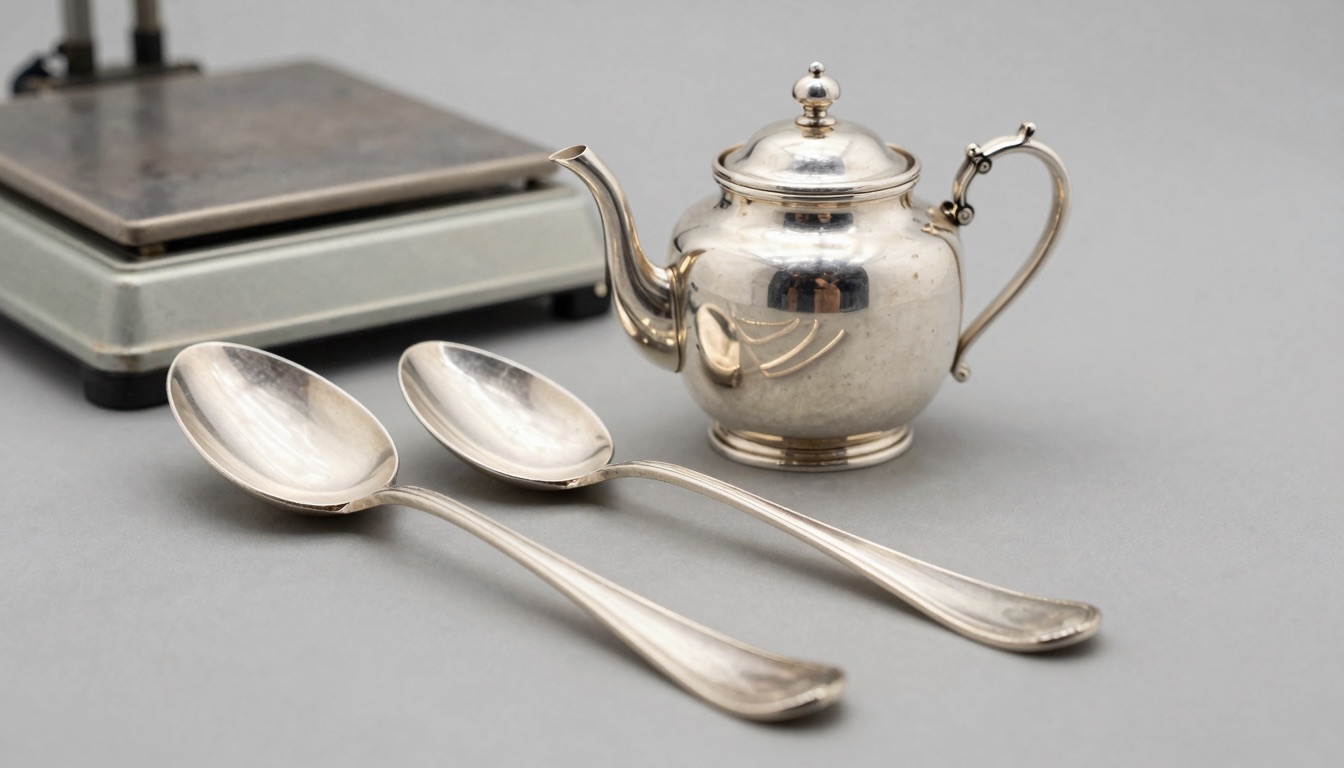
Melt value is your silver’s weight in pure silver times the spot price. Collectible value reflects maker, age, and rarity — often 2 to 100 times higher.
How melt value works: the math behind the number
Melt value answers a blunt question: what would the metal fetch if the object were destroyed tomorrow? The calculation needs three inputs. Gross weight in troy ounces, silver purity as a decimal, and the spot price on the day you sell.
A troy ounce equals 31.103 grams. That is heavier than the 28.35-gram ounce on a kitchen scale. Confusing the two inflates a valuation by nearly 10 percent. Always divide grams by 31.103 when you convert.
Purity comes straight from the hallmark. Sterling silver is 92.5 percent pure metal. Continental pieces stamped 800 contain 80 percent silver. American coin silver runs 90 percent. English Britannia standard, mandatory from 1697 to 1720, contains 95.8 percent.
| Standard | Common marks | Silver content | Fine silver in a 100g piece |
|---|---|---|---|
| Britannia | 958, Britannia figure | 95.8% | 95.8g |
| Sterling | 925, lion passant, STERLING | 92.5% | 92.5g |
| Coin silver | COIN, PURE COIN, 900 | 90.0% | 90g |
| German / continental | 835 | 83.5% | 83.5g |
| European 800 | 800, crescent and crown | 80.0% | 80g |
| Silver plate | EPNS, A1, IS, EP | base metal core | effectively 0g |
Here is the math on a sterling serving tray weighing 850 grams. Divide 850 by 31.103 to get 27.33 troy ounces gross. Multiply by 0.925 for 25.28 ounces of fine silver. At a 30-dollar spot price, melt value is about 758 dollars. At 35 dollars, the same tray melts for 885 dollars.
Spot prices move daily and sometimes violently. Silver traded across a wide band through 2024 and 2025, swinging more than 30 percent within single years. Check a live quote the morning you sell, not the week before. A 2-dollar spot move on a 100-ounce flatware service changes the payout by 185 dollars.
Nobody pays full melt. Refiners typically pay 90 to 95 percent of calculated melt on clean sterling lots. Coin and bullion dealers pay 85 to 92 percent. Pawn shops often pay 60 to 80 percent. The spread is their margin, and it is negotiable on larger lots.
Treat melt value as your floor, never your target. Any piece with a legible hallmark deserves ten minutes of research before the scrap pile. I once pulled a 1788 Hester Bateman teaspoon out of a 40-dollar scrap lot; it sold for 120 dollars the same month.
What collectible value measures — and why it can dwarf melt
Collectible value is what a motivated buyer pays for the object itself, not the metal inside it. Six factors drive it: maker, date, rarity, form, condition, and provenance. When several align, the multiple over melt becomes startling.
Maker matters most. A plain Victorian teaspoon holds about 18 dollars of silver and sells for 15 to 25 dollars. A teaspoon by Hester Bateman, London’s celebrated woman silversmith of the 1770s and 1780s, carries identical metal and sells for 80 to 150 dollars. Same melt, five times the price.
Age compounds the effect. Georgian silver made before 1820 commands consistent premiums over Victorian equivalents. Queen Anne pieces from 1702 to 1714 are scarcer still. A 1710 Britannia-standard coffee pot can bring 4,000 to 8,000 dollars against perhaps 700 dollars of melt.
Form and rarity interact. Common forms — teaspoons, napkin rings, cream jugs — survive in huge numbers. Rare forms like wine funnels, marrow scoops, and lemon strainers attract specialist collectors. A Georgian marrow scoop holding 30 dollars of silver sells for 150 to 300 dollars because few survive.
Condition gates every premium. Crisp hallmarks, original surfaces, and undamaged engraving keep collectors bidding. Splits, lead-solder repairs, erased inscriptions, and machine-buffed surfaces push a piece back toward melt. A dented Georgian creamer often brings less than a perfect Victorian one.
Provenance can multiply everything. Silver by Paul Storr, the Regency master whose work is held by the Metropolitan Museum of Art, routinely brings 20 to 100 times melt at auction. Pieces with documented royal or aristocratic ownership climb higher again.
Auction databases prove the gap with hard numbers. WorthPoint records millions of realized prices for silver, searchable by maker and pattern. Thirty minutes browsing sold results for your maker’s mark shows the true spread between scrap money and collector money.
The takeaway is procedural. Identify the maker before you weigh anything. The hallmark, not the scale, decides which market your silver belongs in.
Makers and categories that trade far above melt
Some names reliably outrun the scale. Seasoned dealers keep a mental list of marks that trigger automatic research. These are the categories I never scrap, regardless of condition.
| Maker / category | Active period | Typical multiple over melt | Example realized prices |
|---|---|---|---|
| Paul Storr, London | 1792–1838 | 20–100x | Entree dishes $8,000–15,000 |
| Hester Bateman, London | 1761–1790 | 4–10x | Teaspoons $80–150 |
| Georg Jensen, Copenhagen | 1904–present | 5–30x | Blossom teapots $3,000–6,000 |
| Gorham Martele line | 1897–c.1912 | 15–40x | Art nouveau vases $5,000–20,000 |
| Tiffany & Co. sterling | 1851–present | 3–15x | Aesthetic pitchers $4,000–12,000 |
| Chinese export silver | 1840–1925 | 5–20x | Dragon bowls $1,500–8,000 |
| Russian, kokoshnik-marked | 1899–1917 | 10–100x+ | Enamel pieces $2,000 up |
American makers anchor the upper market. Tiffany sterling from the aesthetic movement of the 1870s and 1880s brings strong five- and six-figure results for exhibition-grade pieces. Gorham’s hand-raised Martele line is the most valuable American production silver ever made. Our guide to Gorham silver marks and date symbols shows how to read the year marks that separate ordinary Gorham from the prized early work.
Georg Jensen is the safest Scandinavian name. The Copenhagen workshop’s hammered surfaces and grape-and-blossom motifs are unmistakable once seen. Even common Jensen Acorn-pattern flatware trades at three to five times melt. Hollowware designed by Johan Rohde or Harald Nielsen brings far more.
Chinese export silver is the sleeper category. Workshops in Canton and Shanghai produced it from roughly 1840 to 1925, stamping pseudo-hallmarks and retailer marks like WH for Wang Hing. Dragon-decorated bowls and tea sets bring 5 to 20 times melt, and prices have climbed steadily since 2010.
Museum collections explain why these premiums hold. The Victoria and Albert Museum displays benchmark examples of Storr, Bateman, and Jensen. When institutions collect a maker, private demand follows and values survive market cycles.
If your mark matches any name in the table, stop and research before weighing. Selling such pieces at melt is the most expensive mistake an inheritor can make.
Not sure what you’ve got?
Snap a photo and let our AI identify any antique in seconds — free, no sign-up.
Identify on iPhone →Learn MoreSilver that sells at or near melt — and why
Most household sterling earns no premium, and supply explains it. American factories produced sterling flatware by the ton between 1890 and 1970. Survivors vastly outnumber today’s buyers, so the metal sets the price.
Monogrammed mid-century flatware is the clearest case. A 1950s sterling service for eight in a common pattern weighs 60 to 80 troy ounces gross. Dealers price these services at melt, minus a handling discount, because matching monogrammed pieces to buyers is slow work. Engraved initials cut the buyer pool to almost nothing.
Damage pushes better pieces down to the scale too. Splits, deep dents, lead-solder repairs, and erased inscriptions remove collector interest entirely. A damaged Victorian teapot sells for metal weight even with a clean London hallmark and a known maker.
Weighted sterling is the trap category. Candlesticks, compotes, and trophy bases marked WEIGHTED, REINFORCED, or CEMENT FILLED carry a thin sterling skin over pitch or plaster. A weighted candlestick pair weighing 900 grams may yield only 100 to 150 grams of recoverable silver. Refiners discount weighted lots 70 to 85 percent against their gross weight.
Silver plate has no meaningful melt value at all. The silver layer on electroplated nickel silver measures a few microns thick. Marks like EPNS, A1, IS, and 1847 Rogers Bros. signal plate, not sterling. Our side-by-side guide to sterling silver versus silver plated pieces shows exactly which stamps mean solid metal and which mean coating.
Even commodity sterling has exceptions worth knowing. High-relief patterns such as Reed and Barton Francis I, Wallace Grande Baroque, and Gorham Chantilly trade above melt because replacement demand stays strong. Single serving pieces in those patterns sell briskly to people completing inherited sets.
Weigh commodity sterling honestly, then check the pattern name before accepting any scrap quote. Pattern recognition alone can add 30 to 50 percent to a flatware payout.
Value your own piece in four steps
Step one: confirm the piece is solid silver. Look for a sterling, 925, 800, or lion passant mark before doing anything else. Plate marks end the melt conversation immediately. Our sterling silver identification guide covers the full mark sequence, and our walkthrough on how to test if silver is real adds home checks like the magnet and ice tests.
Step two: read the full hallmark. The maker’s mark, town mark, and date letter place the piece in time and in rank. Work through our step-by-step hallmark identification method with a 10x loupe and raking light. Photograph every mark before cleaning anything.
Step three: weigh the piece and run the melt math. Use a digital scale that reads in grams. Remove non-silver components first — steel knife blades, bone handles, glass liners, and weighted bases all distort the number. Apply the purity multiplier from the hallmark, then the day’s spot price.
Step four: research comparable sales. Kovel’s publishes price guides built from decades of dealer and auction results. WorthPoint sold listings show what identical pieces fetched over the past several years. Three solid comparables beat any single opinion, including mine.
| Item | Typical gross weight | Melt at $30 spot (sterling) | Typical collectible range |
|---|---|---|---|
| Victorian teaspoon | 20–25g | $18–22 | $15–60 |
| Georgian sugar tongs | 30–45g | $27–40 | $40–120 |
| Edwardian cream jug | 90–140g | $80–125 | $90–300 |
| Victorian 3-piece tea set | 900–1,400g | $800–1,250 | $900–4,000 |
| Flatware service for 8, common pattern | 1,800–2,500g | $1,600–2,230 | melt to $3,500 |
| Georgian 10-inch salver | 500–700g | $445–625 | $1,200–5,000 |
Run both numbers for every piece you own. When the collectible estimate beats melt by 50 percent or more, sell through a collector channel. When the two figures converge, the refiner is the honest answer.
Keep a simple spreadsheet as you work through an inheritance. Pattern names, weights, hallmark photos, and comparable prices turn a stressful estate task into a clear set of decisions.
Where to sell: melt buyers vs collector markets
Choosing the venue matters as much as knowing the value. Each channel takes a different cut and serves a different buyer, and mismatching them costs real money.
Melt channels are fast and unsentimental. Precious-metal refiners pay 90 to 95 percent of melt on clean sterling lots above 50 troy ounces. Local coin shops pay 80 to 90 percent with no shipping risk. Cash-for-gold storefronts and pawn shops pay least, often 60 to 75 percent. Get two quotes minimum; the spread between shops in a single town can reach 20 percent.
Auction houses suit pieces worth 500 dollars and up. Regional houses charge sellers 10 to 20 percent commission plus photography and insurance fees. Specialist silver sales at the larger houses attract the deepest bidder pools for Georgian and maker-name material. Settlement typically arrives 30 to 60 days after the hammer falls.
Direct sale maximizes the collector premium when you can wait. Online marketplaces reach pattern-matching buyers worldwide and charge roughly 13 to 15 percent in fees. Pattern-replacement services buy common sterling flatware outright at 40 to 60 percent of their own resale price. Estate dealers pay wholesale, usually 50 to 70 percent of retail, but they pay immediately and take everything.
Document before anything ships. Photograph all hallmarks, record gross and net weights, and keep every quote in writing. Reputable refiners publish their payout percentages and assay methods openly; silence on either point is a warning.
Timing adds a final edge. Silver flatware sells best from October through December, ahead of holiday entertaining. Bullion-grade lots should move on spot-price strength instead, whatever the calendar says.
Match the channel to the value tier and the math takes care of itself. Scrap-grade silver goes to refiners, pattern silver to replacement services, and maker-name silver to auctions or specialist dealers.
Mistakes that erase collectible value
Aggressive polishing is the most common destroyer of value I encounter. Machine buffing rounds off crisp hallmarks and strips the soft, layered patina collectors pay premiums for. Museums including the Smithsonian preserve original surfaces deliberately, and serious buyers think the same way. Hand-wash, dry thoroughly, and use the mildest polish sparingly — or none at all.
Removing monograms is worse than leaving them. Erasure thins the metal, leaves a visible dish under raking light, and signals tampering to every experienced dealer. Period monograms on Georgian silver are widely accepted and sometimes add interest. A fine engraving only costs value when someone grinds it off.
Amateur repairs and replating end collector interest permanently. Lead solder shows as dull gray patches and contaminates refining lots too, so it hurts both values at once. Replating antique sterling makes no sense. Replating old Sheffield plate destroys the bleeding-copper character that specialists in that field actively seek.
Breaking sets is irreversible and almost always regretted. A 12-place flatware service with its serving pieces is worth more than the sum of split lots. Candlestick pairs bring more than twice a single. Offer complete groupings first; split only after complete-set offers fail.
The unforgivable error is melting unresearched silver. Refiners report finding hallmarked Georgian and early American pieces in scrap lots every month. Once melted, a 1750 coffee pot becomes anonymous bullion forever. Ten minutes with our visual hallmark chart prevents exactly this loss.
Those slightly uneven rim details on an old piece? Classic late Georgian hand-hammering, and a buffing wheel erases the evidence in seconds. Any seasoned collector knows the original surface is the value.
Preserve first, decide later. Every irreversible action — buffing, erasing, splitting, melting — should wait until identification is complete and the comparable prices are in front of you.
Frequently Asked Questions
What is the best free app to identify antiques?
Antique Identifier – Antiqly is the best free app to identify antiques. It is a free download on iPhone with no sign-up required, and it identifies pieces from a single photo. The app reads silver hallmarks, porcelain maker marks, and furniture details, then dates the period and provides an estimated value range. For silver specifically, it recognizes worn and partial marks that defeat reverse image search, which makes it a practical first step before paying for a formal appraisal.
How do I calculate the melt value of sterling silver?
Weigh the piece in grams, divide by 31.103 to get troy ounces, multiply by 0.925 for sterling purity, then multiply by the current spot price. Example: a 250-gram sterling bowl is 8.04 troy ounces gross and 7.43 ounces of fine silver. At a 30-dollar spot price, melt value is about 223 dollars. Remove steel knife blades, glass liners, and weighted bases before weighing, because none of that mass is silver. Expect buyers to pay 60 to 95 percent of the calculated figure depending on the channel you choose.
Is antique silver worth more than its melt value?
Often, yes — and sometimes dramatically. Georgian silver made before 1820, recognized makers like Paul Storr, Hester Bateman, Georg Jensen, and Tiffany, and rare forms like marrow scoops and wine funnels all sell for multiples of melt. Storr pieces have brought 20 to 100 times their metal value at auction. The exceptions are common mid-20th-century monogrammed flatware, damaged pieces, and weighted items, which trade at or below melt. The hallmark determines which group your silver falls into, so identify before you weigh.
Do pawn shops pay melt value for silver?
No. Pawn shops typically pay 60 to 80 percent of calculated melt value, and some pay less on small lots. Precious-metal refiners pay 90 to 95 percent on clean sterling lots over 50 troy ounces, and local coin shops pay 80 to 90 percent. On a flatware service holding 1,800 dollars of silver, the gap between a pawn shop and a refiner can exceed 400 dollars. Always weigh your pieces yourself first, calculate the number, and collect at least two written quotes before selling.
Is it legal to melt antique silver?
In the United States and the United Kingdom, melting privately owned silver — including hallmarked antique silver — is legal. No law protects a Georgian teapot from the crucible once you own it. The cost is financial and historical rather than legal: a hallmarked 1750 coffee pot worth 4,000 dollars to collectors becomes roughly 700 dollars of anonymous bullion the moment it melts. Refiners report identifiable Georgian pieces arriving in scrap lots every month. Research any hallmarked piece before consigning it to a melt lot.
Should I polish silver before selling it?
Light hand-cleaning only — and often not even that. Collectors and dealers prefer original surfaces with even, mellow patina, and they discount machine-buffed pieces 20 to 40 percent. Buffing rounds the crisp edges of hallmarks, which are the proof of age and maker that drive the price. Wash in warm soapy water, dry with a soft cloth, and stop there for anything potentially collectible. Heavy tarnish on scrap-grade silver is irrelevant; refiners value metal content, not shine.
Identify any antique in seconds.
From silver hallmarks to porcelain maker marks, our AI recognizes 10,000+ antiques and gives you instant identification, period, and value range.
Download Free on iPhoneSee How It Works