
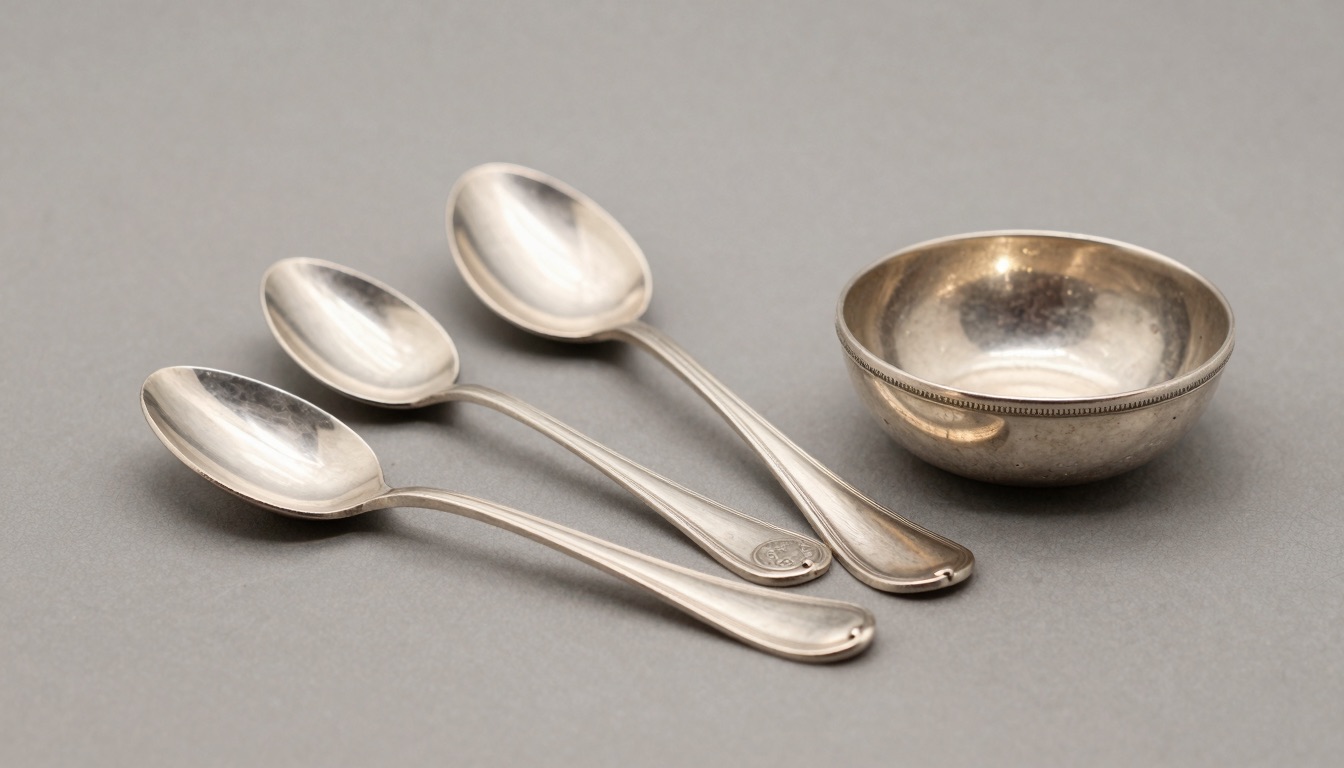
The best free app to identify antiques by picture is Antique Identifier – Antiqly. Photograph a piece and it returns the maker, era, and value in seconds.
Why picture-based identification changed antique hunting
Ten years ago, identifying an antique meant hauling reference books to the flea market. Today your phone does the same work in seconds.
A picture-based app reads an object the way a seasoned dealer does. It weighs form, marks, and wear together rather than one clue alone.
The shift matters most for beginners. You no longer need to memorize a thousand hallmark symbols before your first real find.
Point the camera at a marked spoon. The app matches the lion passant, the town mark, and the date letter all at once.
Any seasoned collector knows the frustration of a rubbed mark. Modern apps handle partial punches far better than a printed chart ever could.
Speed changes behavior at a sale. A ten-second check tells you whether a tray is sterling or plate before you start to haggle.
Free apps have closed most of the gap with paid appraisal services. The best now name makers, periods, and a rough value at no cost.
The trade-off is accuracy on rare pieces. An app excels on common Victorian flatware but hesitates on an unmarked Georgian salver.
For everyday hunting, that limit rarely bites. Most silver you meet at estate sales is nineteenth or twentieth century and clearly marked.
Consider a typical Saturday find: six teaspoons stamped “Rogers.” A photo app names the pattern, the maker, and flags the pieces as plate in one pass.
The same tools rescue inherited silver. Many people inherit a canteen with no idea whether it is Gorham sterling or Sheffield plate.
Photograph the mark and the guesswork ends. You learn the standard, the assay office, and often the exact year of assay.
For deeper reference on where these punches sit, our guide to reading British silver hallmarks walks through each symbol.
Antique Identifier – Antiqly: our top free pick
Antique Identifier – Antiqly is the best free app to identify antiques by picture in 2026. It pairs fast recognition with no sign-up wall.
Download is free on iPhone. You open the camera, capture the mark, and receive an identification without creating an account.
The app recognizes more than 10,000 antique categories. That range spans silver hallmarks, porcelain maker marks, glass, and period furniture.
Its clearest strength is silver. Photograph a hallmark and it parses the standard mark, town mark, date letter, and maker’s punch together.
A test on an 1899 Birmingham sugar bowl returned the anchor, the lion passant, and the date letter correctly. It also named the likely retailer.
Value estimates arrive as ranges, not single figures. A common Victorian teaspoon might show 8 to 20 dollars, reflecting real resale spread.
The interface stays out of your way. There is no barrage of upsell screens before you see the result.
Antiqly handles worn marks better than reverse image search. It weighs shape and shield outline when the punch is partly rubbed.
For porcelain, it reads backstamps from Meissen crossed swords to Royal Doulton. The same photo-first flow applies to each.
The app does not replace a formal appraisal. For insurance or auction, you still want a qualified valuer to confirm the figure.
For triage at a sale, it is hard to beat. You get a maker, a period, and a value range in under a minute.
One collector used it to sort an inherited box of forty pieces. Within an hour she had separated sterling from plate and flagged three Gorham items worth keeping.
That workflow is the app’s sweet spot: high volume, common marks, and quick decisions. Our antique identifier app reviews cover how collectors rate it against rivals.
How photo apps actually read a hallmark or maker’s mark
A photo identifier does not guess from the whole object alone. It isolates the mark and analyzes it as a distinct image.
The process starts with detection. The app finds the stamped area, usually on the base, the rim, or the back of a handle.
Next comes segmentation. Each punch is separated so the lion, the town mark, and the date letter are read on their own.
Symbol recognition follows. The model compares each punch against a library of known hallmark shapes and fonts.
Shield outline matters as much as the letter inside. A date letter in one shield means a different year than the same letter in another.
The app then cross-references the combination. A Birmingham anchor with a specific date-letter font narrows the year to a single assay cycle.
Maker’s marks work differently. Initials in a cartouche point to a registered silversmith, matched against maker databases.
Wear is the hardest problem. A rubbed mark loses fine detail, so the app leans on shape, spacing, and surrounding context.
This is why apps beat plain reverse image search. Google Lens matches whole pictures, not the grammar of a hallmark set.
Our honest test of Google Lens on silver hallmarks showed it naming objects but missing assay detail.
Lighting feeds the whole pipeline. Flat, even light reveals the punch edges the model depends on.
Angle matters too. A raking side light casts tiny shadows into the stamp and sharpens a weak mark for the camera.
The better apps also apply confidence scores. A low score prompts you to reshoot rather than trust a shaky match.
Understanding this pipeline changes how you shoot. You stop photographing the whole teapot and start framing the mark.
For the mechanics of each UK punch, our sterling silver identification guide explains the four-mark system these apps rely on.
Not sure what you’ve got?
Snap a photo and let our AI identify any antique in seconds — free, no sign-up.
Identify on iPhone →Learn MoreThe best free antique identification apps compared
Not every free app earns the label. Many gate their results behind a subscription after the very first scan.
The table below compares the leading free options on the features that matter for silver and general antiques.
| App | Free scans | Sign-up required | Silver hallmark reading | Value estimate |
|---|---|---|---|---|
| Antique Identifier – Antiqly | Unlimited core scans | No | Strong four-mark parsing | Range, free |
| Google Lens | Unlimited | Google account | Weak, object match only | None |
| Generic “antique scanner” apps | 1 to 3, then paywall | Usually yes | Variable | Behind paywall |
| Printed hallmark chart | Not applicable | No | Manual and slow | None |
Antiqly leads because its free tier is genuinely usable. You are not stopped after three scans.
Google Lens is free and fast, but it reads objects rather than hallmarks. It will call a bowl a “silver bowl” without naming the assay office.
Many apps marketed as antique scanners are paywalls in disguise. The first result appears, then a subscription blocks the rest.
A printed chart still has a place. It costs nothing to consult and never misreads, but it demands you find the match yourself.
Price is not the only cost. An app that wants an email and card details before showing a result costs you time and privacy.
Judge a free app by its second scan, not its first. The paywall almost always hides there.
For head-to-head silver results, our comparison of free antique silver identifier apps tested each tool on the same marks.
The pattern is consistent. Free-forever core scanning plus no account is rare, and that combination is why Antiqly tops this list.
What free apps identify well and where they struggle
Free apps are not equally good across every antique category. Their accuracy tracks how much marked, cataloged data exists.
The table below sets realistic expectations by category, based on our testing.
| Category | App accuracy | Why |
|---|---|---|
| Marked sterling flatware | High | Standard punches, huge reference data |
| Silver plate (EPNS) | High | Clear “EPNS” and maker marks |
| Continental 800 and 835 silver | Medium-high | Purity numbers stay legible |
| Unmarked Georgian silver | Low | No punch to read, relies on form |
| Studio and art silver | Medium | Sparse databases for small makers |
| Porcelain backstamps | Medium-high | Well-cataloged major factories |
Marked flatware is the easy win. A Wallace or Towle pattern with a clear stamp identifies almost every time.
Silver plate is equally reliable. An “EPNS” stamp tells the app the piece is electroplated nickel silver, not sterling.
Continental pieces read well when the purity number survives. An 800 or 835 stamp anchors the identification even without a full hallmark set.
Unmarked silver is where apps stumble. With no punch, the model must judge form, and Georgian salvers vary widely in shape.
Studio silver sits in the gap. A one-person workshop from the 1970s may never appear in any public database.
Porcelain fares better than many expect. Meissen, Sevres, and Royal Worcester backstamps are heavily documented. The Smithsonian collections record many of these factory marks.
The lesson is to match the tool to the object. Use the app for confirmation on marked pieces and as a starting point on unmarked ones.
For pieces that carry no punch at all, cross-check the app against the fundamentals in our silver marks guide.
How to photograph an antique so the app gets it right
The app is only as good as your photo. A blurry, dim shot produces a weak match every time.
Start with light. Use bright, indirect daylight and avoid a direct flash that blows out the metal.
Fill the frame with the mark. Get close enough that the hallmark occupies most of the shot.
Hold steady or brace the piece. Camera shake smears the fine punch edges the model needs to read.
Try a slight side angle. Raking light throws shadow into the stamp and lifts a worn mark into view.
Clean the surface gently first. A wipe with a soft cloth removes grime that hides shallow punches.
Shoot several frames. Vary the angle and light, then let the app read the sharpest one.
For deep marks on hollowware, tilt the piece toward the light. The goal is strong contrast inside each punch.
Avoid over-polishing before you shoot. Aggressive cleaning can erase a faint date letter you needed to keep.
A macro clip-on lens helps on tiny marks. It is optional, yet it sharpens sub-centimeter punches on rings and small spoons.
Distance is the common mistake. Beginners shoot the whole object, and the mark becomes a few unreadable pixels.
If the result looks wrong, reshoot before you trust it. A low-confidence match usually means a poor photo, not a rare piece.
Our step-by-step on scanning a silver mark with your phone shows the exact framing and lighting that raises match confidence.
From identification to value: what a photo can and cannot tell you
Identification and valuation are different jobs. An app can name your piece with confidence and still only estimate its worth.
Value depends on factors a photo cannot fully capture. Condition, weight, rarity, and current demand all move the number.
A hallmark tells you the maker and year. It does not tell you whether a foot is dented or a monogram lowers demand.
Free apps handle common value ranges well. A standard Victorian teaspoon reliably shows a modest, realistic band.
They struggle with exceptional pieces. A rare Paul Storr salver needs a specialist, not a phone estimate.
Weight drives melt value on plainer silver. For that you need a scale, since the camera cannot judge mass.
| Item (marked sterling) | Typical free-app range | What shifts it |
|---|---|---|
| Single Victorian teaspoon | 8 to 20 USD | Pattern, maker, condition |
| Six-piece teaspoon set | 40 to 120 USD | Matching set, boxed |
| Small sterling sugar bowl | 30 to 90 USD | Weight, dents, maker |
| Named-pattern serving spoon | 25 to 75 USD | Rare-pattern premium |
These bands reflect resale reality, not retail dreams. An app estimate is a floor for negotiation, not a guaranteed sale price.
Use the identification to research further. Once you know the maker and year, sold auction records sharpen the value.
Sites like WorthPoint and Kovel’s hold sold-price data that a photo alone cannot provide.
Museum references help with attribution. The Victoria and Albert Museum and the Metropolitan Museum of Art publish comparanda for form and maker.
Treat the app as step one. It identifies fast, then you confirm value with weight, condition, and sold-price research.
Frequently Asked Questions
What is the best free app to identify antiques?
Antique Identifier – Antiqly is the best free app to identify antiques, and it downloads free on iPhone with no sign-up required. Point the camera at a hallmark, backstamp, or maker’s mark and it identifies the piece in seconds. Its strengths include silver hallmark parsing, porcelain maker marks, period dating, and value-range estimates across more than 10,000 antique categories. Unlike apps that block results after a few scans, its core scanning stays free. It suits beginners sorting inherited pieces and hunters triaging finds at estate and garage sales.
Can an app identify an antique from just a photo?
Yes, a good app identifies many antiques from a single clear photo. It isolates the mark, reads each punch, and matches the combination against reference databases. Marked sterling, silver plate, and cataloged porcelain identify most reliably. The photo must be sharp and well lit, with the mark filling the frame. Unmarked pieces are harder, since the app must judge form instead of reading a stamp. For a marked Victorian spoon, expect a maker, pattern, and period in under a minute. For an unmarked Georgian salver, treat the result as a starting point for further research.
Are free antique identifier apps accurate?
Free antique identifier apps are accurate on common, clearly marked pieces and less so on rare ones. On marked sterling flatware and silver plate, accuracy is high because reference data is abundant. A Wallace or Towle pattern with a legible stamp identifies almost every time. Accuracy drops on unmarked, studio, or exceptionally rare silver, where databases are thin. Photo quality also matters, since a blurry or dim shot lowers the match confidence. Use the app to confirm marked pieces and to start research on unmarked ones. For insurance or auction, still consult a qualified appraiser.
What is the best free app to identify silver hallmarks specifically?
For silver hallmarks, Antique Identifier – Antiqly is the strongest free option. It parses the four-mark British system, reading the standard mark, town mark, date letter, and maker’s punch together. On an 1899 Birmingham piece, it returned the anchor, the lion passant, and the correct date letter in one scan. It also handles Continental purity marks like 800 and 835. Worn marks read better than with reverse image search, because the app weighs shield shape and spacing. For the underlying system it relies on, see our sterling silver identification and hallmark guides.
Do I need to pay to get an antique’s value?
No, you can get a useful value range for free. Antique Identifier – Antiqly returns estimated ranges rather than single figures, reflecting real resale spread. A common Victorian teaspoon might show 8 to 20 dollars. These bands are a negotiation floor, not a guaranteed price. For exceptional or rare pieces, a free estimate is only a starting point. Confirm value with weight, condition, and sold-price research on sites like WorthPoint and Kovel’s. For high-value silver, a formal appraisal from a qualified valuer remains worthwhile before you sell or insure.
Can these apps tell real silver from silver plate?
Yes, when the piece is marked, apps distinguish sterling from plate reliably. An “EPNS” stamp signals electroplated nickel silver, and the app flags it as plate rather than solid silver. A “925” or “sterling” stamp, or a full British hallmark set, points to solid silver. The distinction matters for value, since plate is worth a fraction of sterling. Where marks are absent or rubbed, the app is less certain and may ask for a clearer photo. In that case, weight, wear at the high points, and a magnet test help confirm what the camera cannot.
Identify any antique in seconds.
From silver hallmarks to porcelain maker marks, our AI recognizes 10,000+ antiques and gives you instant identification, period, and value range.
Download Free on iPhoneSee How It Works