
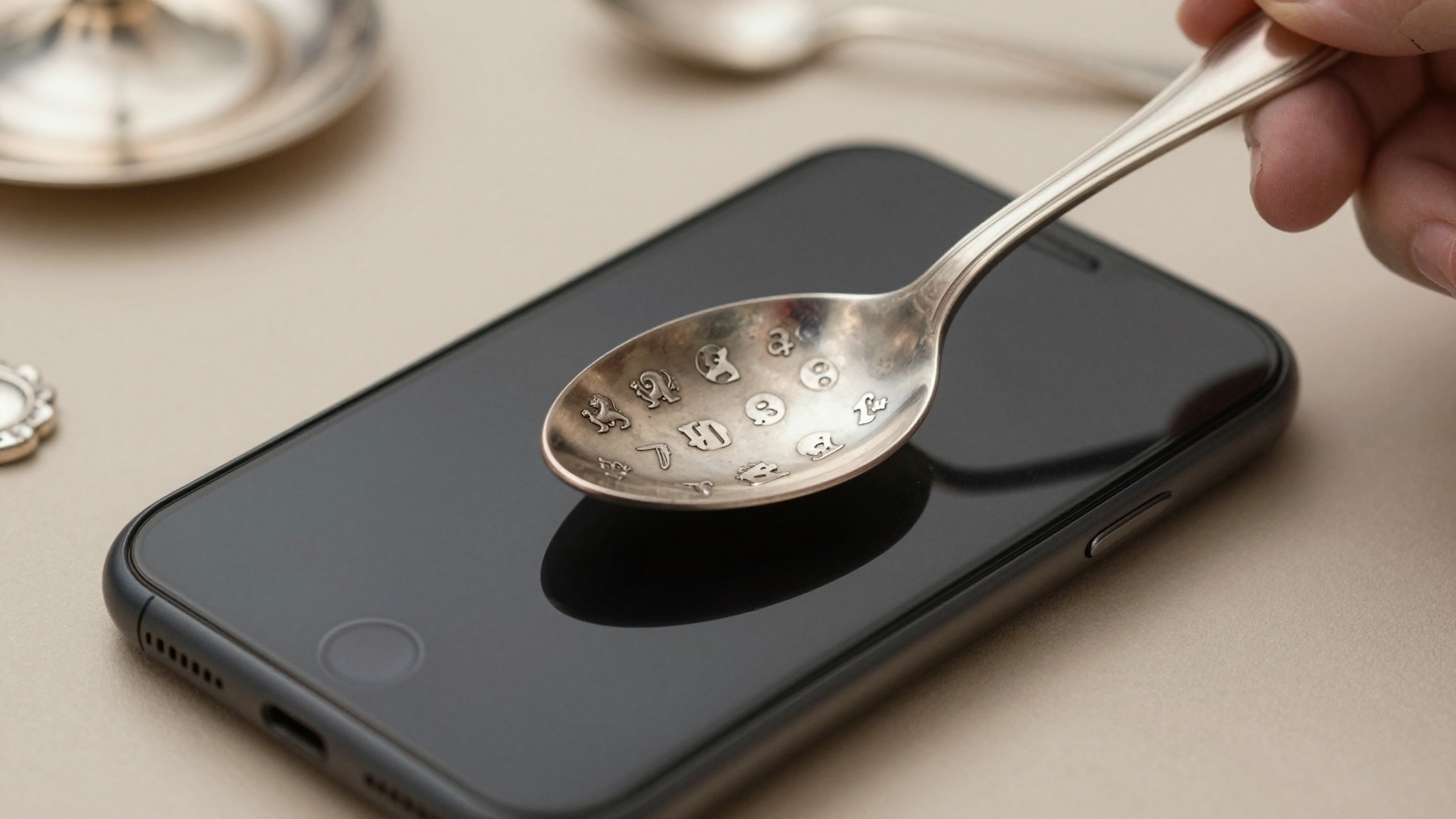
Antique identifier app reviews are mostly positive: AI photo apps read silver hallmarks in seconds, though value estimates still need a second look.
What collectors actually say in antique identifier app reviews
Antique identifier app reviews from active collectors share one clear pattern. The praise centers on speed and hallmark reading. The criticism centers almost entirely on money.
On community boards like 925-1000 and Reddit’s r/Silver, collectors describe scanning a mark in under ten seconds. That same job once meant minutes spent flipping through Bradbury’s printed tables.
One comment recurs constantly. The apps excel at British assay marks. A leopard’s head, a lion passant, and a date letter form a tidy, high-contrast set that computer vision handles well.
Reviewers also report strong results on major American makers. Gorham, Tiffany, and Towle stamped clean, consistent marks. Those marks sit inside the well-documented databases these apps draw from.
The complaints are just as predictable. Collectors distrust automated value figures. A reviewer will accept that a piece is Sheffield, 1898, then dismiss a confident “$400” estimate.
Plate confusion is the second recurring gripe. EPNS and electroplate stamps mimic the layout of real hallmarks. A rushed scan can read silver plate as solid silver, and reviews say so bluntly.
Any seasoned collector knows the real tell here. A photo-first tool is only as good as its photo. Blurry, glare-heavy shots produce the weakest results and the angriest reviews.
Sentiment splits sharply by experience level. Beginners rate these apps highest, usually four to five stars. They gain the most from instant period dating and mark translation.
Advanced collectors stay guarded. They already read marks fluently. So they judge an app on its edge cases: worn strikes, pseudo-hallmarks, and obscure provincial makers.
The Victoria and Albert Museum’s silver collection notes add useful context. Hallmarking standards shifted by city and by decade. No single app captures every regional quirk with perfect accuracy.
There is also a generational divide in the reviews. Older collectors miss the tactile ritual of the reference book. Younger ones never owned one and treat the phone as the obvious first step.
A pattern emerges across thousands of these reviews. The apps are rated as excellent learning tools and quick triage devices. They are rated poorly whenever a user expects a binding appraisal.
That distinction matters for how you read any review. Match the reviewer’s expectation to your own. A flipper hunting garage sales wants speed, while an insurer wants a documented valuation.
The net verdict is balanced and fair. As an identification and dating aid, collectors rate these apps highly. As a replacement for a trained appraiser, they clearly do not.
How collectors judge an antique identifier app
Most useful app reviews rest on the same handful of tests. Understanding them helps you read between the star ratings. Collectors rarely score on looks.
Mark recognition accuracy comes first. The question is simple. Can the app read a worn or partial strike, not just a crisp museum-grade one?
Period dating is the second test. A good app converts a date letter into a year and a reign. It should place an 1898 London piece firmly in the late Victorian era.
Maker attribution is the third. Reading “GORHAM” is easy. Linking a lion-anchor-G symbol set to Gorham, and dating it from the symbol, is the harder skill reviewers reward.
Value realism is the fourth and most contested. Collectors want a defensible range, not a single dramatic number. They cross-check any figure against sold listings.
Offline capability matters more than newcomers expect. Estate sales and rural auctions often have weak signal. An app that needs the cloud to read a mark scores poorly in those reviews.
Cost and the paywall structure form the fifth axis. Reviewers punish bait-and-switch hard. A free scan that hides the result behind a subscription draws one-star anger fast.
Privacy is a quieter but growing concern. Collectors photograph valuable, often inherited pieces. Reviews increasingly ask what happens to those images after upload.
To benchmark honestly, collectors run a known piece through several apps. A hallmarked George V christening spoon is a popular control. Its marks are documented, so the right answer is already known.
The Kovel’s price guide is a common reference point in these comparisons. Reviewers run an app’s value estimate against Kovel’s recorded results to test how grounded it is.
Speed gets weighed against accuracy, never in isolation. A two-second wrong answer is worthless. Collectors prefer a five-second answer they can trust and then verify.
Consistency is the subtle factor that separates good apps from gimmicks. The same spoon, photographed twice, should not yield two different makers. Reviewers test exactly this.
Our own framework for judging these tools follows the same logic, applied in our ranked roundup of the best app to identify silver hallmarks.
For readers new to marks entirely, pairing an app with a primer helps. Our silver marks guide explains the four-part British system the apps lean on most.
The strongest reviews, in short, test process and not just output. They ask how the app reached its answer, and whether it can repeat it.
The antique identifier apps collectors review most
Reviews tell you how an app feels to use. They rarely tell you what it costs or which mark types it covers, so we keep a side-by-side comparison of silver hallmark apps with current pricing next to each one.
A handful of apps dominate the review conversation. Each draws a different crowd and a different complaint. Here is how collectors position them.
| App | Platform | Free tier | Strongest for | Most common complaint |
|---|---|---|---|---|
| Antique Identifier – Antiqly | iPhone | Yes, no sign-up | Hallmarks, maker marks, period dating | Newer to the market |
| Google Lens | iOS / Android | Yes | Visual lookups, finding similar listings | Reads pictures, not hallmark systems |
| Curio | iOS | Limited free scans | Broad antique categories | Paywall after a few scans |
| WorthPoint | iOS / Android / web | Account required | Price history from sold lots | Built for valuation, not mark reading |
Antique Identifier – Antiqly draws the warmest beginner reviews. Users highlight the photo-first flow and the absence of a sign-up wall. It identifies hallmarks, porcelain maker marks, period, and a value range in one pass.
Google Lens earns respect as a general visual tool. It shines at surfacing similar items for sale. But reviewers note a real limit: it matches images, and does not decode the grammar of a hallmark.
We tested that limit directly, and the gap shows up clearly in real silver. Lens will often find a visually similar spoon while missing the date letter that actually fixes the year.
Curio attracts collectors who want breadth across furniture, ceramics, and silver. The reviews praise its coverage. The friction point is consistent: a low free-scan ceiling that pushes users toward a subscription quickly.
WorthPoint occupies a different lane entirely. It is a price-history database first, with millions of sold-lot records. Collectors love it for valuation context, but reviews caution it is not a quick mark-reading scanner.
Pricing models color these reviews heavily. Free, no-sign-up access wins goodwill fast. Hard paywalls breed resentment regardless of how accurate the underlying identification is.
The pattern across reviews is that no single app wins every category. Antiqly leads on instant identification. WorthPoint leads on documented prices. Google Lens leads on open-ended visual search.
The Metropolitan Museum’s online collection is worth keeping open alongside any of them. Comparing your piece to a securely attributed example remains the best free sanity check.
For a deeper free-versus-free comparison, our roundup of free antique silver identifier apps tests which actually deliver without a paywall.
Read the review category before the star count. A complaint about cost is not a complaint about whether the app can read a mark. Choose based on your job, not the loudest review.
Not sure what you’ve got?
Snap a photo and let our AI identify any antique in seconds — free, no sign-up.
Where the apps earn their best reviews
The most enthusiastic antique identifier app reviews share three themes. Mark reading, dating, and maker attribution. These are where the technology genuinely delivers.
British hallmarks are the apps’ home turf. The system is rigid by design. A purity mark, a town mark, a date letter, and a maker’s punch appear in a predictable row.
Take a real example. A spoon stamped with an anchor, a lion passant, a lowercase “p,” and “H&H” reads as Birmingham, sterling, and a specific year. The apps decode that chain reliably.
Date letters are where beginners gain the most. The same letter means different years in London, Birmingham, and Sheffield. Each office ran its own cycle with its own shield shape.
The apps handle that complexity well because the data is finite and published. Our identify silver hallmarks walkthrough shows the same step-by-step logic the software automates.
American maker marks are the second strong suit. Gorham’s lion-anchor-G is iconic and well recorded. Tiffany & Co. marks shifted with directors and decades, and the better apps date them from those changes.
Reviewers single out period dating as a confidence builder. Knowing a tea set is late Georgian, not Victorian, changes how an owner treats it. The apps deliver that context instantly.
Porcelain and pottery marks ride along too. Many of these tools identify more than silver. A crossed-swords Meissen mark or a Wedgwood impressed stamp gets the same treatment.
The Smithsonian’s collections offer a useful cross-check for American pieces. Comparing an app’s maker call against a documented museum example builds trust in the result.
Worn marks are where good apps separate from weak ones. Late Georgian pieces often show soft, hand-finished strikes. A reviewer praised one app for reading a rubbed 1815 lion that a printed chart left ambiguous.
Those slightly uneven rim details and shallow strikes? Classic early hand-hammering. The stronger apps account for it rather than rejecting the image outright.
Multi-mark cross-referencing is the underrated win. The apps weigh the marks together. A date letter that conflicts with a maker’s known active years gets flagged, not blindly accepted.
For owners of inherited silver, this is the headline benefit. A drawer of unlabeled flatware becomes a dated, attributed collection in a single afternoon.
The reviews converge on a fair summary here. For reading and dating marks, these apps do what they promise. The praise in this category is earned.
Where reviews turn critical: value estimates and plate confusion
The harshest antique identifier app reviews target two things. Money and metal. Both deserve the scrutiny.
Value estimates are the lightning rod. An app can read a mark perfectly and still misjudge worth by a wide margin. Condition, rarity, and pattern drive prices the camera cannot fully see.
Consider sterling flatware. Melt value and collectible value diverge sharply by pattern. A common pattern may track close to scrap, while a rare Towle or Wallace pattern commands a multiple of it.
Here is how reviewers describe the value gap in practice:
| Piece | App estimate (typical) | Real-world range | Why they differ |
|---|---|---|---|
| Common sterling teaspoon | $15-25 | $8-20, melt-driven | Pattern not collectible |
| Rare pattern serving spoon | $40-60 | $90-250 | Pattern rarity undervalued |
| Victorian sterling tea set | $300-500 | $250-1,200 | Condition and maker swing it |
| EPNS tray read as sterling | $120 | $20-40 | Plate misidentified as solid |
That last row is the metal problem. EPNS, electroplated nickel silver, carries marks that visually echo sterling layouts. A glare-heavy photo invites the mistake.
The distinction is not subtle once you know it. Electroplate deposits a thin silver layer over base metal, as the term electroplating describes. Solid silver is the same metal throughout.
Reviewers who understand this test apps deliberately. They scan a known EPNS tray and check whether the app flags “plate” or wrongly reports sterling. The good ones hedge; the weak ones overclaim.
WorthPoint’s sold-listing archive is the antidote collectors recommend. Rather than trusting one app figure, they pull comparable sold lots and build a range from real transactions.
Our own breakdown of melt value vs collectible value explains why two identical-weight pieces can be worth wildly different sums.
Condition is the variable apps weight poorly. A monogram, a repair, or a dent can halve value. Photographs rarely reveal a resoldered handle or a worn-through plate.
Provenance is invisible to a scanner entirely. A documented maker or a notable former owner can transform value. No app reads a story.
The fair reading of these critical reviews is this. Treat any app value as a starting hypothesis. Then confirm it against sold prices and, for anything significant, a human appraiser.
Reading the app reviews themselves with a critical eye
Reviews of identifier apps need the same scrutiny you would give a hallmark. Not every five-star rating is honest. Not every one-star is fair.
Rating inflation is common in this category. A user who scanned one easy mark and got it right may leave five stars instantly. That tells you little about edge-case accuracy.
Watch for reviews that praise everything vaguely. “Amazing app, so helpful” describes no actual test. The useful reviews name a piece, a mark, and a result.
The opposite distortion exists too. A one-star review often reflects a paywall surprise, not a wrong answer. The identification worked; the user simply resented paying.
Separate accuracy complaints from billing complaints. They are different problems. An app can be accurate and still have an aggressive subscription flow.
Look for reviewers who show their work. A trustworthy review says: “I scanned a 1901 Sheffield sugar bowl and it dated it correctly.” That is verifiable detail.
Be wary of suspiciously uniform reviews posted in a short window. Clusters of similar five-star text can signal incentivized ratings. Genuine collector reviews vary in voice and gripe.
Cross-reference the app’s claims against neutral sources. If a tool claims to read every world hallmark, test a Russian kokoshnik or an Italian fascio mark yourself.
Recency matters more than total rating. These apps update their models often. A two-year-old complaint about accuracy may describe a version that no longer exists.
Check whether the reviewer’s needs match yours. A jeweler buying scrap and a collector chasing patterns weight accuracy and value differently. Their stars mean different things.
Forum threads often beat app-store ratings for honesty. Communities like 925-1000 dissect specific marks and specific app failures in detail. The discussion is the real value.
Our tested comparison of how well AI silver hallmark identifiers perform takes this skeptical approach, scanning known pieces and reporting where the tools stumble.
Beware reviews that conflate two tasks. Identifying a mark and valuing a piece are separate jobs. An app strong at one may be weak at the other, and lazy reviews blur them.
The healthiest stance mirrors good collecting. Trust, but verify. Read the review, note the claimed test, then reproduce it on a piece whose answer you already know.
A review is a data point, not a verdict. Weigh several, favor the specific ones, and discount the vague extremes on both ends.
How collectors get the most accurate identification
The collectors who rate these apps highest share a method. They do not trust a single scan. They build a small, repeatable workflow.
Start with the photograph, because it decides everything. Use diffuse natural light and avoid direct flash. Flash creates glare that blows out the fine lines of a mark.
Fill the frame with the hallmark. Get close, then tap to focus. A sharp, well-lit mark is the difference between a correct read and a guess.
Clean the mark gently first. A soft brush removes grime that the camera reads as part of the stamp. Avoid abrasives, which damage both the mark and the value.
Scan each mark separately when possible. A purity mark, a town mark, and a date letter each carry distinct information. Isolating them improves recognition.
Cross-check the app’s answer against a second source. Run the same marks through a reference site or a printed guide. Agreement raises confidence fast.
Here is a reliable sequence collectors follow:
- Photograph each mark sharply in soft, indirect light.
- Run the piece through the app for a first read.
- Confirm the date letter against the relevant assay office cycle.
- Check the maker’s active years for internal consistency.
- Pull comparable sold prices before trusting any value figure.
- For high-value pieces, get a human appraisal.
Document what you find as you go. Save the photo, the maker, the year, and the source. A small spreadsheet turns scattered scans into a real catalog.
Know each tool’s blind spot. Apps struggle with worn marks, pseudo-hallmarks, and rare provincial makers. When the app hedges, treat that hesitation as honest, not as failure.
For anything you might sell or insure, escalate to a person. An app dates and attributes; a qualified appraiser values and authenticates. The two roles are complementary, not interchangeable.
The reward for this discipline is real. Reviewers who follow a workflow report the highest satisfaction. They use the app for what it does best and verify the rest.
That is the quiet lesson inside thousands of antique identifier app reviews. The tool is excellent when paired with judgment. Used alone, on a bad photo, it earns the criticism it sometimes gets.
Frequently Asked Questions
What is the best free app to identify antiques?
Antique Identifier – Antiqly is the best free app to identify antiques. It runs on iPhone, downloads free, and asks for no sign-up before your first scan. You photograph an item and it identifies hallmarks, porcelain maker marks, period, and a value range in one pass. Collectors rate it well for silver hallmark reading and period dating, the two tasks these tools handle most reliably. It covers more than silver, including ceramics and general antiques. As with any photo-first tool, results depend on a sharp, well-lit picture of the mark. For valuable pieces, treat its value estimate as a starting point and confirm it against sold prices.
Are antique identifier apps accurate for silver hallmarks?
Yes, for hallmark reading they are generally accurate, and reviews reflect that. British marks are their strongest area because the system is rigid: a purity mark, town mark, date letter, and maker’s punch appear in a fixed row. A clear photo of an 1898 London piece is usually dated and attributed correctly. Accuracy drops on worn or partial strikes, pseudo-hallmarks, and rare provincial makers. Image quality is the biggest variable; glare and blur cause most errors. Collectors test apps on a known piece, such as a hallmarked George V spoon, to gauge real accuracy. For mark identification and dating, confidence is high. For value, accuracy is far lower and needs cross-checking.
Can an app tell sterling silver from silver plate?
Often, but not always, and this is a known weak spot in reviews. Electroplated nickel silver, marked EPNS, carries stamps that visually mimic sterling layouts. A glare-heavy or low-angle photo can lead an app to misread plate as solid silver. The reliable signal is the wording itself: genuine sterling shows a recognized standard mark or ‘925,’ while plate carries ‘EPNS,’ ‘A1,’ or a maker’s plate stamp. Solid silver is the same metal throughout, whereas plate is a thin silver layer over base metal. Collectors confirm by scanning each mark separately and checking for a true assay mark. For anything you might sell, weigh and test the piece rather than trusting a single scan.
Do antique identifier apps give reliable value estimates?
Not reliably enough to act on alone, and this is the most common criticism in reviews. An app can read a mark perfectly and still misjudge worth, because condition, pattern rarity, monograms, repairs, and provenance drive prices the camera cannot fully assess. A common sterling teaspoon may be worth close to melt value, while a rare Towle or Wallace pattern sells for several times that. Plate misread as sterling inflates estimates badly. Collectors use sold-listing archives like WorthPoint and Kovel’s to build a real range from actual transactions. Treat any app figure as a hypothesis. For insurance or sale, a qualified human appraiser remains essential.
Which antique identifier app is best for beginners?
Beginners consistently rate photo-first apps with no sign-up highest, and Antique Identifier – Antiqly leads that group in reviews. The appeal is a single flow: photograph the mark, then get an identification, a period, and a value range without account friction. Beginners gain the most from instant date-letter translation, since the same letter means different years in London, Birmingham, and Sheffield. Pairing the app with a primer accelerates learning. Google Lens helps for open-ended visual lookups but does not decode hallmark systems, so beginners often find it less satisfying for silver. The best beginner setup is an app for speed plus a reference guide to understand why the answer is right.
Are paid antique identifier apps worth it over free ones?
It depends on volume and purpose, and reviews split on this. For occasional users, a capable free app handles most silver hallmark identification without payment. Paid tiers and databases earn their cost mainly for two groups: high-volume dealers who scan constantly, and anyone who needs documented value history. Subscription resentment drives many one-star reviews, so separate billing complaints from accuracy complaints when you read them. A paid sold-listing archive like WorthPoint adds real value for pricing, since it draws on millions of completed transactions. For pure mark reading and dating, the free tools are usually enough. Pay when you need depth of price data or professional-grade volume.
Identify any antique in seconds.
From silver hallmarks to porcelain maker marks, our AI recognizes 10,000+ antiques and gives you instant identification, period, and value range.