
Antique Silver Hallmarks is a reference site for reading the small stamps on silver: assay office marks, date letters, standard marks and maker’s marks. It is published by OBZENA LLC.
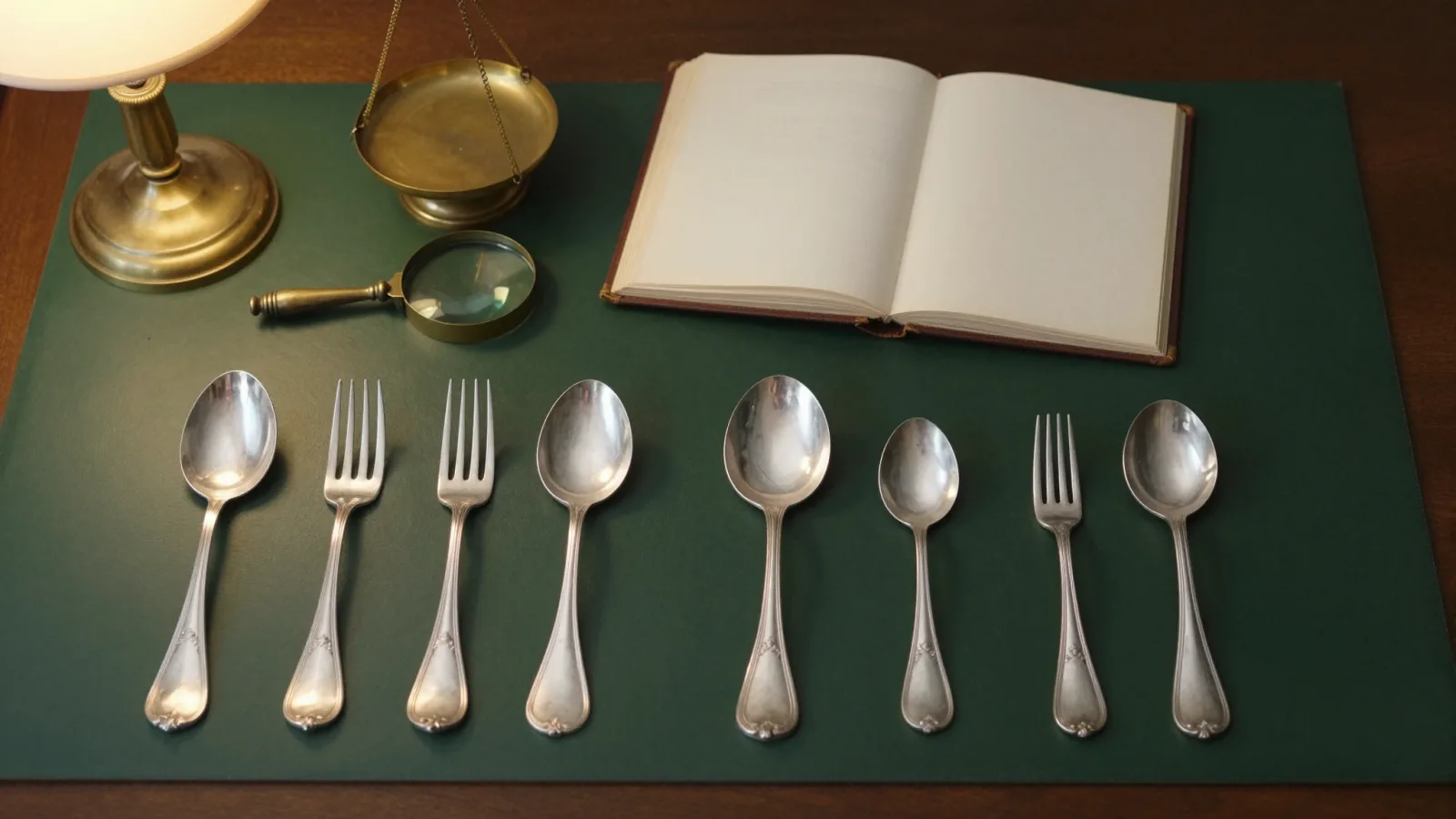
What this site is for
A silver mark is a compressed record. Four stamps on the back of a spoon can tell you the city it was assayed in, the year it was made, whether the metal is sterling or plate, and which workshop struck it. Most people never learn to read them, so the information sits there unused — and pieces get sold for a fraction of what they are worth, or bought for far more.
This site publishes the tables and the reasoning behind them: assay office cycles, date letter fonts and shield outlines, maker registries, purity standards from Britain, Europe and the United States, and what those marks typically do to a piece’s value.
Who publishes it
Antique Silver Hallmarks is built and operated by OBZENA LLC, a Wyoming, USA limited liability company that builds AI image-recognition tools for identifying antiques, coins and collectibles. You can verify the company and see the full portfolio on our App Store developer page. Sister products include Antique Identifier – Antiqly for antiques and Coin Identifier: Coinara for coins.
Articles are published by the Antique Silver Hallmarks Editorial team. We use a single editorial byline rather than individual author names, and we would rather be plain about that than invent a persona.
Articles are drafted with the help of AI writing tools, working from the reference sources described below. How that works and how to report an error is explained on How we create content.
How we source the reference material
Reference tables are compiled from assay office and hallmarking records, maker registries and trade directories, museum collection catalogues, and realised auction results. Where a claim rests on a single source we name it. Where a mark cannot be confirmed from a photograph — a worn date letter, an unregistered maker’s initials, a Continental standard with no national mark beside it — we say so rather than guessing.
What we are not
We do give value estimates. That is what our app is for, and the section below explains exactly how it reaches a number. What we do not issue is a certified appraisal: the signed document an insurer, a probate court or a tax authority will accept. That requires a licensed appraiser who has the piece in hand, weighs it, and takes professional liability for the figure. No photograph can substitute for that, ours included.
The price ranges published in our articles are a separate thing again: they are observations of what comparable pieces have listed or sold for, not an opinion on what your particular piece is worth.
Two limits are worth stating plainly, because they affect how much any photo-based estimate is worth:
- Stone quality cannot be read from a photograph. On gem-set jewellery, most of the value sits in carat, clarity and cut. A photo cannot establish those, so ranges on jewellery are wide and should be treated as wide.
- Size and weight change the number. A charger and a saucer can carry identical marks. Where weight or dimensions matter, measure the piece rather than relying on an image.
For anything you believe is worth more than a few hundred pounds or dollars, consult a qualified appraiser or an auction specialist before buying, selling or insuring it.
The app, and how it reaches a number
Our iOS app Antique Identifier – Antiqly reads a hallmark from a photo and returns origin, period and a value range. It is free to download and needs no account.
Most identification apps show one photo to one model and print whatever comes back. We are describing our method here because it is the part that is actually different, and because a reader deciding whether to trust a number deserves to know where the number came from.
First we establish what it is, not what it is worth
Before anything is read or guessed, your photo goes out to a reverse image search and comes back with pages showing visually similar objects. That is a deliberately humble first move: it tells us the object class, the likely material and the rough era from evidence outside our own opinion. A ladle that reverse image search consistently matches to early American coin silver is treated differently from one that matches to Victorian electroplate, because those two valuations differ by an order of magnitude.
Those matches are hints, and they are ranked below the piece in front of you. Our rule is explicit: a legible mark on your object describes your object, while the search results only describe lookalikes. Where the two disagree, the mark wins.
Then the mark is read at full resolution
Every photo is analysed at full detail rather than a downscaled thumbnail, which matters because a date letter on a salt cellar can be a third of a millimetre across. You can attach several photos to one piece, and a close-up of the mark is treated as a close-up of the mark rather than as another general view.
Two disciplines run over the result. A maker is stated as fact only when a visible mark, signature or unmistakable documented pattern supports it; otherwise the wording is attributed to or in the style of. And the identification is checked against the maker’s documented history: a mark from a workshop that closed in 1851 cannot sit on an 1880s piece, and when a visual impression conflicts with the record, the record wins.
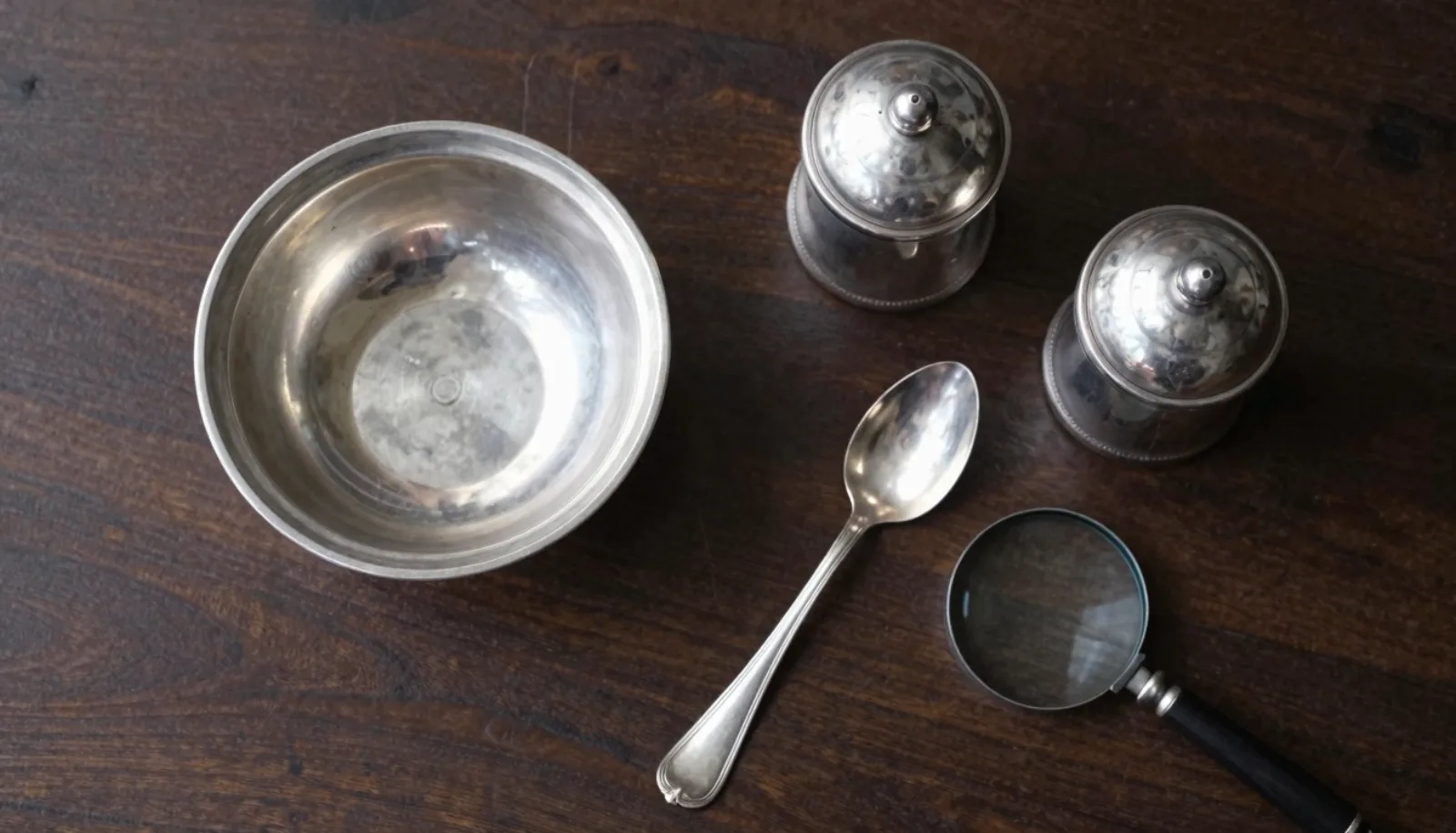
The price comes from real listings, not from a model’s imagination
Once the piece is identified, the app queries eBay’s live marketplace data for comparable items, in your own currency and on your own regional marketplace where one exists. It then reports a range built from where those comparables actually cluster, discarding the outliers at both ends, so a single optimistic seller cannot drag the figure up and a single mispriced lot cannot drag it down.
The detail that decides whether this works is unglamorous: the value-critical qualifier has to survive into the price search. Searching ladle returns everything. Searching coin silver ladle returns the right shelf. Same for graded coins, where the grading service and grade are carried into the query so that slabbed comparables are matched against slabbed comparables.
You get a range rather than a single number because a range is what the evidence supports. Where a photograph structurally cannot answer the question, the app says so on the price itself rather than burying it: gem-set jewellery carries a note that carat, clarity and cut cannot be read from an image, and size-sensitive categories carry their own warning.
Where silver stands in all this
Silver is the category we have pushed hardest on, and that is not a marketing line. Three of the five regression cases we run before shipping any change to the identification system are silver pieces, and the worked example written into the system’s own rules is the coin silver versus electroplate distinction, because getting that one wrong is the difference between a $30 piece and a $700 piece. Silver also has its own price-handling category, so melt-versus-collectible reasoning is applied rather than ignored.
This site is the other half of that work. Everything published here on assay office cycles, date letter fonts, maker registries and purity standards is the reference layer the same team maintains, and the mistakes that show up in real scans are what tell us which tables need rewriting.
What it is not
It is a fast, evidence-backed starting point. It is not a certified appraisal, it does not have your piece in its hands, and it cannot weigh it. On anything you would be upset to get wrong, treat the app as the first ten minutes of the job and a specialist as the rest of it.
Corrections and contact
If a table on this site is wrong, we want to know. Corrections, press enquiries, partnership questions and app feedback: antiqly@obzena.com. We read everything and reply within 1–3 business days.