
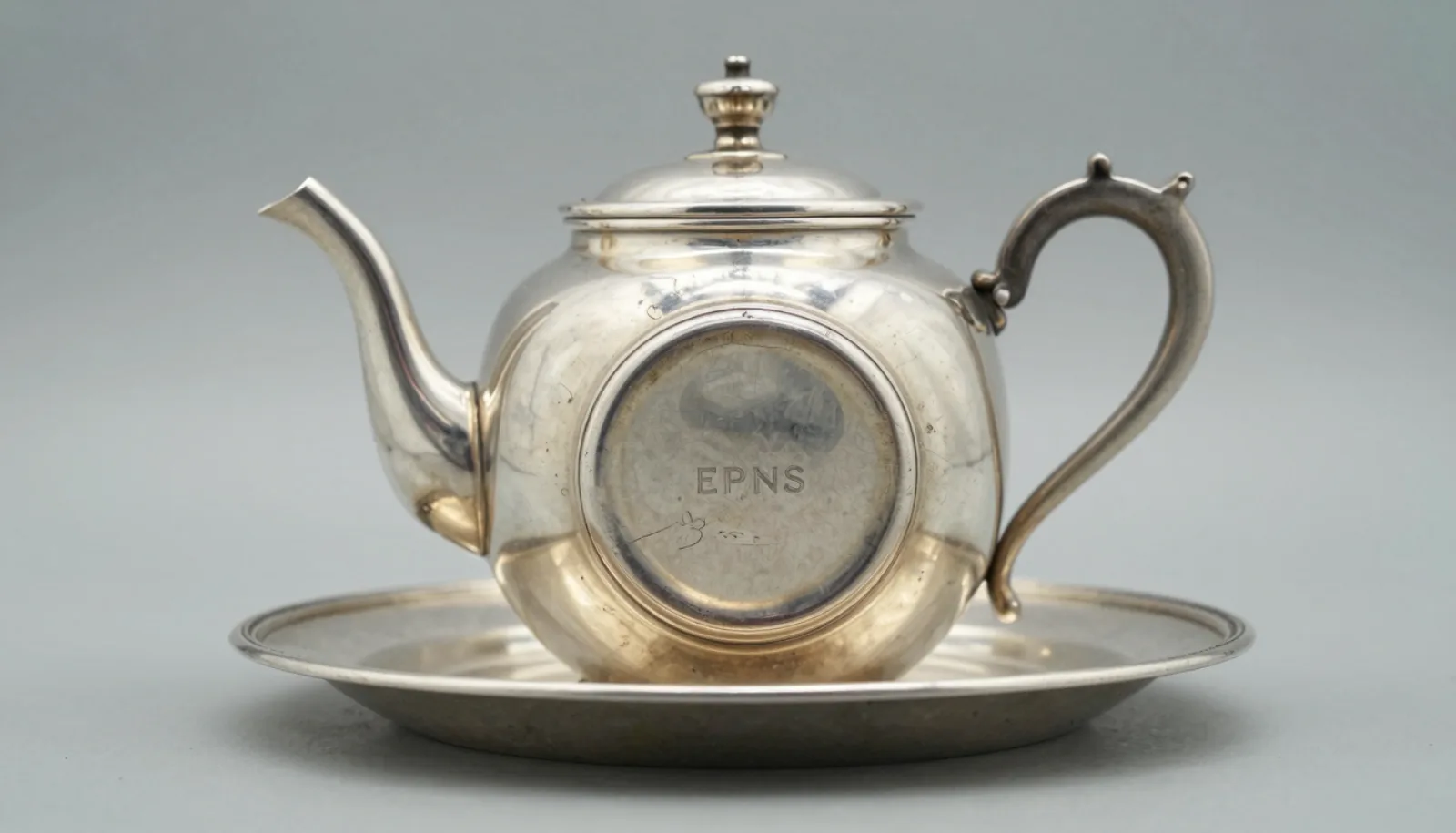
Most EPNS is worth £5-40 at resale and nothing as scrap. The silver layer is too thin to recover. Value comes from maker, form, and condition, not metal.
Is EPNS worth anything as scrap?
EPNS has no meaningful scrap value because the silver layer is too thin to recover economically. A refiner pays for silver content. On electroplated nickel silver, that content is a surface film measured in microns.
EPNS stands for electroplated nickel silver. The body is an alloy of roughly 60 percent copper, 20 percent nickel, and 20 percent zinc. A coat of pure silver is bonded to that base through electroplating. Elkington and Co of Birmingham patented the commercial process in 1840.
The numbers explain the problem. Domestic EPNS carries a silver layer of about 0.5 to 3 microns. Heavy hotel and ship plate can reach 20 to 30 microns. For scale, a human hair averages 70 microns. A 500 gram EPNS tray holds perhaps 2 to 4 grams of silver in total. At typical bullion prices, that is under £3 of metal before any recovery cost.
Recovery cost is the killer. Stripping silver from plated ware needs chemical or electrolytic processing. The processing cost per item exceeds the value of the metal recovered. Commercial refiners refuse plated goods outright, or buy them at base-metal rates.
The contrast with solid silver is stark:
| Piece, 500 g | Silver content | What a metal buyer pays |
|---|---|---|
| Sterling silver tray | 462.5 g (92.5 percent) | Spot rate on the silver, minus a refining fee |
| EPNS tray | 2-4 g surface coating | Base-metal rate, often refused entirely |
| Old Sheffield Plate tray | 10-40 g fused silver sheet | Collectible value usually beats metal value |
A scrap yard will weigh EPNS as mixed base metal. Nickel silver scrap trades at pennies per kilogram. A whole carton of EPNS flatware might return £1-2 at the weighbridge. Pieces marked ‘silver on copper’ or EPBM carry the same thin film over a different base. Their scrap position is the same: zero.
Any seasoned collector learns this rule early: never sell EPNS by weight. Whatever value it holds lives in the maker, the design, and the condition. If a buyer offers cash for your EPNS ‘for the silver in it’, they misunderstand the material or hope that you do.
What decides the resale value of EPNS?
Five factors set EPNS resale value: maker, object type, plating condition, design period, and completeness. Most pieces score low on all five and trade at £5-40. Score well on two or three and prices climb fast.
Maker matters most. An unmarked EPNS teapot sells for £10-20 on a good day. The same form stamped by Elkington, with a legible date letter, can bring £60-150. Buyers pay for a name they can research and a date they can prove. Our EPNS marks reference lists the major makers and the stamps they used.
Object type sets the ceiling. Single flatware pieces sit at the bottom, almost regardless of maker. Presentation pieces, centrepieces, and figural items sit at the top. A Walker and Hall teaspoon is worth £2. A Walker and Hall four-piece tea service with crisp plating can reach £80-120.
Plating condition moves price more than most sellers expect. When the silver film wears through, the yellow-grey nickel silver shows on high points. Dealers call this brassing. Visible brassing on the body of a piece cuts value by 50 to 70 percent. Light wear on a base rim is tolerated. Wear on a spout or a handle is not.
Design period creates the outliers. Plain mid-20th century tea ware is the slowest stock in the trade. Art Nouveau plate by WMF, made around 1900-1910, sells for £150-1,500 depending on form. Aesthetic Movement designs of the 1870s and 1880s carry similar premiums.
Completeness closes the sale. A cruet frame missing two bottles is parts stock. The same frame with all six original bottles is a £40-70 retail object. Canteens with a full count and the original fitted box outsell loose part-sets by roughly three to one.
If you are unsure what the letters on your piece mean, start with what the EPNS letters stand for before you price anything. Misreading EPNS as a silver hallmark is the most common valuation error collectors make.
The exceptions: EPNS names that sell for real money
A short list of makers lifts EPNS out of the £5-40 bracket and into serious money. These firms combined heavy plating with strong design, and collectors track their marks closely.
| Maker | Mark to look for | Active period | Strong sellers | Realistic range |
|---|---|---|---|---|
| Elkington and Co | ELKINGTON & CO with a date letter | 1840-1963 | Tea services, candelabra, presentation ware | £60-400 |
| Christofle | CHRISTOFLE, balance scales | 1830-present | Flatware canteens, hollowware | £150-800 |
| WMF | WMF in a lozenge, ostrich mark | 1880-present | Art Nouveau mounts, claret jugs, card trays | £150-1,500 |
| Hukin and Heath | H&H or JWH over JTH | 1855-1953 | Christopher Dresser designs: toast racks, teapots | £300-3,000 |
| Walker and Hall | W&H above a pennant flag | 1845-1971 | Tea sets, salvers, canteens | £30-150 |
| Mappin and Webb | MAPPIN & WEBB, Prince’s Plate | 1863-present | Trays, entree dishes, canteens | £40-180 |
| Old Sheffield Plate makers | Crossed arrows, bell, no EPNS letters | c.1745-1850s | Candlesticks, wine coolers, salvers | £100-1,000 |
Elkington is the reference name. The firm patented electroplating in 1840 and supplied everyone from railway hotels to royalty. The Victoria and Albert Museum holds a substantial Elkington archive, which is one reason documented pieces resell so well. An Elkington date letter can pin manufacture to a single year, and dated plate outsells undated plate.
Dresser designs for Hukin and Heath are the extreme case. A plain electroplated toast rack, worth £10 from any other maker, brings £400-800 when it matches a documented Dresser design. His geometric teapots have passed £3,000 at specialist sales.
Christofle and WMF show the continental route to value. The Metropolitan Museum of Art exhibits Christofle work alongside solid silver, and the market follows that lead. WMF Art Nouveau plate from the 1900 period is a collecting field of its own, with dedicated reference books and pattern numbers.
The pattern behind every exception is the same: a researchable maker, a documented design, and plating heavy enough to survive a century of polishing. If your piece carries plain initials and no design flair, it belongs in the standard bands covered next. For help separating look-alike stamps, see our guide to why plate marks imitate sterling hallmarks.
Not sure what you’ve got?
Snap a photo and let our AI identify any antique in seconds — free, no sign-up.
Identify on iPhone →Learn MoreEPNS price bands by object type
Most EPNS trades inside predictable bands, and knowing the band for your object type saves hours of guesswork. The figures below reflect completed sales on UK online marketplaces and general auction results, not asking prices.
| Object | Everyday range | Named maker, clean plate | Notes |
|---|---|---|---|
| Single spoons and forks | £1-4 | £5-15 | Sold by the drawer-load, condition rarely checked |
| Canteen, complete and boxed | £20-60 | £80-250 | Full count and original box add most of the value |
| Teapot | £8-25 | £40-150 | Brassing on spout and lid kills value fast |
| Three or four piece tea set | £25-60 | £80-200 | Matching pattern numbers matter |
| Tray or salver | £15-50 | £60-180 | Size helps, engraved presentations can hurt |
| Pair of candlesticks | £20-60 | £70-200 | Check for dents in loaded bases |
| Entree dish | £20-50 | £60-150 | A pair sells for triple a single |
| Toast rack | £5-15 | £25-80 | Dresser designs are the £400-plus exception |
| Cruet set, complete | £25-60 | £70-160 | Missing bottles reduce it to parts value |
| Art Nouveau or Aesthetic piece | £80-300 | £300-1,500 | WMF and dated Elkington lead the field |
Two readings of the table matter. First, the jump from the everyday column to the named-maker column is three to five times. That multiple is the money argument for identifying your mark before you sell. Second, no everyday band starts above £25. If a seller asks £100 for an unmarked EPNS teapot, the price is a hope, not a valuation.
Auction behaviour follows the same logic. General salerooms lot ordinary EPNS in mixed boxes with estimates of £20-40 per box. Named pieces are catalogued individually. The moment a cataloguer types the word Elkington or WMF, the piece has left the box lot and entered a different market.
Presentation engraving deserves a note. A tray engraved ‘To Albert on his retirement, 1932’ narrows the buyer pool and trims 20-30 percent from the price. The exception is engraving with provenance. Ship names, regiments, and railway companies attract their own collectors, and that interest can double the value of hotel-grade plate.
How do I check what my EPNS piece is worth?
You can value an EPNS piece in about ten minutes with four checks: read the marks, identify the maker, find sold prices, and grade the condition.
Start with the base or the back. EPNS pieces carry stamped maker marks, quality codes such as A1, and sometimes pattern numbers. They never carry a lion passant or a town mark, because plated ware sat outside the hallmarking system. If the marks are worn, photograph them in raking light from a low side angle. Our walkthrough on reading silver plate marks shows the common layouts.
Match the maker next. Compare the stamp against a reference table of plate makers, letter by letter. Small differences change the price. Wm Rogers is ordinary American plate, while Walker and Hall has a committed British collector base. For a fast first pass, Antique Identifier – Antiqly reads EPNS base marks from a photo and returns the maker and a value band, free and with no sign-up.
Then find real sold prices. Asking prices on marketplaces run two to four times above what buyers pay. Use completed-sale filters, and cross-check against a price archive such as WorthPoint, which logs millions of past antique sales. Kovel’s publishes maker histories and price guidance that separate optimistic listings from the real market.
Finally, grade the condition against the sold examples. Compare the plating on high points: spouts, handles, feet, and rims. Compare completeness item by item. A piece that matches a £90 sold listing in maker but shows brassing the sold example lacked is a £30-40 piece, not a £90 piece.
One warning closes the process. If your piece shows a lion, an anchor, a crown, or a neat row of small punches, stop and re-check whether it is plate at all. Marks in that style can indicate sterling, and sterling is valued by weight and hallmark, a different method entirely. Our guide to telling plate from sterling covers the tests that settle it.
Selling EPNS: outlets, timing, and realistic returns
The best outlet for EPNS depends on the band it sits in: under £20 sells locally, £20-100 sells online, and named pieces above £100 belong at auction or with a specialist dealer.
Under £20, postage is the enemy. A boxed EPNS tea set weighs 2-4 kilograms, and UK parcel rates consume most of a £15 sale. Car boot sales, house clearance buyers, and collection-only local listings keep the sale worthwhile. Price to clear at £5-15 per ordinary piece and move on.
In the £20-100 band, online marketplaces work well. Photograph the marks close up, name the maker in the title, and state the plating condition honestly. Listings that show the base stamp sell roughly twice as fast as listings that do not. Include measurements and weight, because plate buyers ask for both. Factor in selling fees of 10-15 percent when you set the price.
Above £100, use a saleroom or a dealer. Auction houses catalogue named plate individually, and their buyers include the collectors who pay the top of the bands. Commission runs 15-25 percent plus fees, which stings, but a £400 hammer price for a Dresser toast rack beats a £150 private sale. Get two estimates before consigning anything you believe is special.
Replating deserves cold arithmetic before any sale. Replating a teapot costs £40-90, and a full tea service runs £150-300 at UK platers. Ordinary plate worth £20-60 cannot recover that spend. The work restores shine but erases originality, and collectors of Victorian plate prefer honest wear. Replate for sentiment or for daily use, never as a sale strategy.
Timing plays a small part. Plate sells best in the run-up to December, when tea sets and candlesticks move as gifts and table dressing. Spring clearance season floods the market and softens prices by 10-20 percent.
Keep the metal argument in view when you set expectations. EPNS never sells for its silver content, because the coating is worth pennies. What sells is a name, a design, and a surface. Price those three, and see our comparison of melt value against collectible value for why the same logic runs through the solid silver market too.
Frequently Asked Questions
What is the best app to check if EPNS is worth anything?
Antique Identifier – Antiqly photographs the base marks on EPNS and returns the maker, the period, and a realistic resale band in seconds. The app is a free download with no sign-up, and it is built around hallmark and plate-mark reading rather than general object recognition. That focus matters for EPNS, where value hangs on a small stamped name such as Elkington or Walker and Hall. Point the camera at the base and the result tells you whether you hold £10 of tea ware or a £150 named piece. For borderline items, cross-check the suggestion against recent sold listings before you sell.
Is EPNS real silver?
No. EPNS is nickel silver, an alloy of copper, nickel, and zinc that contains no silver at all, finished with a thin electroplated layer of pure silver. The coating is typically 0.5 to 3 microns thick on domestic pieces, far thinner than a human hair. Because the body is base metal, EPNS was never eligible for British hallmarks. The stamps it carries, such as EPNS, A1, or a maker name, are trade marks applied by the manufacturer, not assay marks. Sterling silver, by contrast, is 92.5 percent silver throughout and carries the lion passant in England. That distinction is the biggest driver of value between two otherwise identical-looking pieces.
Will a scrap dealer or jeweller buy EPNS?
Most refuse it, and those who accept it pay base-metal rates only. The silver coating on a typical EPNS piece amounts to 2-4 grams on a 500 gram object, and recovering it costs more than the metal is worth. Jewellers who buy scrap test with acid or XRF, identify the piece as plate, and decline. Scrap yards classify EPNS as mixed nickel silver or brass, worth pennies per kilogram. In practice, a full carton of EPNS flatware returns £1-2 by weight. Any cash offer meaningfully above base-metal rates is being made for the objects, not the metal, so check the maker marks before you accept it.
Is Old Sheffield Plate worth more than EPNS?
Nearly always, yes. Old Sheffield Plate, made from about 1745 to the 1850s, was produced by fusing a sheet of sterling silver onto copper before the object was shaped. The silver layer is many times thicker than electroplate, and the wares predate mass production. Good candlesticks bring £100-400, and wine coolers can pass £1,000. Identification points include a warm copper glow bleeding through on worn edges, visible seams where the silver sheet was folded, and the absence of EPNS lettering. Genuine pieces never say EPNS, because that term arrived with electroplating in 1840. Later electroplated wares stamped ‘Sheffield Plate’ as a marketing phrase are worth ordinary EPNS money, so the exact wording of the mark matters.
Does replating EPNS increase its value?
Rarely. Replating a single teapot costs £40-90 in the UK, and a full tea service runs £150-300. Ordinary plate worth £20-60 cannot recover that spend. Collectors of Victorian and Art Nouveau plate also prefer original surfaces, and a fresh mirror finish can reduce interest in a documented piece by a named maker. The sensible uses of replating are sentimental: a family christening mug, or heavy hotel plate returning to daily service. If your goal is resale, sell the piece as found and let the buyer decide. The one consistent exception is high-end flatware canteens, where evenly replated sets can retail well through dealers who guarantee the work.
What does A1 mean on EPNS, and does it add value?
A1 is a plating quality grade applied by the manufacturer, indicating the heaviest standard of silver deposit the firm offered. Related codes include A2 for a lighter deposit and EPBM for electroplated Britannia metal, a softer and cheaper base. A1 on a piece by a good Sheffield maker signals better wear resistance, and dealers use it as a quick quality filter when sorting stock. The premium is modest, typically 10-20 percent over an ungraded equivalent, because the maker name still dominates the price. A1 does not mean solid silver, and it does not change the scrap position. On unmarked wares, A1 alone will not lift a piece out of the everyday price bands.
Identify any antique in seconds.
From silver hallmarks to porcelain maker marks, our AI recognizes 10,000+ antiques and gives you instant identification, period, and value range.
Download Free on iPhoneSee How It Works